
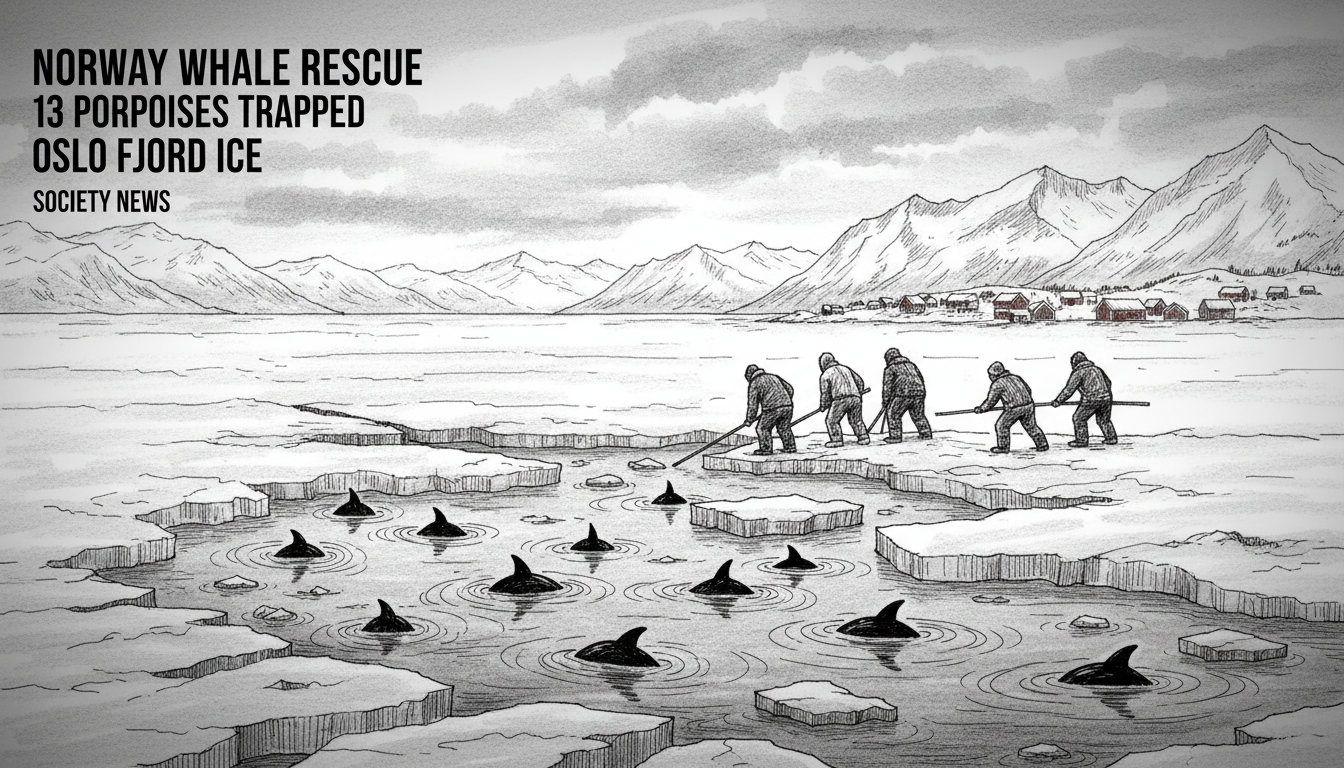
Norway whale rescue teams are battling freezing temperatures to save a pod of 13 harbor porpoises trapped by ice in the inner Oslo fjord. The small whales have been encircled by thickening ice near Nesodden since Christmas Eve, unable to reach open water to breathe and feed. Local resident Camilla Skjelstad first raised the alarm, telling reporters the situation looked grim. "The ice doesn't look that thick, but they cannot get out," Skjelstad said. "This has happened before, and back then several died." Her warning launched a complex rescue operation that has so far defied efforts by firefighters, harbor authorities, and an icebreaker.
A Desperate Fight Against the Freeze
Rescue attempts began with boats trying to carve a narrow channel through the ice, hoping the porpoises would use it as an escape route to open sea. That initial channel quickly froze over again in the sub-zero temperatures. By Saturday, authorities deployed an icebreaker to cut a much wider path through the frozen fjord. Despite this significant effort, the porpoises have not taken the offered exit. Field biologist Kjell Sandaas, who is monitoring the situation, explained the increasing danger. He said the area where the porpoises can move is shrinking as the ice continues to spread, critically limiting their access to air. Harbor porpoises, which resemble small dolphins, must surface frequently to breathe. Prolonged entrapment leads to exhaustion, starvation, and ultimately drowning.
The Biology of a Trapped Whale
Harbor porpoises are protected marine mammals in Norway and are common residents in Danish waters too. They are among the world's smallest cetaceans, typically measuring 1.5 to 1.8 meters long and living 15 to 20 years. While the broader North Sea population is estimated in the hundreds of thousands, each localized pod is vital for genetic diversity and ecosystem health. Marine biologists emphasize the severe stress of ice entrapment. It disrupts their entire survival cycle—restricting movement, preventing foraging for fish, and creating a constant, panicked struggle for air. Experts note that unpredictable winter conditions, potentially influenced by broader climate patterns, can create these sudden ice traps in sheltered coastal areas, posing an intermittent but deadly threat to coastal marine life.
Community Vigil and Historical Echoes
The unfolding drama has captured national attention, with both local residents and media closely watching the rescue. The historical precedent mentioned by Skjelstad hangs heavily over the operation. Past incidents in Norwegian and other Arctic waters have often ended tragically for entrapped porpoises and whales, with rescue options limited by technology and the sheer power of nature. The current standoff highlights the tension between human intervention and wild animal behavior. Even with a clear path opened by machinery, the porpoises may be disoriented, too weak, or simply too cautious to leave their shrinking ice hole for the unfamiliar man-made channel. Rescuers are now faced with a complex behavioral puzzle as well as an engineering challenge.
The Uncertain Path Ahead
The coming days will be critical. Rescue teams must balance aggressive intervention with the risk of further frightening the animals. Some marine mammal specialists suggest that using underwater sound guidance, or even considering cautious herding techniques, might be necessary if the pod remains stuck. However, such methods carry their own risks of causing stress or injury. The situation remains a race against time and temperature. Each night of frost solidifies the ice further, and each day spent trapped depletes the porpoises' energy reserves. The Norwegian rescue teams, praised for their persistent efforts, now face the difficult possibility that nature may take its course despite their best attempts.
A Broader Environmental Signal
This incident serves as a stark reminder of the vulnerabilities faced by marine life even in relatively populated and monitored areas like the Oslo fjord. While not directly attributable to a single cause, such events prompt questions about how changing winter conditions affect coastal ecosystems. Scientists note that climate change can lead to more volatile and unpredictable ice formation, creating new dangers. The trapped pod is more than a local news story; it is a small-scale manifestation of the delicate balance within northern marine environments. Their fate will tell us something about our capacity to respond when that balance tips toward disaster.
Waiting for a Break in the Ice
As of now, the community of Nesodden and the nation watch and wait. The icebreaker's channel remains open, a dark scar on the white fjord leading to freedom. The thirteen porpoises surface in their small hole, their dark backs breaking the water in brief, urgent arcs. The rescue operation has done everything conventional wisdom suggests. The outcome now depends on the animals themselves, and on whether the winter cold will relent long enough to give them a chance. This quiet drama, playing out between a frozen shore and a gray sky, underscores a profound truth: our desire to help is often met with the immense, indifferent force of the natural world. The hope is that this time, the story ends with a successful swim to open water, not another sad footnote in the history of the fjord.