
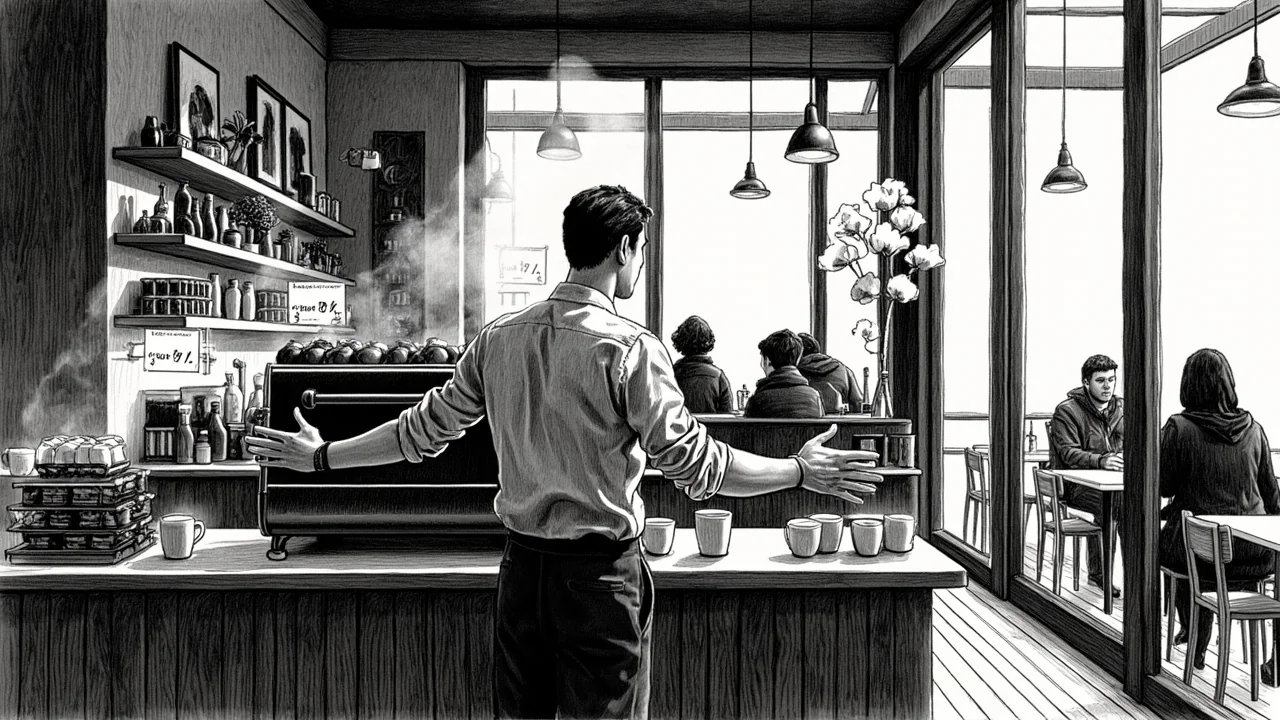
Norway's food prices surged 5.7% in 2025, with coffee, tea, and cocoa leading the inflationary charge at over 15%. The data from Statistics Norway reveals a stark acceleration in grocery costs, outpacing the general consumer price index which held steady at 3.1%. This jump places significant pressure on household budgets and ignites a political debate over market power and consumer protection in Oslo.
Statistics Norway's Friday report detailed a concerning trend. While overall inflation remained unchanged from 2024, the cost of food and non-alcoholic drinks climbed from 5.2% growth in 2024 to 5.7% in 2025. Specific categories experienced dramatic spikes. The price of coffee, tea, and cocoa skyrocketed by 15.2%, a staggering increase from the mere 1.3% rise recorded the previous year. Sugar-based goods, including candy, chocolate, and jam, followed with a 9.9% increase, up from 6.3% in 2024.
The Global Commodity Squeeze Hits Home
Bendik Solum Whist, director of grocery retail at Virke, the Enterprise Federation of Norway, directly linked the price hikes to turbulent international markets. "The price development for cocoa, chocolate powder, and coffee reflects the situation in the international commodity markets," Whist said in a statement. He noted that Norway's experience aligns with neighboring countries, suggesting a regional, supply-driven phenomenon. Whist offered a cautiously optimistic outlook, stating, "The largest cost increases are hopefully in the rearview mirror, and it will be interesting to follow the development through 2026."
The data shows monthly price drops, particularly a 1.7% fall from November to December 2025, which Whist attributes to aggressive promotional campaigns. "In connection with the Christmas holiday, stores lower prices on a number of Christmas goods. This naturally benefits consumers and reflects the strong price competition between the grocery chains," he explained. This seasonal discounting highlights the complex interplay between global wholesale costs and local retail strategies.
Political Backlash and Calls for Reform
The sustained high prices have not gone unnoticed in the Storting. Mimir Kristjansson, the fiscal policy spokesperson for the Red Party, launched a sharp critique against the grocery sector, accusing chains of profiteering. "The grocery chains are exploiting the expensive times to squeeze even more money out of people," Kristjansson stated. He expressed outrage at the situation facing Norwegian consumers: "It is completely insane that this is the reality Norwegian customers have to deal with."
Kristjansson's comments signal a growing political appetite for intervention. He called for stricter industry controls and announced concrete legislative plans. "Therefore, we will submit proposals in the Storting that limit chain power, prohibit shrinkflation, and make price development more predictable," he said. This push for regulation targets the concentrated market power of Norway's major grocery retailers, a long-standing concern for consumer advocates.
Analyzing the Year's Price Trajectory
The twelve-month growth for food items from December 2024 to December 2025 stood at 5.2%. The year's inflation was not evenly distributed. Statistics Norway pointed out that high food prices in February and March 2025 were primary drivers of the elevated twelve-month growth rate observed through much of the year. This pattern indicates that the initial shock from commodity markets early in 2025 set a high baseline that influenced the annual average.
The contrast between the 15.2% surge for luxury staples like coffee and chocolate and the more moderate general food inflation tells a story of targeted pressure. Consumers are not facing uniform increases across the board but are instead hit hardest in specific, often daily, indulgence categories. This creates a perceptional disconnect where the overall basket cost rises steadily, but the items shoppers notice most—their morning coffee or a chocolate bar—have become markedly more expensive.
Expert Perspective on Market Dynamics
From an economic standpoint, the figures illustrate Norway's vulnerability to global supply chains. The nation, despite its wealth and stable economy, cannot insulate itself from droughts in West African cocoa regions or production issues in South American coffee belts. The price transmission from commodity futures markets to supermarket shelves in Oslo or Bergen has been swift and severe in 2025.
The political response championed by Red Party reflects a broader European trend of scrutinizing grocery retailer margins during cost-of-living crises. The debate hinges on whether high prices result purely from international factors, as industry representatives argue, or if domestic market structures allow for excessive margin retention. The call to ban 'shrinkflation'—reducing product size while holding price—addresses a consumer frustration that often accompanies periods of high inflation.
What Lies Ahead for Norwegian Shoppers?
Bendik Solum Whist's hope that the worst is over will be tested in 2026. Commodity markets for cocoa and coffee remain volatile, influenced by climate change and geopolitical factors. The December price dip shows the Norwegian market's capacity for temporary relief through competition, but it may not indicate a long-term downward trend.
The proposed legislation from the Red Party will likely spark a heated parliamentary debate. Any move to limit 'chain power' would face strong opposition from the industry but could find sympathy among other parties sensitive to voter anxiety over living costs. The outcome will shape Norway's grocery retail landscape for years to come.
For the average Norwegian, the statistics confirm a felt reality: the simple pleasures have become a significant budget line. As the political and market forces continue to interact, the question remains whether 2026 will bring relief or if elevated prices for coffee, tea, and chocolate are the new normal in one of the world's most expensive countries.