
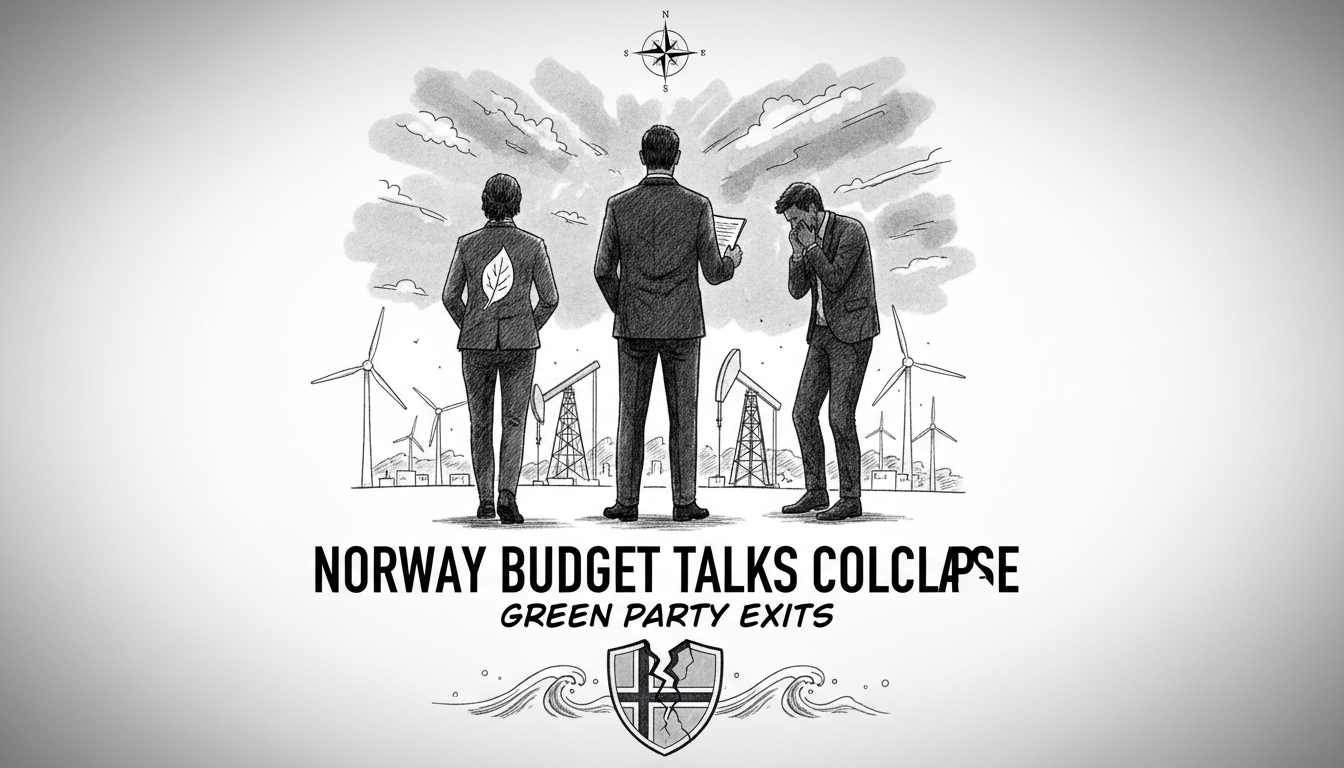
Norway's minority government faces a political crisis after the Green Party abandoned budget negotiations. Party leader Arild Hermstad confirmed the breakdown just days before Sunday's deadline. The Labor Party government now struggles to secure parliamentary support for its fiscal plan.
The collapse threatens Norway's economic stability during a volatile energy market period. Oil prices directly impact the Government Pension Fund Global, the world's largest sovereign wealth fund. Budget disagreements could delay crucial investments in offshore wind and carbon capture projects.
Norway's political system requires minority governments to build consensus across party lines. The current administration depends on support from the Socialist Left, Center Party, and Red Party. Each holds decisive votes in the Storting, Norway's parliament located in central Oslo.
The Green Party's withdrawal reflects deeper disagreements about petroleum industry subsidies. Norway remains Europe's largest oil and gas producer despite its climate commitments. Key fields like Johan Sverdrup in the North Sea and Snøhvit in the Barents Sea generate substantial state revenue.
Budget negotiations typically determine Norway's annual petroleum tax adjustments and environmental investments. The breakdown could affect funding for coastal protection along Sognefjorden and Hardangerfjorden. These western fjords face increasing climate change impacts despite Norway's green reputation.
What happens when a Norwegian budget agreement fails? The government may present a minority budget that risks parliamentary rejection. Alternatively, parties could negotiate temporary funding arrangements while seeking new compromises.
Norwegian oil production averaged two million barrels daily in the third quarter. This revenue funds Norway's extensive welfare system and climate initiatives. Political instability could complicate long-term energy transition plans affecting Arctic communities.
The Labor Party government now faces difficult choices about budget priorities. It must balance environmental demands with economic realities in petroleum-dependent regions. This political test comes as Norway seeks to expand its renewable energy exports to Europe.
Budget deadlines create natural pressure for compromise in Norwegian politics. Yet fundamental disagreements about oil exploration near Lofoten islands persist. The Green Party's stance reflects growing environmental concerns among Norwegian voters.
Norway's parliament building near Akershus Fortress will host urgent talks this weekend. Political observers note that previous budget crises have triggered government reshuffles. The outcome will influence Norway's approach to European energy markets and Arctic policy development.