
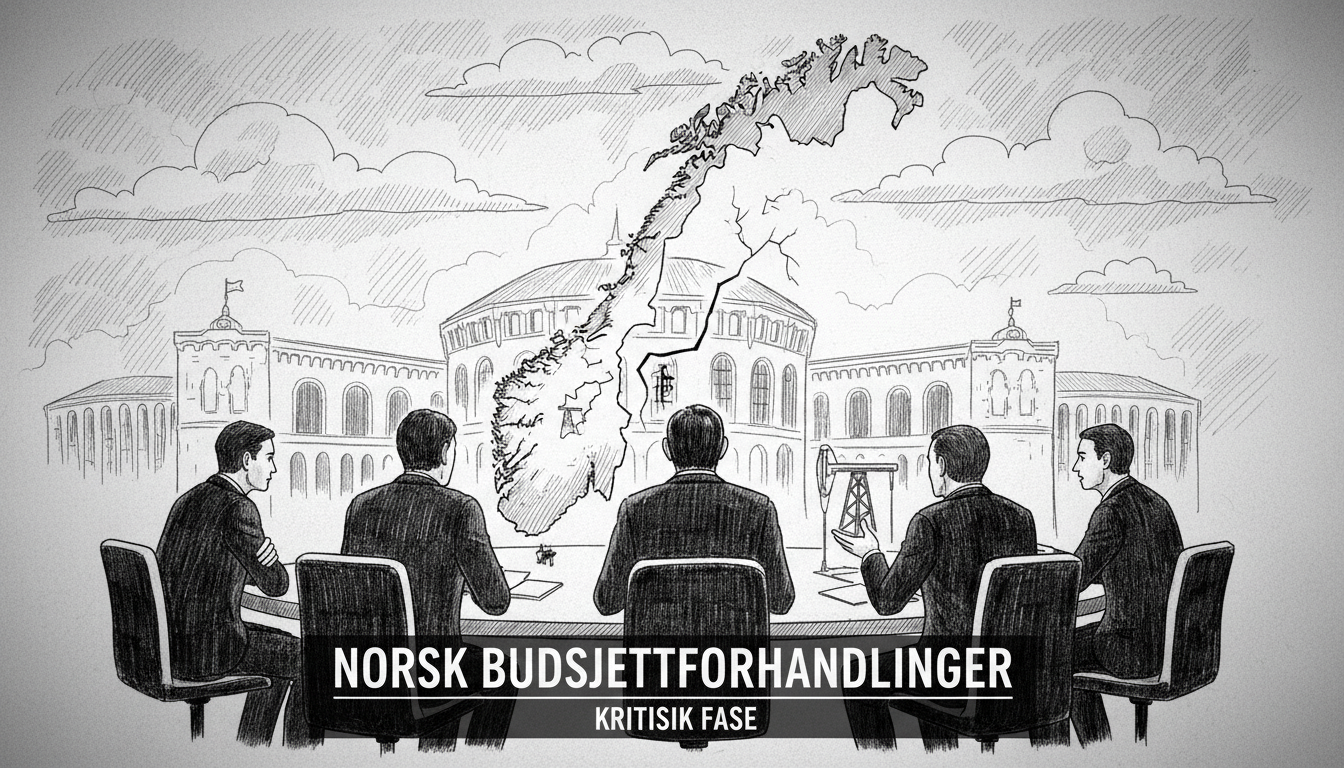
Norwegian budget negotiations have entered their most critical phase with five parliamentary parties still deeply divided over next year's government spending plan. The talks now involve top parliamentary leaders from the Labor Party, Center Party, Socialist Left, Red Party, and Green Party.
Green Party leader Arild Hermstad confirmed the substantial disagreements in a statement to media. He said the parties remain far apart and need major concessions to reach any agreement. Hermstad noted that significant changes must occur for negotiations to succeed. He described rapid resolution as completely unrealistic given the current divisions.
This political stalemate carries serious implications for Norway's economic stability and energy sector planning. Budget delays disrupt oil and gas investment timelines in key production areas like the Johan Sverdrup field and Troll complex. The uncertainty affects development projects across Norwegian waters from the Barents Sea to the North Sea.
The Storting's budget committee faces mounting pressure to broker compromise before parliamentary deadlines. Norway's consensus-driven political system typically produces agreements, but current divisions appear unusually deep. The five parties span from centrist to far-left positions on energy and environmental policy.
Oil industry representatives express concern about prolonged uncertainty. Norway remains Europe's second-largest natural gas supplier and crucial energy partner. Budget decisions directly impact licensing rounds, carbon capture projects, and maritime operations in vulnerable fjord regions like Hardangerfjord and Geirangerfjord.
The government's headquarters at R6 and adjacent ministerial buildings host intense negotiations. Parliamentary leaders shuttle between offices seeking common ground. Norway's petroleum fund management requires stable fiscal frameworks for long-term investment strategies.
Political analysts note these negotiations test the current minority government's stability. Budget failures could trigger broader political consequences beyond immediate spending decisions. The outcome will shape Norway's energy transition pace and Arctic development policies.
International observers watch closely as Norway balances climate commitments with energy security demands. The country faces complex decisions about fossil fuel extraction amid global market volatility. Budget allocations will signal Norway's strategic direction on key issues from northern region development to offshore wind expansion.
Norwegian parliamentary procedures allow extended negotiation periods, but delays now risk cascading effects. Government agencies await funding clarity for everything from snow clearance to maritime surveillance. The final budget must balance environmental goals with economic realities in Europe's northernmost nation.