
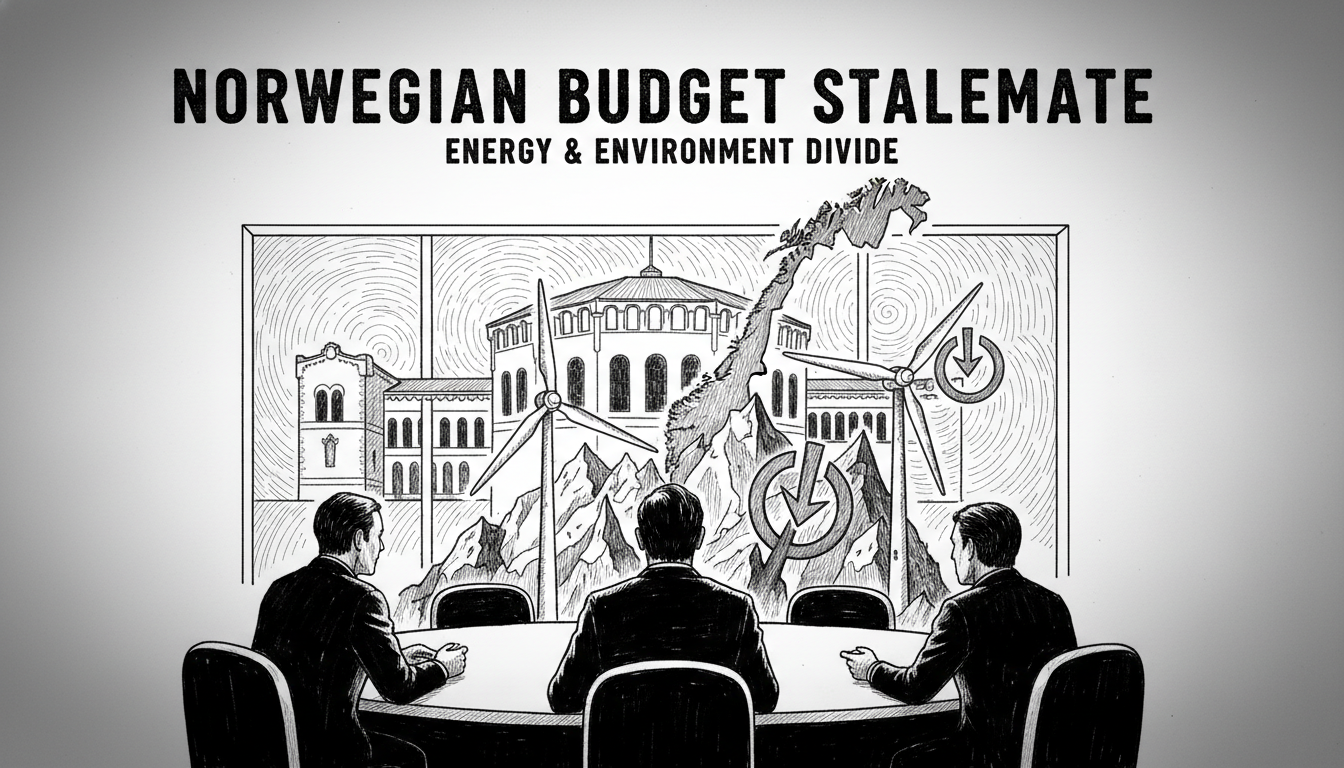
Norway's minority government faces a critical budget impasse as coalition negotiations enter their final phase. The Green Party leader Arild Hermstad confirmed substantial disagreements remain between negotiating parties. He stated significant concessions must occur to reach any agreement. The process appears unlikely to conclude within hours according to participants.
Socialist Left Party leader Kjersti Bergstø acknowledged the challenging negotiations continue overnight. Both parties work toward securing a viable budget agreement despite the current deadlock. The political standoff threatens Norway's economic stability during a period of global energy uncertainty.
Norwegian budget negotiations typically involve complex trade-offs between environmental policies and economic interests. The current government relies on support from multiple smaller parties to pass legislation. This dynamic creates particular challenges for budget approval in the Storting building overlooking Oslo's inner fjord.
Energy policy represents a central point of contention in these discussions. Norway faces competing pressures between its massive oil industry and climate commitments. The country remains Europe's second-largest natural gas supplier after Russia's invasion of Ukraine. Petroleum production from fields like Johan Sverdrup and Troll directly funds Norway's sovereign wealth fund.
Budget disagreements could delay critical investments in Norway's green transition. The government planned substantial allocations for offshore wind development and carbon capture technology. These projects require parliamentary approval through the budget process. Any delay affects Norway's ability to meet its climate targets while maintaining energy exports.
The political deadlock comes during a period of economic uncertainty for Norway. The country's oil industry faces both market volatility and long-term transition pressures. Government stability remains crucial for maintaining investor confidence in Norway's energy sector. The current negotiations test the minority government's ability to govern effectively.
What happens if parties fail to reach agreement? Norway would need temporary budget arrangements while negotiations continue. This scenario creates uncertainty for public services and business planning. The situation demonstrates the challenges of Norway's multi-party political system in practice.
Norwegian politics often involves complex negotiations between competing interests. The current budget talks reflect broader tensions between environmental goals and economic realities. How these negotiations conclude will shape Norway's direction for the coming year.