
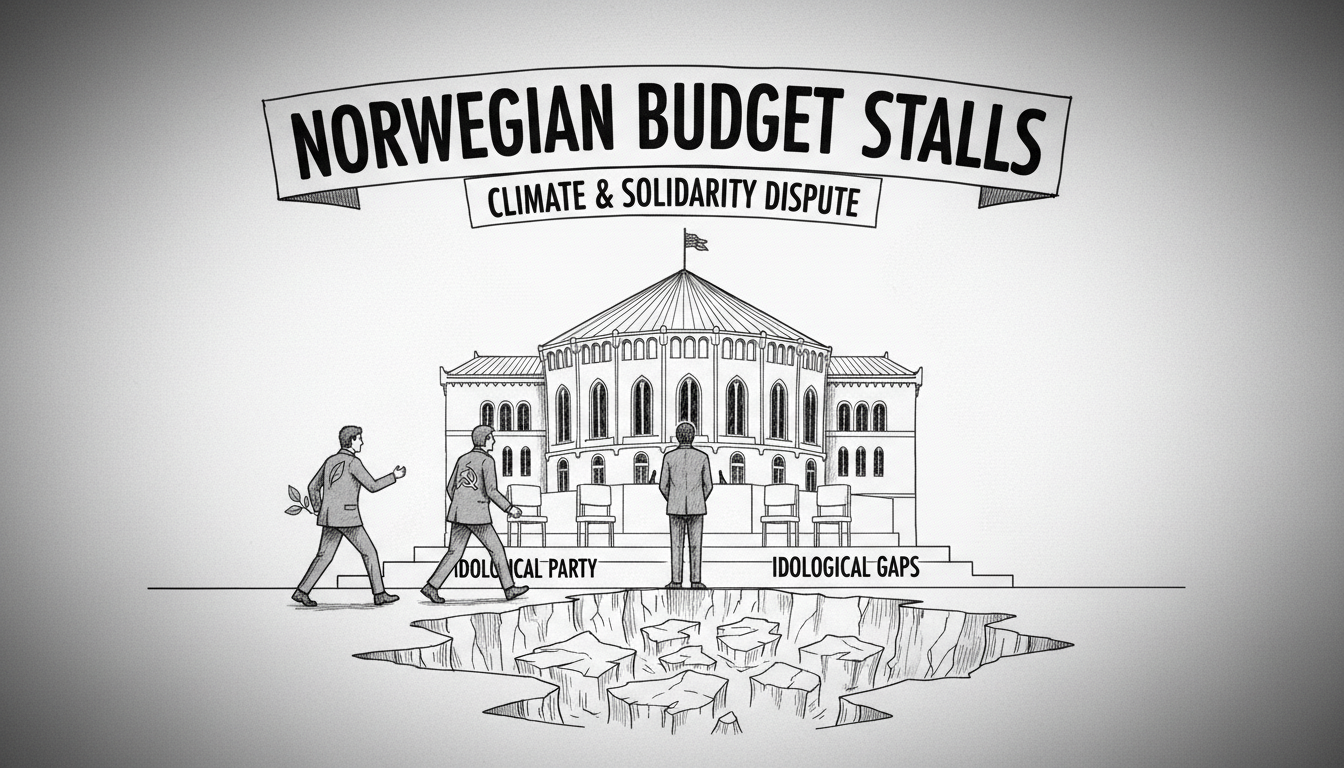
Norway's minority government faces mounting pressure as the Green Party suspended budget negotiations with the ruling Labour Party. The development marks the second coalition partner to withdraw from talks this week, creating significant uncertainty about Norway's fiscal direction. The Green Party cited fundamental disagreements over climate policy and social solidarity as their reason for pausing discussions. This political stalemate comes at a critical time for Norwegian energy policy and Arctic development plans.
Ingrid Liland of the Green Party explained their position in a public statement. She said her party had stretched themselves thin and accepted several difficult positions. They did not experience the same willingness from their Labour Party counterparts. The Green Party perceives only ultimatums rather than constructive movement. They will maintain their negotiation pause until Labour demonstrates sufficient willingness to meet them on climate and solidarity issues.
Earlier this week, the Socialist Left Party also suspended their budget negotiations. They cited similar concerns about Labour's negotiating stance. Both parties have expressed frustration with what they describe as inflexible positions from the government's lead negotiator.
Tuva Moflag, the lead negotiator for the Labour Party, acknowledged the temporary break in discussions. She noted that negotiations have continued for several weeks with long days and three full overnight sessions. All parties need some rest before continuing the complex budget process. The Labour Party remains committed to reaching a workable budget agreement.
Norwegian budget negotiations typically involve intense bargaining between the minority government and its support parties. This process determines Norway's spending priorities across key sectors including energy development, Arctic infrastructure, and social programs. The current impasse reflects deeper ideological divisions about Norway's transition from oil dependence to renewable energy leadership.
The stalled negotiations could impact several major Norwegian projects. Development timelines for Arctic oil fields in the Barents Sea might face delays. Funding for green technology initiatives centered around Norwegian fjords remains uncertain. The government's ability to implement its climate action plan through the Storting building proceedings hangs in the balance.
Norwegian political observers note this situation mirrors previous budget standoffs in Norwegian politics. Minority governments often struggle to balance competing interests between environmental parties and traditional industrial supporters. The Labour Party must now decide whether to make additional concessions or risk proceeding with a budget that lacks parliamentary support.
International energy markets are watching these developments closely. Norway remains Europe's second-largest natural gas supplier and a crucial oil exporter. Budget decisions affect investment in offshore projects from the North Sea to newly explored areas near Lofoten. The outcome will signal Norway's commitment to balancing economic interests with climate responsibilities.
The negotiation pause comes as Norway faces important decisions about its Arctic policy. Melting ice creates new shipping routes and resource opportunities. But environmental groups push for stronger protections. The budget will determine funding for Arctic surveillance, environmental monitoring, and infrastructure development in northern regions.
What happens next depends on whether the Labour Party can bridge the gap with its coalition partners. The government may need to reconsider its positions on carbon taxation, renewable energy subsidies, and social welfare spending. Another possibility involves seeking support from opposition parties, though this would represent a significant political shift.
The budget deadline creates pressure for resolution. Norwegian law requires parliamentary approval before the new fiscal year begins. All parties understand the consequences of failure. They have faced similar deadlines in previous years and eventually reached compromises.
This situation demonstrates the challenges of Norway's proportional representation system. No single party commands majority support. Governing requires constant negotiation and compromise. The current standoff tests whether Norway's traditional consensus politics can withstand growing ideological polarization.
Norwegian voters will judge the outcome in future elections. Both urban progressives and rural traditionalists watch how their priorities fare in the final budget. The government's ability to deliver stable governance while addressing climate concerns remains the central challenge of modern Norwegian politics.