
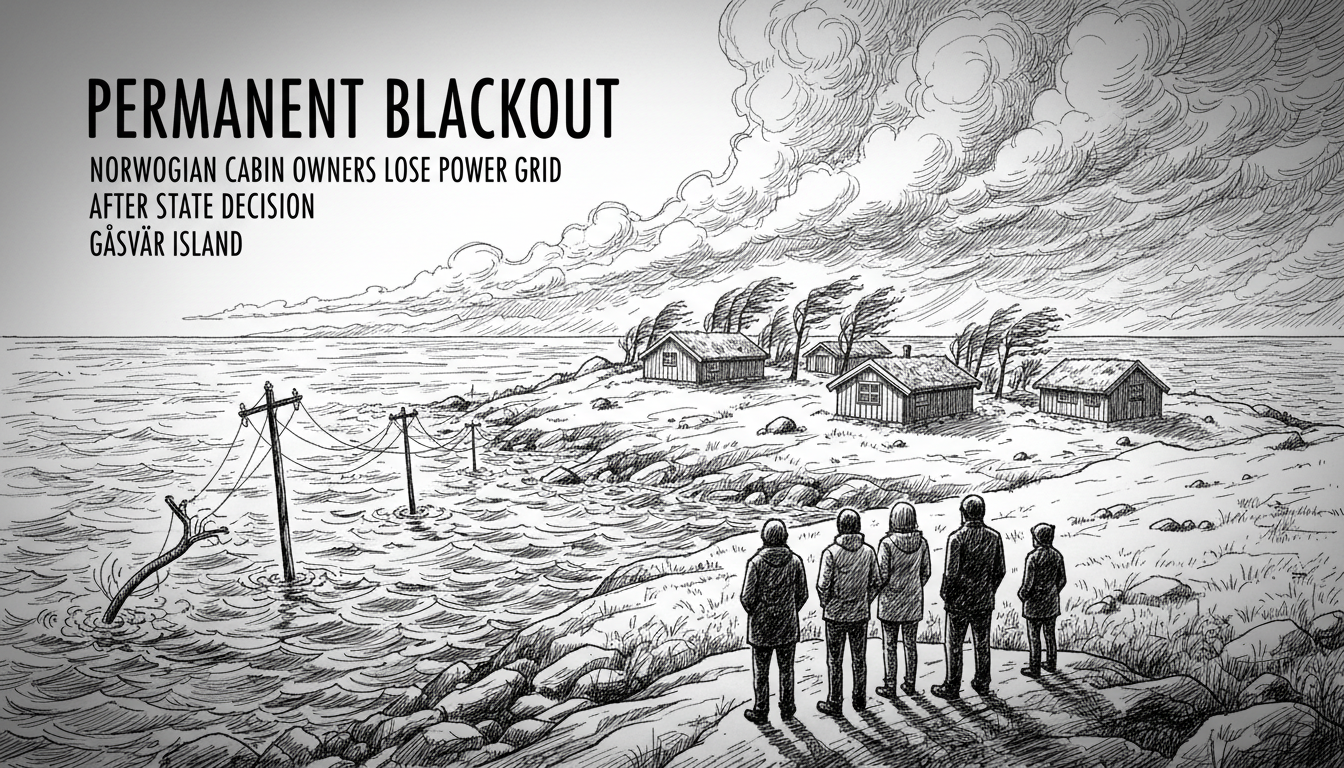
Twenty-nine cabin owners on the remote island of Gåsvær will permanently lose electricity after Norwegian authorities approved the dismantling of the island's power grid. The decision follows a cable failure last year that left the island without power.
Gåsvær first received electricity in 1964. Øivind Mathisen, who grew up on the island, remembers the excitement. "It was a big deal. We were quite late - many island communities around us already had power," he said.
No permanent residents live on Gåsvær today, but 29 holiday cabins remain. When the power cable failed after 60 years of service, the grid operator determined repairs would cost approximately 30 million Norwegian kroner.
The company argued that replacing the cable wasn't economically feasible. They noted the cost would ultimately fall on other customers in the Helgeland region.
Frode Dorp from the power company explained in a statement, "The cost per kilowatt-hour would be around 24 kroner. It's not responsible to burden other customers in Helgeland with these expenses through grid fees."
Cabin owners faced an alternative option - pay over 1 million kroner each for a new cable. Now they must find other energy sources for light and heat.
Øivind Mathisen expressed disappointment about the decision. "We had hopes we would keep the electricity and get a new cable. But that's not how it turned out," he said.
He believes the ruling halts further development on the island. "No one will establish themselves on Gåsvær with these prospects now."
Another cabin owner, Øystein Mathisen, described the practical challenges. "We use generators and gas, but it's cumbersome. We had hoped to use more electricity and less diesel, not the opposite."
The cabin owners are considering appealing the decision. Local officials also expressed disappointment with the ruling.
The power company will provide each cabin owner with 65,000 kroner and guidance for alternative energy solutions like solar panels.
This situation highlights the challenges of maintaining infrastructure in remote Norwegian coastal communities where population decline makes traditional services economically unviable.