
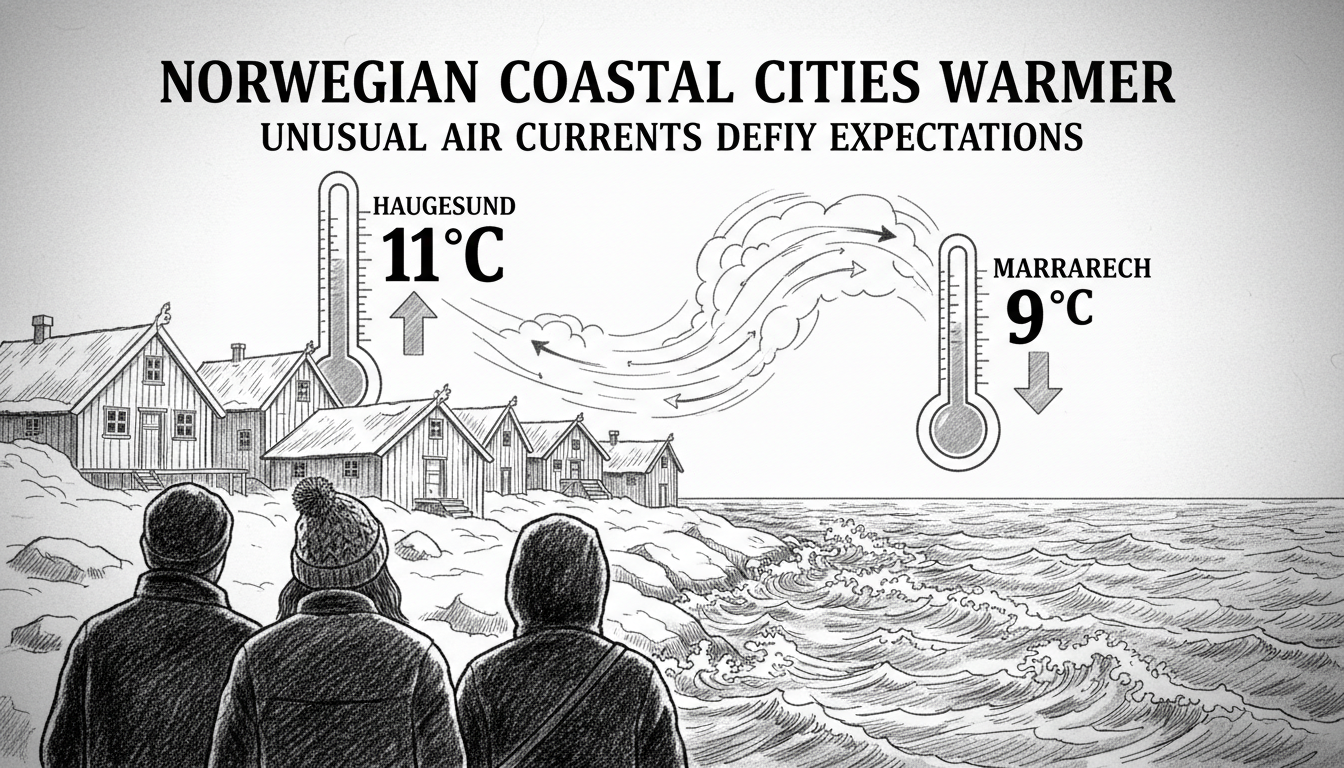
A narrow band of warm Atlantic air has created unusual temperature patterns across Norway. Coastal cities like Haugesund recorded 11 degrees Celsius while Mediterranean destinations struggled with colder conditions. Meteorologists confirm this weather anomaly places Oslo among Europe's warmest capitals. The Norwegian capital matched Haugesund's temperatures while Rome and Berlin measured only 5 degrees. This thermal inversion represents a dramatic departure from seasonal norms just days before Advent Sunday.
The meteorological phenomenon stems from specific atmospheric conditions over Northern Europe. Warm air currents from the Atlantic envelop Norway while cold air dominates the Mediterranean region. This creates temporary temperature extremes that defy typical seasonal expectations. The pattern demonstrates how localized weather systems can produce unexpected climate conditions across relatively short distances.
Norwegian energy experts note such temperature fluctuations impact national energy consumption patterns. Warmer winter periods temporarily reduce heating demand across residential and commercial sectors. This affects natural gas and electricity markets in unpredictable ways. The petroleum industry monitors these patterns for their effect on energy production and distribution networks.
Climate researchers have observed increasing frequency of such anomalous weather events in recent decades. The Norwegian Meteorological Institute tracks these developments as part of broader climate monitoring efforts. Their data contributes to understanding how global climate patterns manifest in specific Nordic contexts.
The current warm spell remains temporary according to weather forecasts. Colder conditions are expected to return as December progresses. This normalization will bring temperatures more in line with seasonal averages across southern Norway. The transition may occur rapidly as weather systems continue to evolve.
These temperature variations have practical implications for Norwegian society. Municipalities adjust winter preparedness measures while transportation authorities monitor road conditions. The shipping industry notes effects on maritime operations in coastal regions. Fishermen observe impacts on traditional fishing patterns in Norwegian fjords.
The situation highlights Norway's unique geographical position between Atlantic and Arctic influences. This location creates dynamic weather patterns that frequently surprise residents and visitors alike. The country's complex coastline and mountainous terrain further contribute to microclimates that defy simple categorization.
International observers should note that such weather anomalies don't necessarily indicate broader climate trends. Norway's weather remains characterized by considerable variability throughout the year. The current warm period represents one data point in a complex meteorological picture that continues to evolve.