
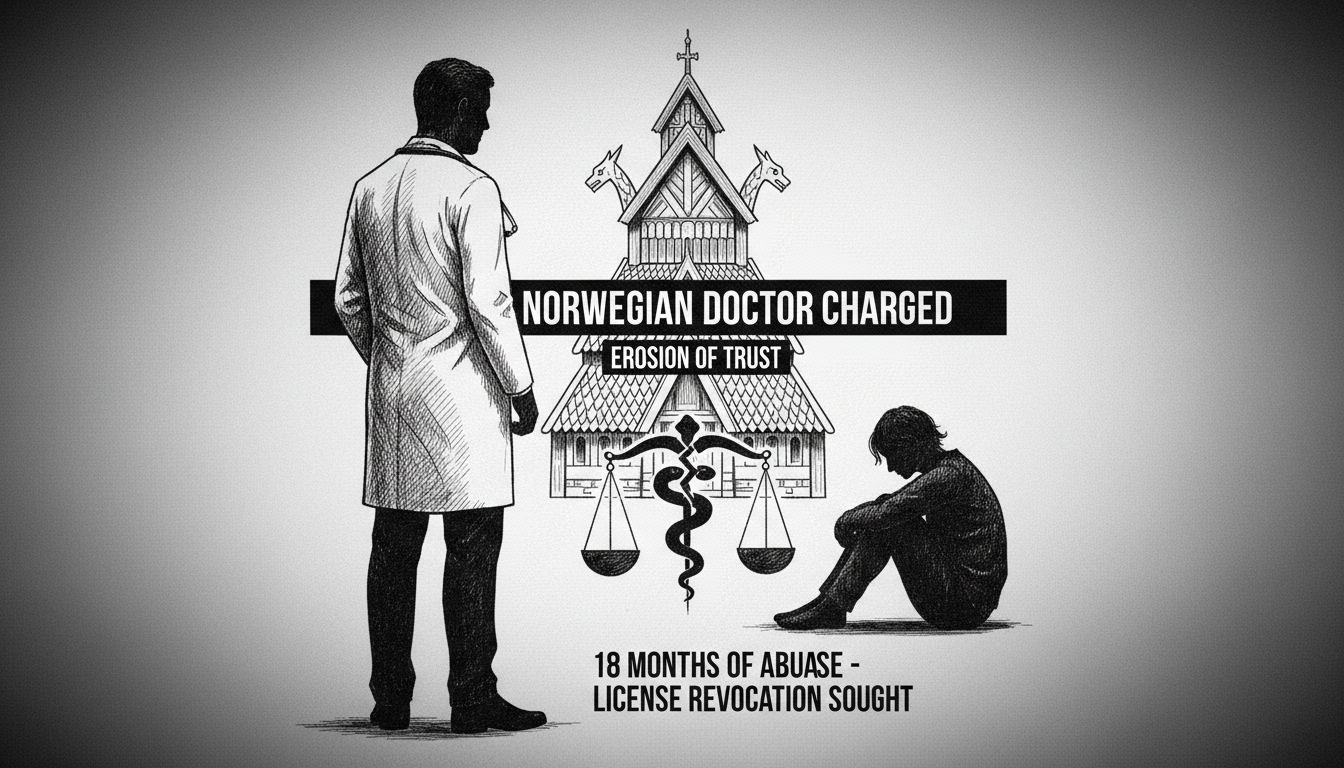
A male doctor in Norway's Helse Fonna health trust faces serious criminal charges for allegedly exploiting his professional position. Prosecutors accuse him of establishing a sexual relationship with a female patient over approximately eighteen months. The case highlights critical vulnerabilities in patient-doctor trust and the enforcement of medical ethics in the Nordic welfare system.
The physician, in his forties, is formally charged with abuse of position. Authorities state he built a relationship of dependency and trust with the younger woman. He allegedly prescribed medication and provided various financial benefits to her during this period. A separate charge concerns his failure to record the prescription withdrawals in her patient journal for over six months, a clear breach of medical record-keeping protocols.
The public prosecution office has signaled it may seek the indefinite revocation of his medical license. This represents the most severe professional sanction available. The case will be heard in the Haugaland and Sunnhordland District Court over three days in March 2026. The defendant's lawyer, Per Ivar Hessen, stated his client looks forward to presenting his explanation in court but declined further comment on the charges.
This incident forces a difficult conversation about power dynamics and safeguards within Norwegian healthcare. Norway prides itself on a high-trust society with robust public institutions. Cases like this directly challenge that foundational principle. They reveal how the very trust that makes the system efficient can also be weaponized by individuals in positions of authority.
The legal process will scrutinize not just the doctor's actions but also systemic oversight. Questions will arise about supervisory routines within Helse Fonna and whether red flags were missed. The Norwegian Board of Health Supervision maintains strict ethical guidelines, but enforcement relies heavily on institutional self-reporting and patient courage. The outcome may prompt calls for more independent audit mechanisms for patient interactions, especially in long-term care scenarios.
For international observers, this case underscores that even nations with top-ranked healthcare systems are not immune to profound ethical failures. The Norwegian response will be telling. A strong judicial and regulatory reaction could reinforce systemic integrity. A perceived lenient outcome might erode public confidence. The case sits at the intersection of law, medicine, and public trust, with implications for medical governance far beyond this single district court.