
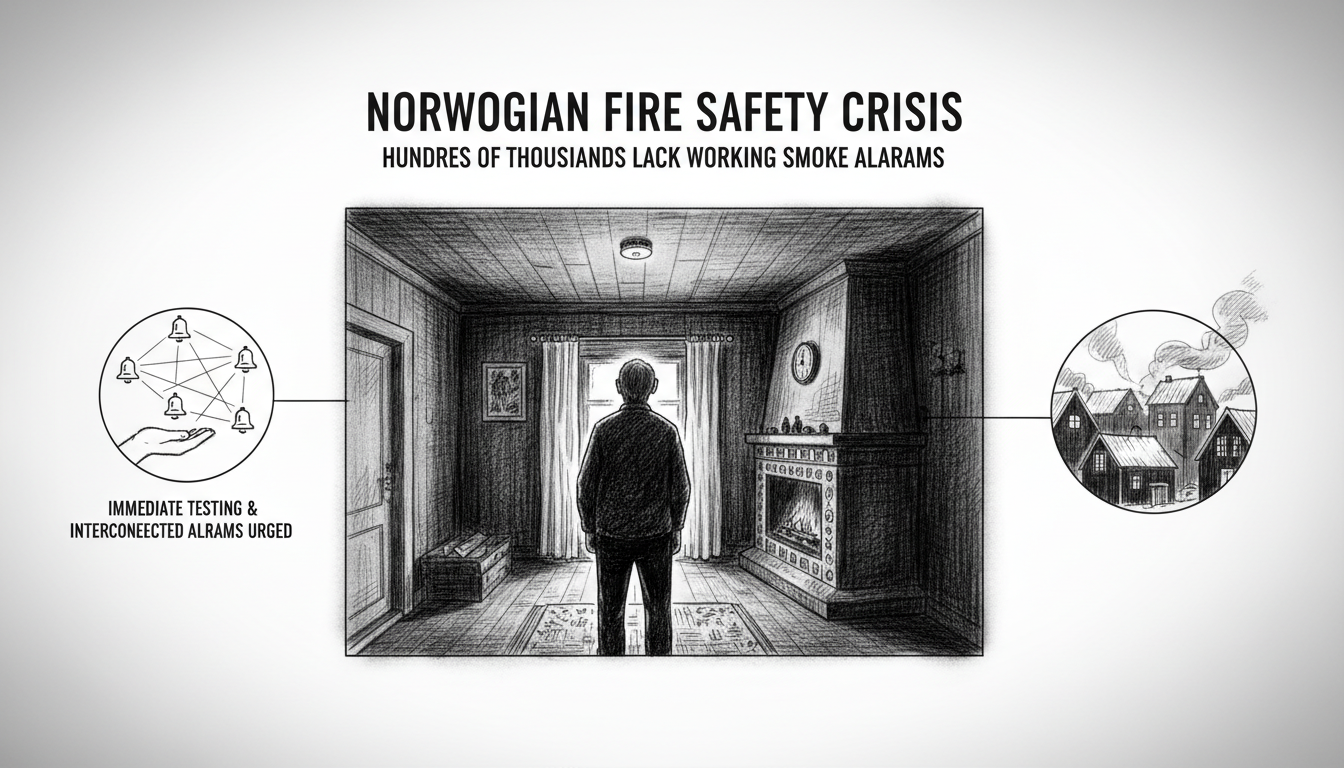
A major fire safety crisis is unfolding in Norwegian homes during the most dangerous month for residential fires. New data reveals hundreds of thousands of residents lack functioning smoke alarms, creating a severe public safety risk. Experts are issuing urgent warnings as the country enters its peak fire season.
Approximately 300,000 Norwegian adults either lack a working smoke alarm or do not know if they have one. This figure represents a population equivalent to Norway's second-largest city, Bergen, being entirely unprotected. A survey conducted for an insurance firm found seven percent of adults are in this vulnerable position. Fire safety officials call the situation a crisis, especially for December, the month with the highest number of fire-related fatalities.
December's unique combination of stress, candle use, holiday cooking, and increased electricity consumption makes it particularly hazardous. Vulnerable groups, including the elderly, people with substance abuse issues, and those with mental health conditions, are at the highest risk. Statistics show these groups account for three out of every four fire deaths in the country.
A critical problem identified by safety directors is false security. Many people press the test button on their alarm, but this only confirms battery power, not the sensor's ability to detect smoke. The only reliable test involves actual smoke, using a special testing match, a small gas canister designed for the purpose, or a recently extinguished candle held beneath the detector. If the alarm sounds on its own, it is working correctly.
Experts strongly recommend interconnected smoke alarms for maximum safety. When one alarm detects smoke, all interconnected units in the home sound simultaneously. This provides crucial extra time for evacuation, especially if a fire starts in a different room or during the night. Officials advise installing enough functional alarms in all living and sleeping areas and ensuring they are linked. Many Norwegians are also unaware that smoke alarms have a limited lifespan of eight to ten years, after which electronics degrade and dust reduces sensitivity.
The situation highlights a gap between regulation and real-world compliance. Norway has strong building codes, but maintenance and testing fall to individual homeowners and renters. For at-risk individuals who cannot test alarms themselves, the responsibility falls to relatives and neighbors. The clear message from all authorities is direct and urgent: check your smoke alarm tonight. Early warning can be the difference between life and death.