
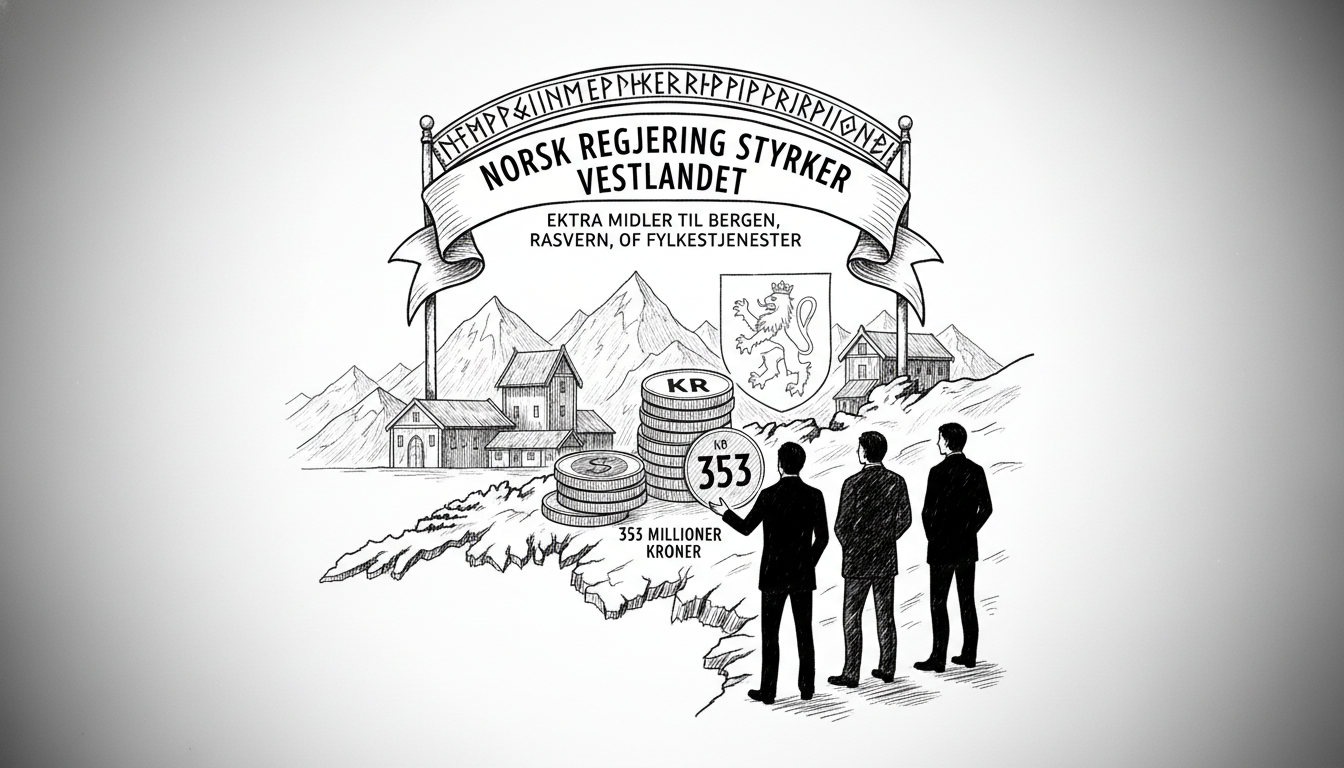
Western Norwegian municipalities will receive 353 million kroner in additional funding through a new budget agreement. The Labor Party, Center Party, and Red Party presented their joint budget recommendation on Saturday evening. This cross-party collaboration signals strong support for regional development priorities across political lines.
Bergen municipality gains 149 million kroner more than originally proposed in preliminary budget drafts. The funding increase reflects growing recognition of urban cost pressures in Norway's second-largest city. Municipal leaders had advocated for additional resources to address infrastructure maintenance and public service demands.
Another 46 million kroner is allocated specifically for landslide protection measures throughout Vestland county. This investment comes amid increasing climate concerns affecting Norway's western coastline. The region has experienced several significant landslide incidents in recent years that damaged property and infrastructure.
Vestland County Council receives 135 million kroner in additional operational funding. County politicians will determine how to distribute these resources across transportation, education, and regional development projects. The funding boost may accelerate several planned infrastructure improvements along Norway's western fjords.
Center Party politician Kjersti Toppe confirmed her party secured several important budgetary achievements. She stated the Center Party prioritized municipal finances above other spending categories. The party also obtained half a billion kroner extra for hospital services nationwide.
Existing programs for free ferry transport and student debt cancellation will continue under the new budget. These popular initiatives particularly benefit residents in coastal and remote communities. The ferry program supports mobility for island residents while the student debt relief aims to retain young professionals in rural areas.
The budget agreement demonstrates Norway's continued commitment to regional equity despite economic uncertainties. Oil revenue fluctuations often create tension between urban and rural funding priorities. This allocation shows western regions maintaining their political influence in national spending decisions.
Municipal leaders now face the challenge of allocating these resources effectively before the fiscal year begins. They must balance immediate infrastructure needs against long-term community development goals. The additional funding could support everything from road repairs to school upgrades across western municipalities.
International observers should note how Norway distributes national wealth across its regions. The country maintains strong public services even in less populated areas through such targeted funding. This approach contrasts with many nations where rural communities often experience service decline.
The budget process continues through parliamentary review in the Storting building. Final approval typically occurs after several weeks of committee scrutiny and potential amendments. The three-party coalition appears to have sufficient votes to pass their budget proposal unchanged.