
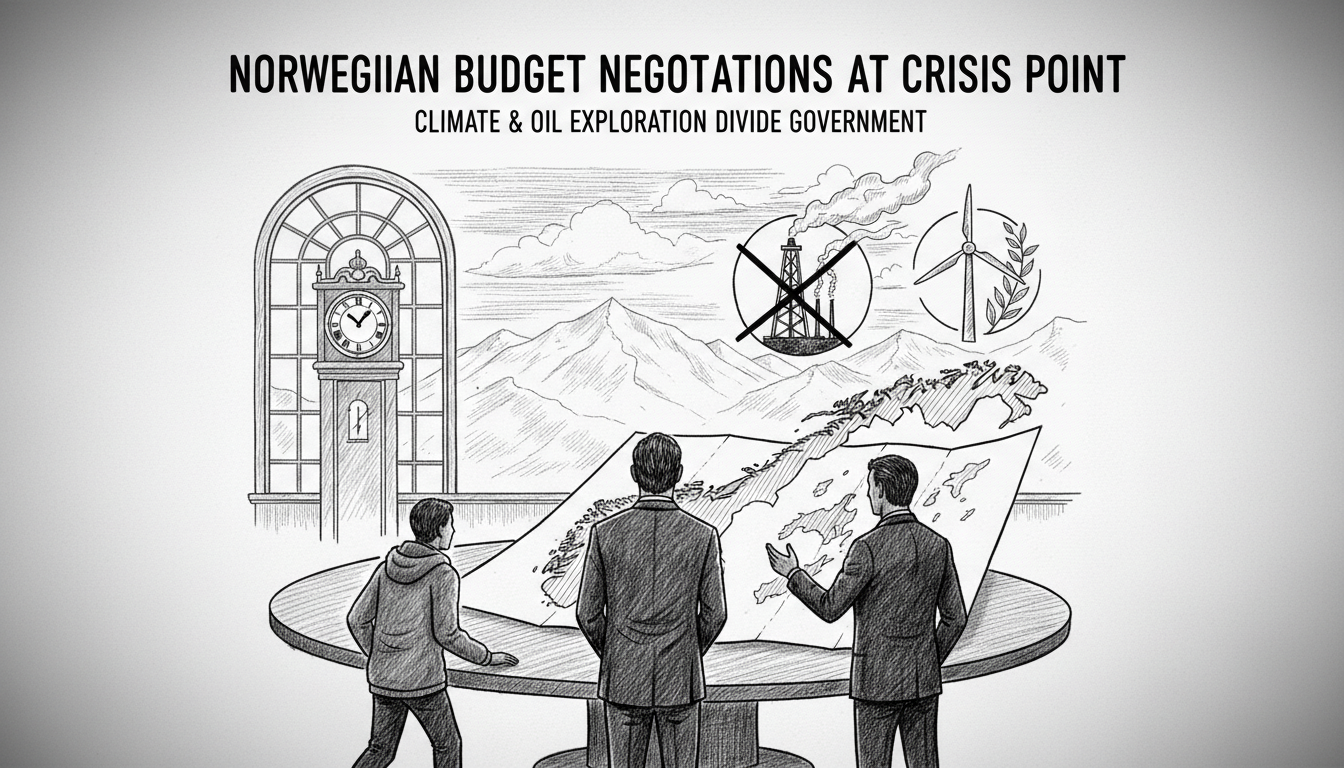
Norwegian political parties face a budget crisis as coalition talks falter. The minority government led by Prime Minister Jonas Gahr Støre risks losing its parliamentary majority. The Green Party (MDG) has withdrawn from budget negotiations, creating significant political uncertainty.
Party leader Arild Hermstad confirmed the breakdown in talks. He stated the Green Party entered negotiations to make the budget greener and more socially responsible. The distance between parties proved too great to bridge. Hermstad expressed frustration with the ruling Labour Party's position on climate issues.
Several sticking points emerged during weeks of closed-door meetings. Oil exploration became a major point of contention. The Green Party demanded a complete halt to new oil licenses. This directly contradicts established Labour Party and Centre Party energy policies.
The political drama unfolded throughout the day at Norway's Parliament building. Key figures moved between meeting rooms as deadlines approached. Multiple party leaders offered brief comments to waiting journalists while maintaining negotiating positions.
Labour Party's parliamentary leader Tonje Brenna remained cautiously optimistic despite the setbacks. She acknowledged disagreements but emphasized continued work toward a majority budget. Brenna described the situation as having a very good starting point for agreement.
Other coalition partners showed varying levels of concern. The Socialist Left Party leader Kirsti Bergstø left negotiations without commenting. Her party had previously paused talks alongside the Green Party. Sources described widespread dissatisfaction with Labour Party negotiation strategies.
Norway's parliamentary system requires coalition governments to build consensus across multiple parties. This creates complex negotiation dynamics, especially on contentious issues like climate policy and oil exploration. The current situation reflects broader tensions in Norwegian politics between environmental concerns and economic interests.
The budget deadline creates real pressure for resolution. Parliament President Masud Gharahkhani confirmed the Sunday deadline remains firm. The finance committee must deliver its recommendation by this date. Opposition parties need adequate time to submit budget comments before the final deadline.
Norwegian budget negotiations typically involve intense last-minute discussions. The current impasse suggests deeper ideological divisions within the governing coalition. Climate policy has become increasingly central to political negotiations in recent years.
International observers watch Norwegian energy policy closely. As Europe's second-largest gas supplier and significant oil producer, Norway's domestic decisions carry international implications. The current budget struggle reflects global tensions between climate action and energy security.
The outcome will affect Norway's green transition pace and international climate commitments. It also tests the stability of the current minority government configuration. Further developments are expected throughout the weekend as parties work against the clock.