
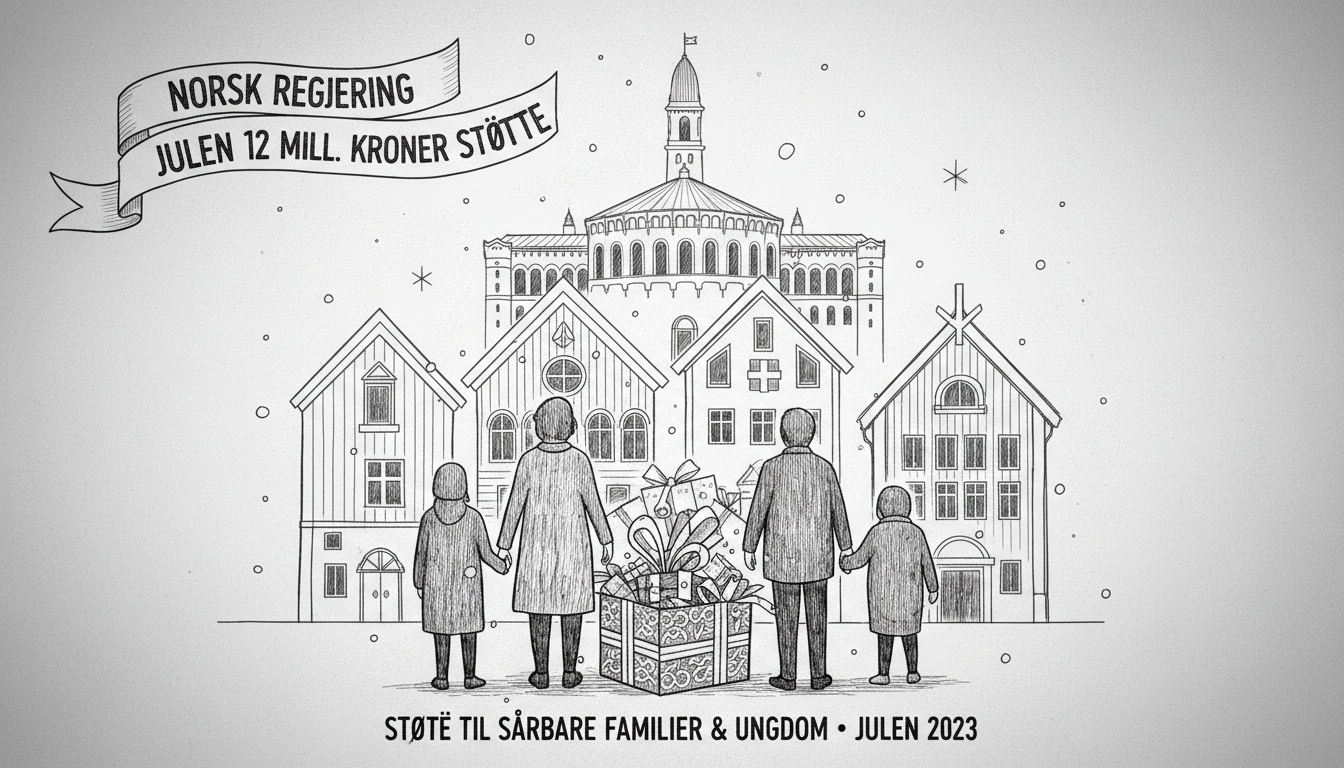
The Norwegian government has announced a special Christmas funding package for four major social organizations. The proposal allocates 3 million kroner each to the Salvation Army, Blue Cross, Red Cross, and Church City Mission. This creates a total support package of 12 million kroner specifically designated for holiday assistance programs.
These funds will directly support Christmas help and holiday celebrations for vulnerable groups across Norway. The assistance particularly targets struggling families with children, along with youth facing difficult circumstances. The government emphasized that this support comes during a period when many Norwegian households experience increased financial pressure during the holiday season.
Norway maintains a strong tradition of government partnership with voluntary organizations in providing social services. This Christmas funding represents a continuation of that collaborative approach. The selected organizations have extensive networks reaching communities throughout the country, from urban centers to remote northern regions.
What does this funding actually mean for Norwegian families in need? The money will enable these organizations to provide essential holiday support that many take for granted. This includes Christmas meals, gifts for children, and community celebrations that reduce social isolation during what can be a difficult time for vulnerable populations.
The timing of this announcement reflects the government's recognition of growing economic challenges. While Norway remains wealthy by global standards, rising living costs have placed new pressures on low-income households. This Christmas support package represents a targeted response to those specific seasonal pressures.
International readers might wonder how this fits within Norway's comprehensive welfare system. Even with universal healthcare and education, temporary support like this Christmas funding addresses gaps that emerge during particularly stressful periods. The government's choice to work through established organizations rather than creating new programs demonstrates practical efficiency.
Looking forward, this funding will immediately deploy through organizations that already have distribution systems in place. The relatively modest amount per organization suggests this serves as supplemental funding rather than primary operational support. It shows the government's awareness that even in prosperous societies, seasonal assistance remains necessary for maintaining social cohesion.
This approach reflects Norway's balanced model of state support working alongside civil society organizations. The funding acknowledges that while systemic solutions address long-term challenges, immediate seasonal needs require flexible, targeted responses.