
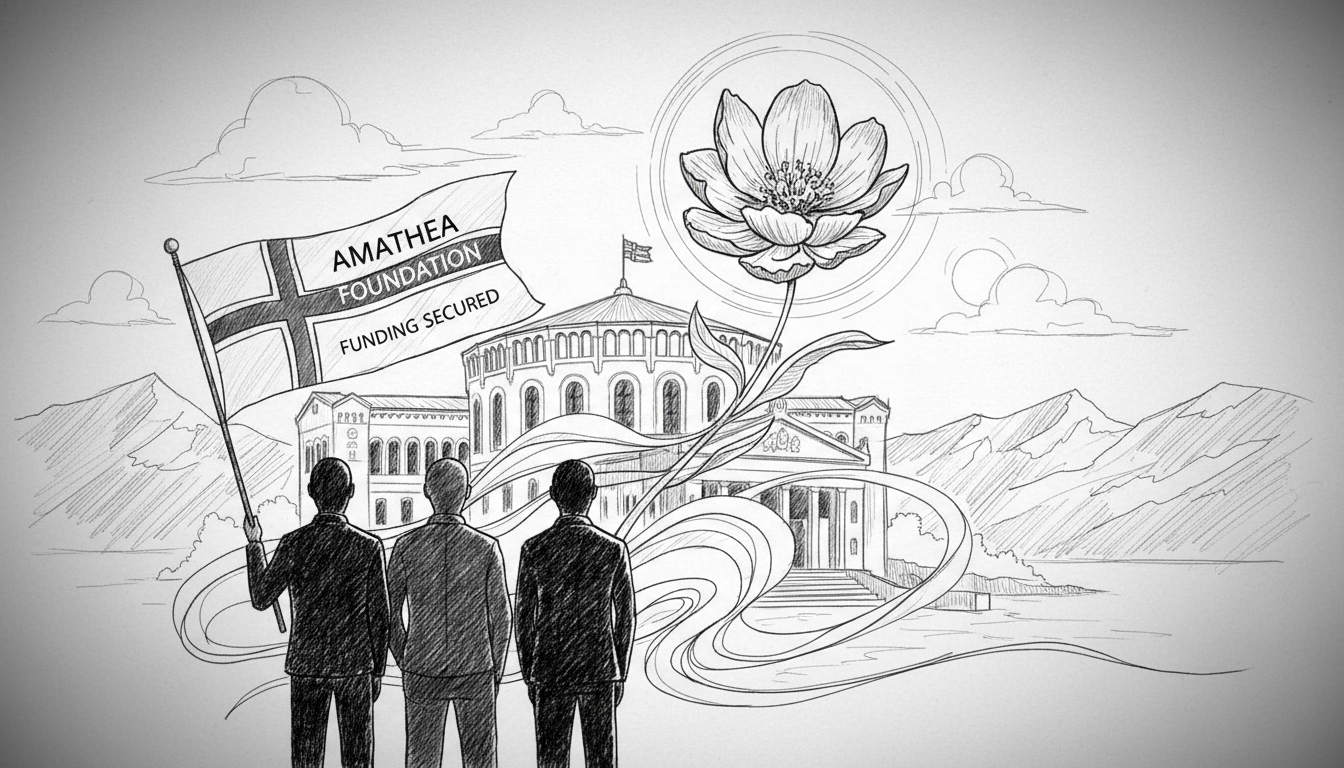
The Norwegian government has secured continued state funding for the Amathea Foundation in the final state budget agreement. This decision preserves Norway's only nationwide free support service for women who have undergone an abortion. The funding was initially marked for elimination in the first budget proposal presented in October. Negotiations concluded overnight have now reversed that cut. The Storting will formally approve the budget in the coming days.
This funding decision carries significant weight for Norway's social safety net. The Amathea Foundation provides crucial post-abortion counseling and support across all nineteen counties. Its services are accessed by hundreds of women annually. The initial proposal to cut its 8 million kroner allocation sparked immediate debate. Several political parties voiced strong opposition during committee hearings at the Storting building in Oslo.
The reversal highlights the complex dynamics of Norway's coalition government. Budget negotiations often involve trade-offs between different policy areas. In this case, support for health and social services prevailed. The decision reflects a broader political consensus on women's healthcare rights in Norway. Abortion has been legal and largely accessible in the country for decades. Yet, support services for the emotional and psychological aftermath receive less public attention.
From a policy perspective, this move underscores a commitment to holistic care. It recognizes that legal access is only one component of reproductive health. The free service is particularly important in remote regions like Finnmark or along the western fjords. In these areas, local healthcare resources can be sparse. A national, telephone-based service fills a clear gap. The funding ensures its operators can continue their work without charging users.
What does this mean for Norway's political landscape? The budget process tested the government's priorities. Protecting this specific line item signals where compromise was possible. It also shows the influence of advocacy groups and public sentiment on final appropriations. The outcome will be noted by organizations across the civic sector. They see that targeted state support for specialized NGOs can survive fiscal scrutiny.
The practical impact is straightforward. Women facing distress after an abortion will continue to have a confidential, free point of contact. The service operates independently from the public health system. This independence is a key part of its value. Users can seek support without the encounter becoming part of their official medical record. In a small society where anonymity can be hard to find, this is a critical feature.
Looking ahead, the funding is secured for the coming fiscal year. The debate, however, raises a longer-term question. Should such essential psychosocial support be subject to annual budget negotiations? Some argue it merits permanent, automatic funding given its role in public health. Others contend all expenditures must be reviewed regularly. This tension between stable service provision and fiscal oversight is a classic feature of Norwegian governance. For now, the supporters of the Amathea Foundation have won this round.