
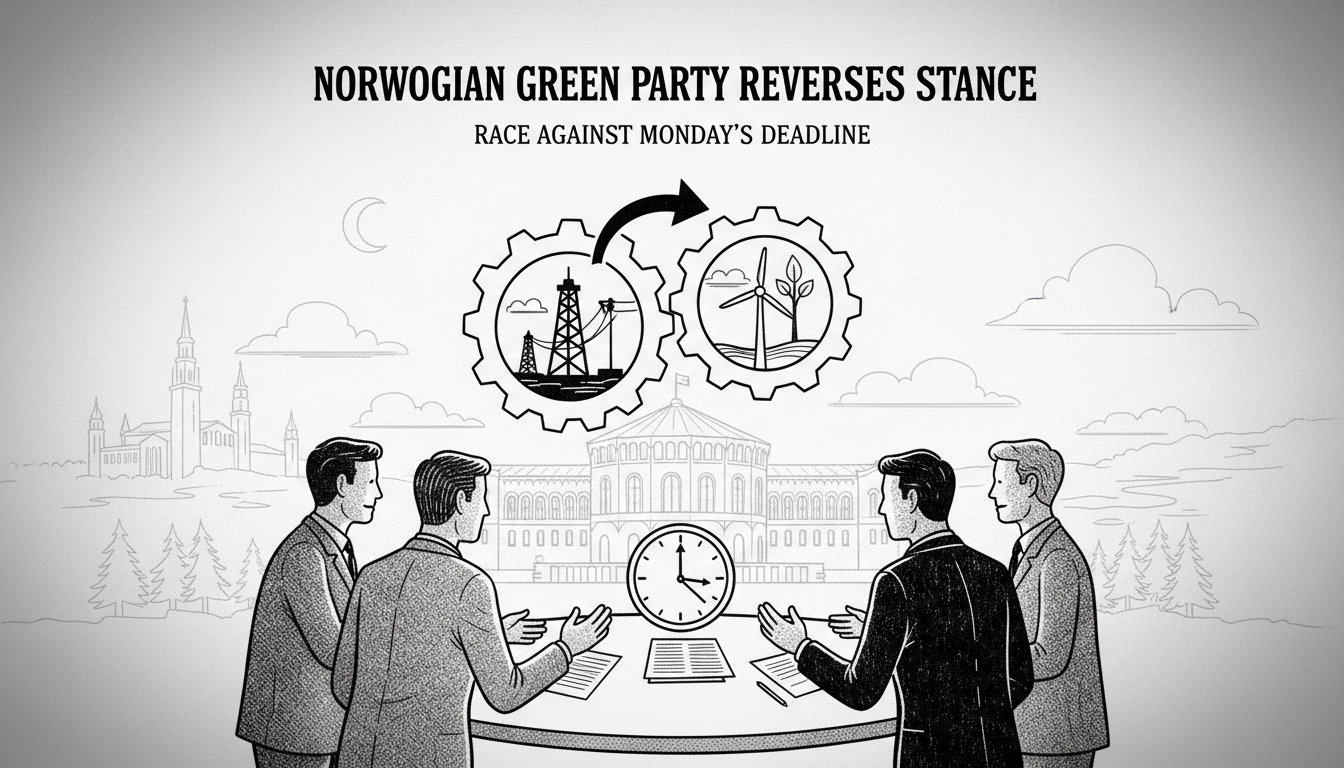
The Norwegian Green Party has dramatically reversed its position on state budget negotiations. Party leader Arild Hermstad arrived at talks this morning despite earlier rejecting participation. This sudden shift comes as parties face a Monday deadline to reach agreement on next year's spending plan.
The Labor Party, Socialist Left, Center Party, and Red Party resumed discussions at 9 AM. The Green Party and Socialist Left had paused negotiations yesterday afternoon. All parties now work against a tight deadline to find common ground on fiscal priorities.
Norwegian budget negotiations typically involve intense bargaining between coalition partners. The process determines spending allocations across government ministries and programs. This year's talks carry extra weight with energy transition policies and Arctic development at stake.
Oil production figures from the Norwegian Continental Shelf often influence budget discussions. Petroleum revenue remains crucial for Norway's sovereign wealth fund. The world's largest sovereign fund impacts global markets and domestic spending capabilities.
Political observers note the Green Party's participation signals potential compromise on environmental measures. Their presence suggests possible concessions on fossil fuel policies or climate initiatives. The party previously pushed for accelerated transition from oil dependence.
Budget negotiations directly affect Norway's Arctic policy implementation. Northern region development and environmental protection balance requires careful funding allocation. The Storting must approve any final agreement before the fiscal year begins.
The government faces pressure to maintain Norway's generous welfare system while financing green transition. This balancing act creates tension between traditional labor parties and environmental factions. Monday's deadline forces difficult choices about national priorities.
International readers should understand Norway's consensus-based political tradition. Multiple parties typically govern together through compromise agreements. This system prevents radical policy shifts but demands negotiation skills.
Norwegian oil industry representatives watch these talks closely. Budget decisions impact exploration licenses and carbon capture investments. The Petroleum and Energy Ministry's funding level signals government commitment to hydrocarbon resources.
What explains the Green Party's sudden change of heart? Internal pressure likely mounted as Monday's deadline approached. Absence from negotiations risked marginalizing their environmental agenda entirely. Participation now gives them leverage in final discussions.
The coming days will test Norway's famous political cooperation model. Successful budget agreements typically involve all coalition partners. Failure could trigger government crisis or temporary spending measures.
This development matters beyond Oslo's government buildings. Budget choices affect Norway's global climate leadership reputation. They also influence energy markets through petroleum investment decisions. The final agreement will reveal much about Norway's future direction.