
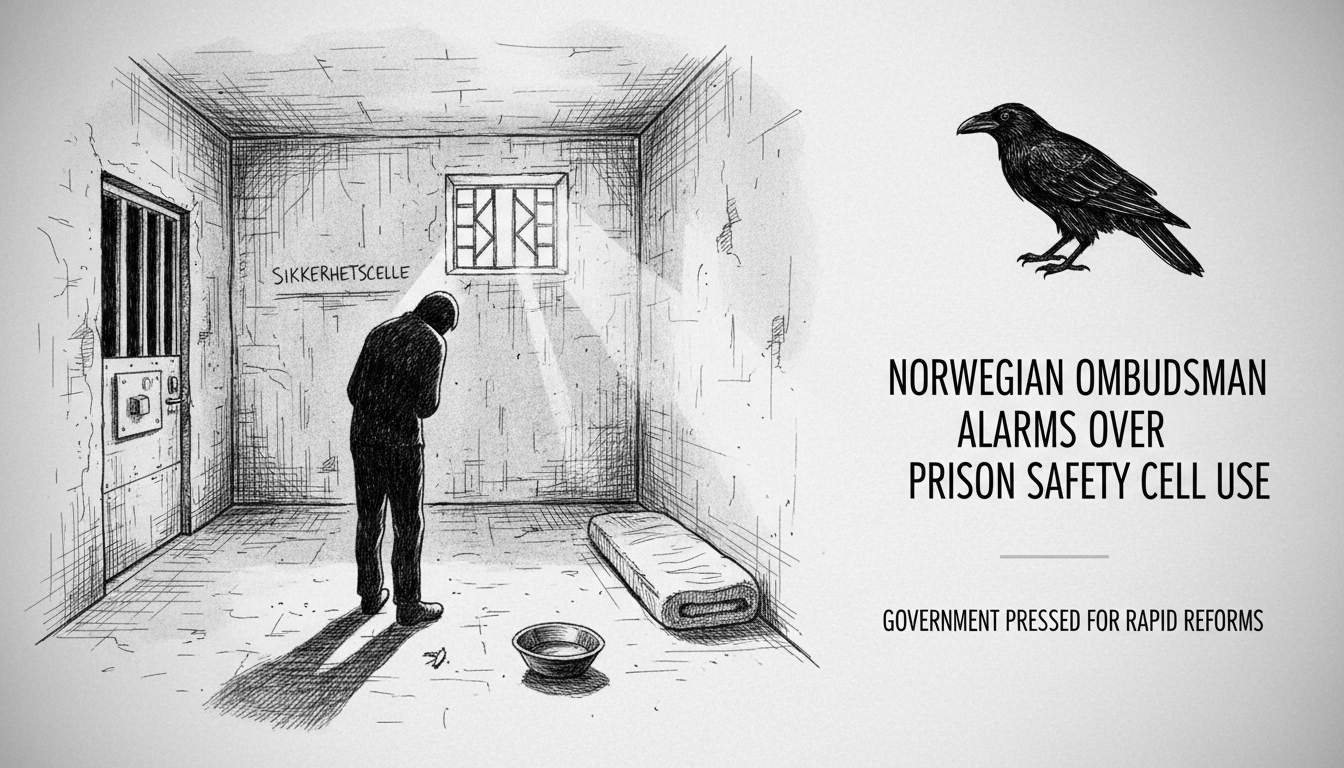
The Parliamentary Ombudsman for Norway has issued a stark warning about the use of safety cells in the nation's prisons. The official report states many inmates are held in these isolation cells longer than the law permits. The Ombudsman calls the practice highly objectionable and demands rapid action. This finding challenges Norway's international reputation for progressive, humane incarceration standards.
Safety cells, known as 'sikkerhetsceller', involve full isolation in a stripped concrete room. The physical design is degrading according to the Ombudsman. Facilities include a hole in the floor for a toilet and no direct access to water. Inmates receive only a plastic mattress to lie on. The smallest cells measure just over five square meters with severely limited outside view. Authorities primarily use these cells to manage self-harm and suicide risk among prisoners.
Ombudsman Hanne Harlem delivered a direct assessment of the conditions. 'The physical design is degrading and involves an intrusive form of isolation with great potential for harm,' Harlem said in the official statement. 'My assessment is that these conditions require rapid measures.' The statement underscores the severity of the issue within the Norwegian correctional system. The report does not specify which prisons or regions show the most frequent violations.
This alarm comes from a cornerstone of Norway's democratic oversight. The Parliamentary Ombudsman investigates complaints against public authorities and ensures administrative fairness. The office holds significant moral authority, though its recommendations are not legally binding. The criticism touches a sensitive nerve in Norwegian society, which prides itself on rehabilitation over pure punishment. Norway's prison model, often highlighted internationally, focuses on normalization and preparing inmates for life after release.
The use of prolonged isolation appears to contradict those foundational principles. Extended solitary confinement is widely recognized by psychologists and human rights groups as causing severe mental distress. It can lead to anxiety, depression, and worsened behavioral outcomes. For a system that closed its last traditional high-security prison, Bastøy, years ago, this report reveals a persistent gap between ideal and practice. The conditions described—a hole-in-the-floor toilet and no water—are particularly jarring for a wealthy nation with extensive social welfare.
The immediate question is how the Norwegian Correctional Service will respond. The agency operates under the Ministry of Justice and Public Security. It must balance inmate safety, staff security, and human rights obligations. The Ombudsman's call for 'rapid measures' will pressure the Storting, Norway's parliament, to examine prison regulations and funding. This scrutiny may extend to budgets for mental health services and alternative de-escalation methods within prisons.
International observers often point to Norway's low recidivism rates as evidence of its system's success. This report suggests that success may rely on the general regime, not on the treatment of those in crisis. The findings could influence ongoing debates about prison capacity and staffing levels across facilities from Oslo to Tromsø. For a country deeply engaged in global human rights advocacy, addressing this domestic issue becomes a matter of credibility. The government now faces a clear test of its commitment to humane treatment for all, including those it has incarcerated.