
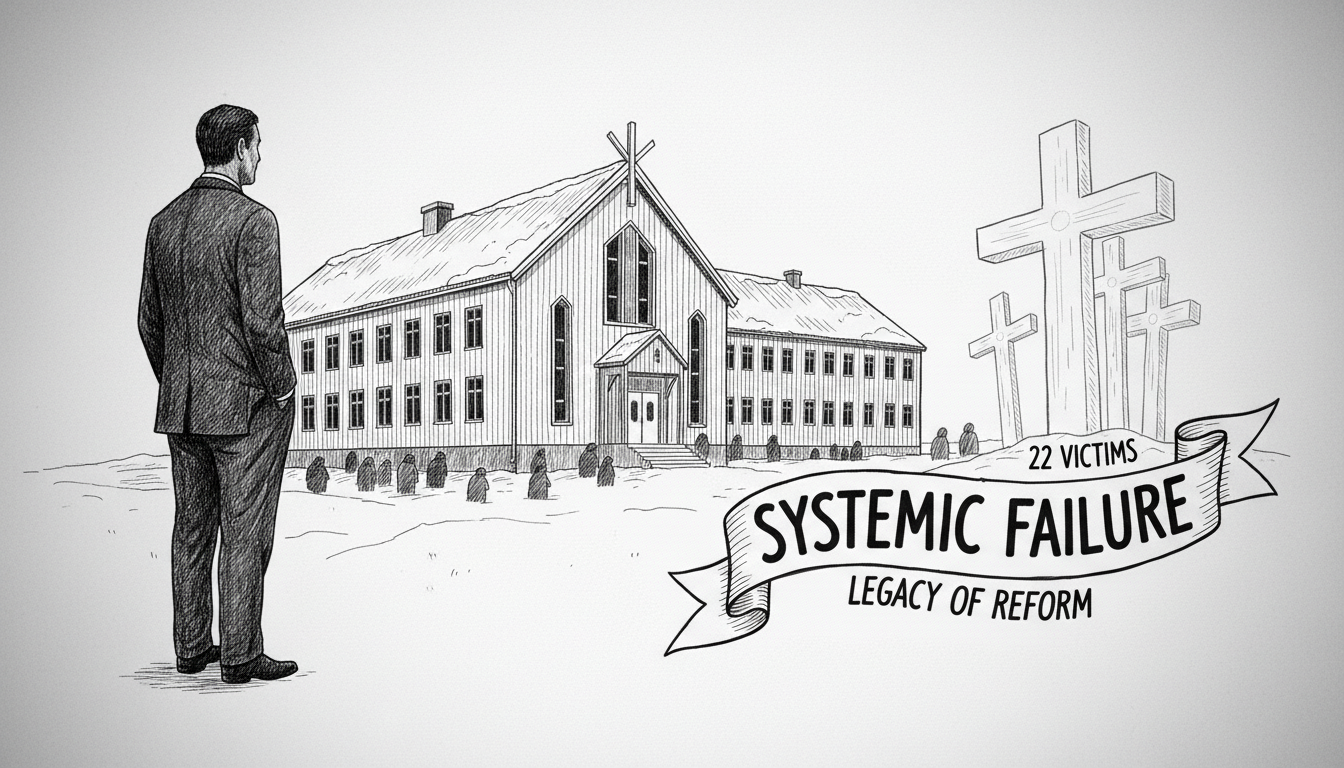
Arnfinn Nesset, a former nursing home director convicted of murdering 22 residents, has died at age 89. His lawyer confirmed the death. Nesset was the director of a care facility in Orkdal, Trøndelag. A court found he used a muscle relaxant to kill patients. He was released from prison in 2004 and lived under a new name. He always denied the killings.
This case remains one of Norway's most disturbing criminal episodes. It exposed critical vulnerabilities in elderly care systems during that era. The murders occurred over several years before detection. They prompted nationwide reforms in nursing home oversight and medication controls. Norway's legal system faced intense scrutiny for its handling of the investigation and trial.
Norwegian society grapples with the legacy of such crimes differently than many countries. The justice system emphasizes rehabilitation over pure punishment. Nesset's release after serving less than two decades reflects this principle. It often generates debate about justice for victims' families. The case also highlights the deep trust historically placed in caregivers, which was profoundly violated.
For international readers, this story underscores a key aspect of Nordic social systems. High trust and communal welfare models can sometimes create blind spots. The crimes exploited the very openness and decentralization meant to protect citizens. Similar cases, though rare, have led to stricter national protocols for healthcare institutions. Norway has since implemented centralized patient records and stricter drug logistics.
The practical implications are still felt today. Elderly care in Norway now operates under multiple layers of auditing. Relatives have more formal rights to access care information. The tragedy forced a difficult but necessary evolution in regulatory frameworks. It serves as a somber reminder that no system is entirely immune to predation. The balance between trust and verification remains a constant challenge for welfare states.
What happens next involves historical reflection rather than legal action. With Nesset's death, the final chapter of a dark period closes. Scholars and documentarians will likely re-examine the case details. The families of the 22 victims continue to live with the aftermath. Their experience shaped Norway's approach to institutional care and criminal justice in profound ways. The system today is arguably more robust, but the human cost was devastating.