
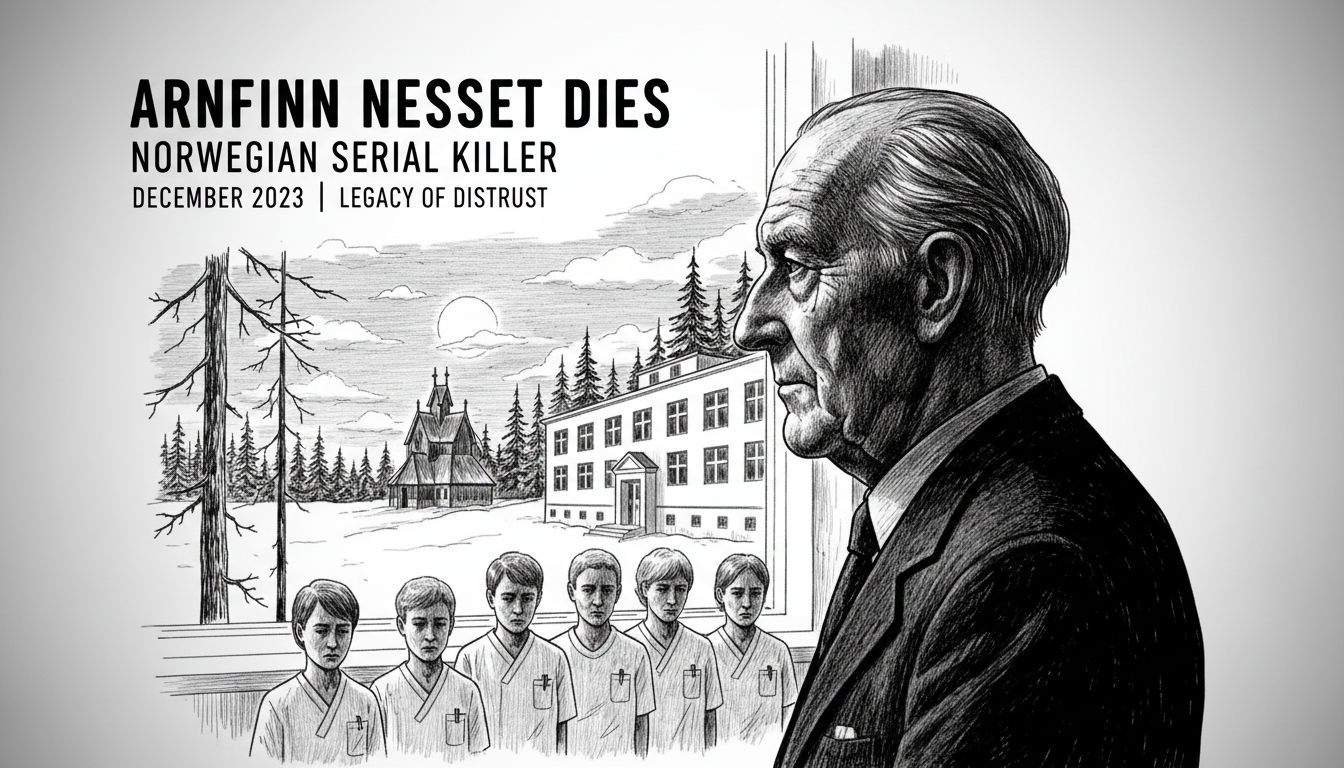
Arnfinn Nesset, the former nursing home employee convicted of one of Norway's most notorious serial murder cases, has died. He passed away quietly at a care facility earlier this week, according to his legal representative. This news closes a grim chapter in Nordic criminal history that shook public trust in care institutions decades ago.
Nesset worked as a nurse and manager at a care home in Orkdal, Norway. Authorities convicted him in the early 1980s for the murders of 22 patients. The court found he used a muscle relaxant called curacit as his weapon. These killings occurred over a four-year period, though Nesset maintained his innocence until the end. The court sentenced him to 21 years in prison followed by ten years of preventive detention. He gained release in 2004.
This case had profound implications for Nordic healthcare oversight. It forced a painful examination of patient safety and staff vetting procedures across Denmark, Norway, and Sweden. The murders exposed critical vulnerabilities in systems designed to protect society's most vulnerable. Nordic countries subsequently tightened regulations for care homes and medication management. They also implemented stricter background checks for healthcare workers. These reforms aimed to restore public confidence in the welfare state's core institutions.
The story resonates deeply within Danish society news and discussions about institutional trust. While the crimes occurred in Norway, they sparked parallel debates in Copenhagen and across Denmark about integration of oversight systems and social policy safeguards. The Danish welfare system prides itself on safety and care, making such breaches of trust particularly alarming for policymakers and citizens alike. It highlighted that no system, however well-designed, is immune to catastrophic human failure.
Community leaders in social centers often reference such historical cases when discussing modern safeguards. They argue that continuous vigilance is the price of maintaining safe, integrated communities. The case remains a somber reference point in training for healthcare professionals and social workers throughout the region. It serves as a stark reminder of the ethical burden carried by those in positions of care.
Nesset's death brings finality to a legal saga. It does not erase the tragedy for the victims' families or the collective memory of a society betrayed. The case continues to inform Denmark social policy and professional ethics training, ensuring lessons from a dark past contribute to a safer future. His story is a permanent part of the Nordic narrative about the boundaries of care, crime, and justice.