
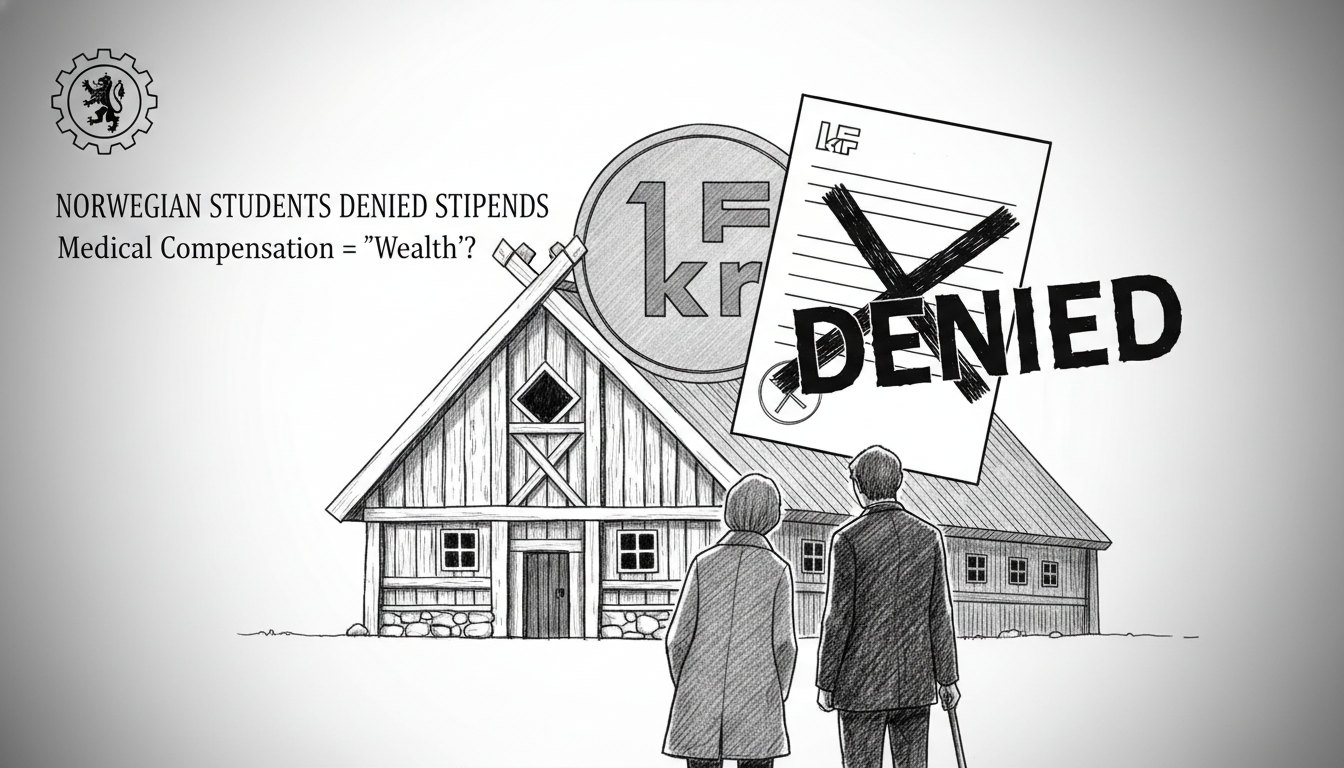
Two visually impaired Norwegian students face a bureaucratic paradox. They received substantial compensation for medical errors but now find themselves ineligible for standard student stipends. Sidsel Størmer and Henrik Borthen lost their sight as children due to failures in the healthcare system. The state-run Norwegian System of Patient Injury Compensation (NPE) awarded them a lump sum. This compensation was intended to cover their lifelong care needs through an assumed annual five percent return. The Norwegian State Educational Loan Fund now classifies them as too wealthy for basic student support. This creates a significant policy contradiction with real human consequences.
Størmer expressed initial disbelief about the decision. 'I thought this must just be a processing error,' she said in a statement. 'But it was not.' The case highlights a critical flaw in how different state agencies assess individual need. One arm of the government provides compensation for a profound, permanent disability. Another then penalizes recipients for holding those very funds. The students are not seeking extra support. They are asking for the standard stipend available to most Norwegians in higher education.
This situation stems from Norway's unique welfare and compensation structures. The NPE operates under the Ministry of Health and Care Services. It provides free processing for claims related to treatment injuries. Awards are calculated to cover future costs, not to generate surplus wealth. The Loan Fund, however, uses a strict asset test. It counts the compensation principal against students, ignoring its designated, restricted purpose. This rigid interpretation fails to recognize the non-discretionary nature of injury compensation.
The implications extend beyond these two individuals. They touch on Norway's broader social contract and its treatment of citizens harmed by the state. The welfare model is designed for security and fairness. Cases like this reveal gaps where systems work at cross-purposes. It raises a fundamental question about the definition of 'wealth.' Is capital earmarked for essential lifelong care truly disposable income? The answer from the Loan Fund currently appears to be yes. This creates a perverse incentive. It could discourage others from seeking rightful compensation for fear of losing educational opportunities.
Looking forward, the case may prompt a political review. Members of the Storting have previously questioned the coordination between welfare agencies. The Labour Party and the Conservative Party have both emphasized the need for a coherent safety net. This incident provides a clear test of that principle. The students' plight underscores a need for more nuanced asset assessments. A simple legislative fix could exempt legally restricted compensation from student aid calculations. Without change, Norway risks undermining the very compensation system it created to provide justice.
The story is ultimately about more than stipends. It is about how a wealthy nation balances its ledgers against human dignity. Norway's oil-funded sovereign wealth fund exceeds 17 trillion kroner. Its budget surpluses are the envy of many nations. Yet, within this prosperity, two blind students are told their compensation for state error makes them too rich for help. The contradiction is stark and demands a policy correction. The integrity of Norway's patient injury system and its educational support framework both depend on a swift resolution.