
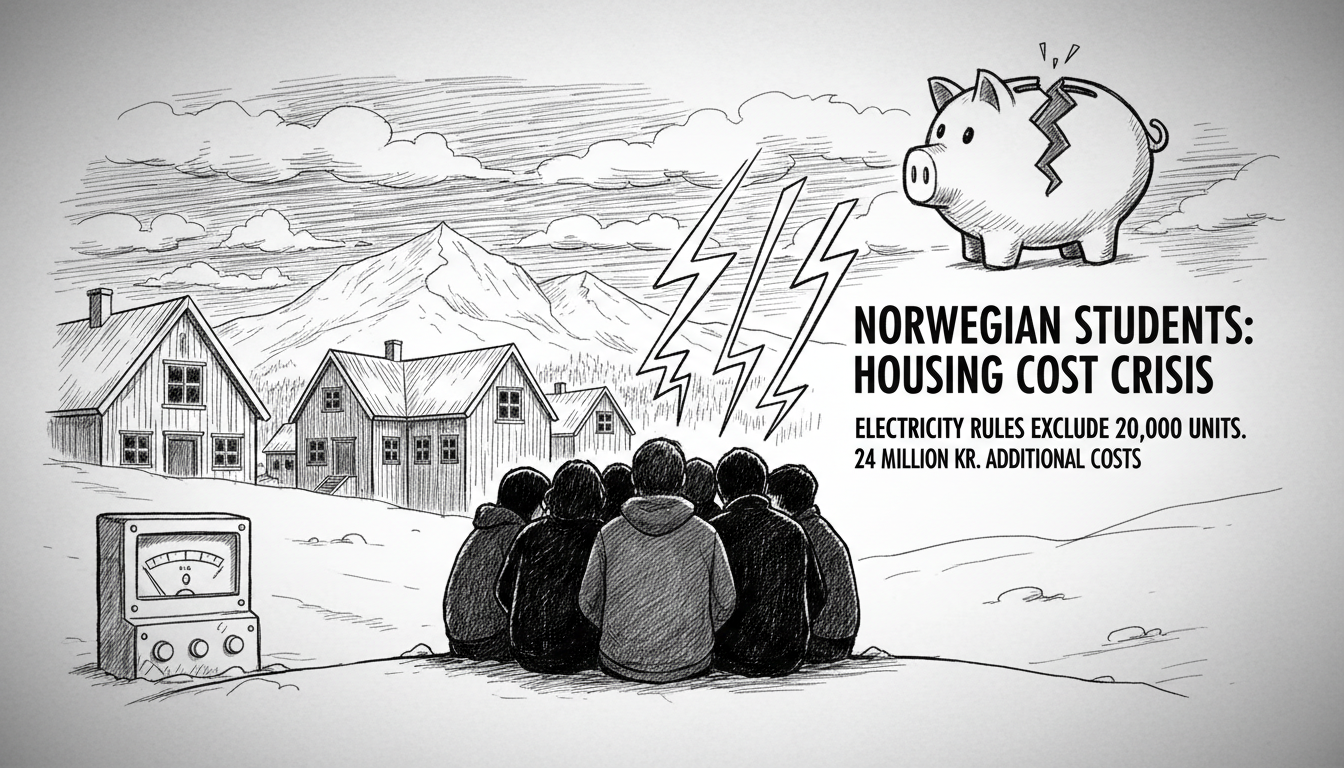
Over 20,000 student housing units across Norway face rent increases due to complicated electricity regulations. Students living in dedicated campus accommodations cannot access the government's electricity price compensation scheme. Private renters and vacation home owners receive the support while students bear full market prices.
Student leader Ada Margrethe Seim expressed deep concern about the situation. She said students feel unfairly treated by the current system. Student welfare organizations estimate the missing support will cost students 23-24 million kroner next year.
This policy gap exposes structural issues in Norway's energy transition. The country maintains its position as Europe's second-largest gas exporter and sixth-largest oil producer. Yet domestic consumers face complex electricity market rules. Students become unintended casualties of this system.
Norwegian student housing operates through independent student welfare organizations. These entities provide subsidized housing to over 120,000 students nationwide. The current electricity crisis hits these organizations particularly hard. They must either absorb rising costs or transfer them to already financially strained students.
The Storting recently debated energy support mechanisms during third quarter budget discussions. Several opposition members questioned the exclusion criteria. The government maintains its compensation framework targets household consumers directly. This technical distinction leaves student housing providers in regulatory limbo.
Norway's electricity market functions differently than most European systems. Hydropower generates nearly all domestic electricity. Regional price zones create dramatic cost variations. Students in southern Norway face particularly severe challenges this winter.
The situation highlights broader tensions in Norwegian energy policy. Can the country maintain its generous welfare model while managing volatile electricity markets? Student organizations warn about rising living costs affecting educational access. They urge policymakers to reconsider the compensation framework before winter peaks.
What practical solutions exist for affected students? Some student welfare organizations consider emergency support funds. Others negotiate fixed-price electricity contracts with suppliers. The fundamental policy question remains unresolved in Oslo government circles.
This electricity cost crisis affects international students equally. Norway hosts nearly 20,000 international degree seekers annually. They face the same housing cost pressures without family support networks. The situation could impact Norway's attractiveness as a study destination.
Energy analysts note similar challenges emerged during previous price spikes. The current crisis appears more structural than temporary. Student representatives plan intensified lobbying efforts when Parliament reconvenes. They seek modified regulations that recognize student housing's unique status.