
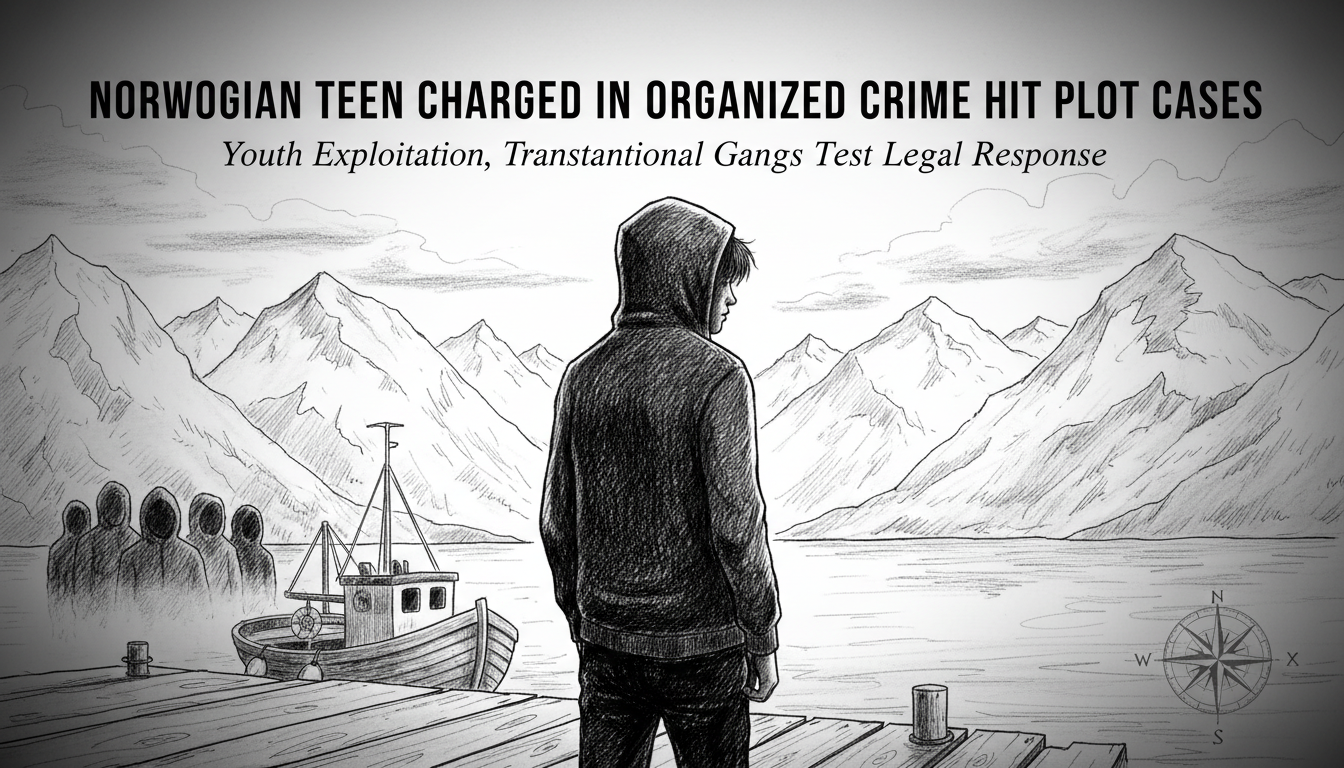
A 19-year-old Norwegian man faces serious charges for his alleged central role in a series of violent plots linked to organized crime. Authorities have charged him with complicity in two cases of serious illegal possession of firearms as part of a criminal group's activities. Police assert he issued the assignments and recruited minors to carry out the acts. The case highlights a troubling trend of youth involvement in serious organized crime on Norway's populous Østlandet region.
The first incident involves a shooting outside a private address in Sarpsborg in late September. Three underage boys were apprehended at the scene. The second case concerns a planned shooting at an address in early October that police managed to prevent. A third incident in early November in the Høybråten district of Oslo involved shots fired at a private home, leading to the arrest of two minors nearby. Police believe the 19-year-old suspect was instrumental in all three events.
Norwegian law enforcement officials state the suspect spent time in Mexico before his arrest in the Netherlands in mid-November. He was detained on an international warrant. His defense lawyer confirmed the young man has consented to custody with restrictions on visitation and correspondence. This legal step indicates the severity of the charges and the flight risk perceived by the court.
This case is not isolated. Police report several incidents this autumn in Eastern Norway executed by youths tied to organized crime networks. The pattern shows a deliberate strategy by criminal groups to exploit younger individuals, who may face lesser legal consequences. This poses a significant challenge for the justice system and social services. The recruitment of minors into violent acts represents a dangerous escalation in gang tactics.
The Norwegian legal framework treats firearm offenses and organized crime with utmost seriousness. Convictions for complicity in such activities carry substantial prison sentences. The involvement of a suspect who traveled internationally suggests connections beyond Norway's borders. This points to the transnational nature of modern criminal networks operating in Scandinavia. The case will likely test cooperation between Norwegian police and international agencies.
For international observers, this news sheds light on a less-discussed aspect of Norwegian society. While the country enjoys low crime rates overall, organized criminal groups are active and evolving. Their turn toward recruiting teenagers is a concerning development. It reflects broader European trends where gangs use younger members for high-risk operations. The response from Norwegian authorities will be closely watched as a benchmark for other Nordic nations facing similar issues.
What happens next? The suspect remains in custody as the investigation continues. Police are likely examining his contacts and financial transactions. The case may lead to further arrests and expose more of the network's structure. For Norway, it reinforces the need for robust youth intervention programs and cross-border police collaboration. The outcome will signal how effectively the system can disrupt criminal recruitment of minors.