
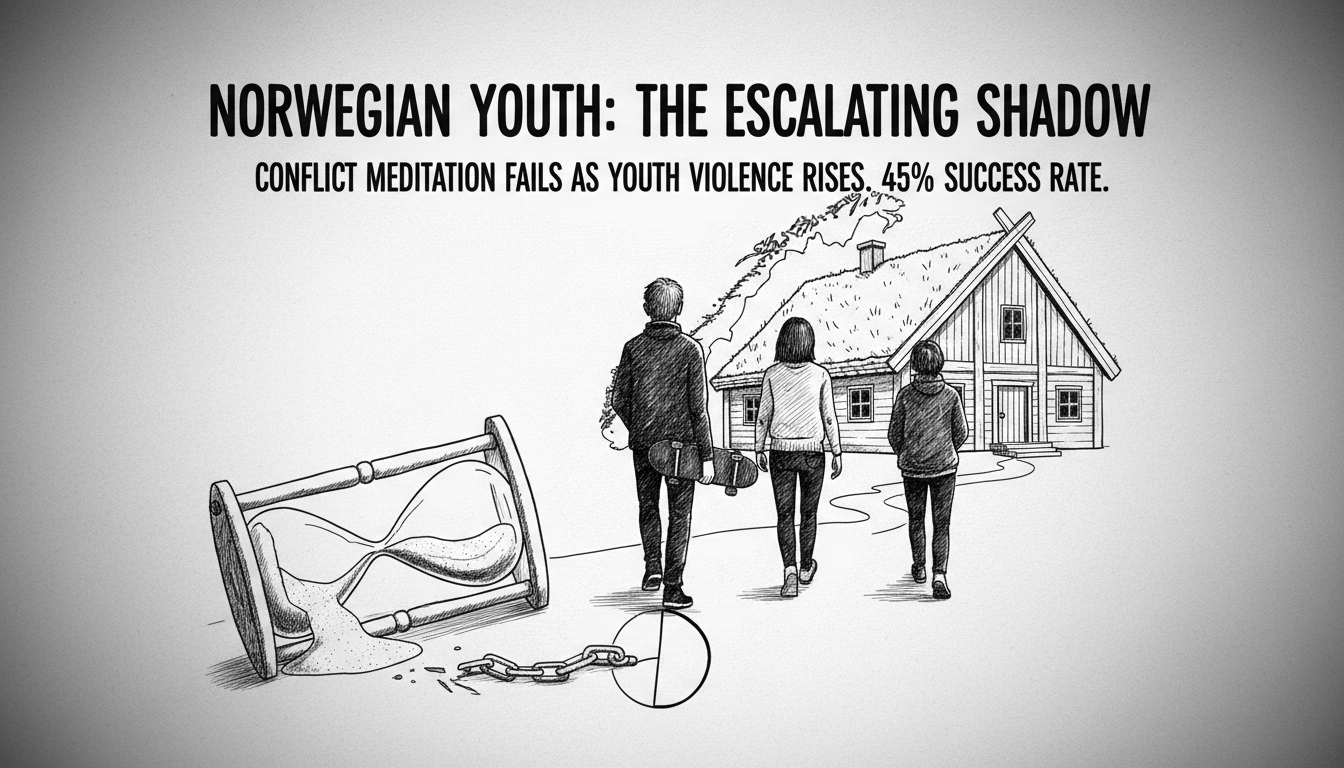
Norwegian authorities face a troubling trend as young people increasingly skip mandatory mediation meetings. The National Conflict Resolution Council reports only 265 successful mediations occurred last year out of 585 total cases. Most failures happen when victims withdraw from the process entirely.
Christine Wilberg, the council's director, confirms rising violence cases among Norwegian youth in recent periods. She believes structured mediation could effectively counter this negative development. The pattern suggests deeper social challenges within Norway's youth support systems.
Norway's conflict resolution councils represent a cornerstone of the Scandinavian justice approach. These community-based forums handle disputes outside traditional court systems. They aim to restore relationships through dialogue rather than punishment.
The current participation crisis threatens this restorative justice model. When young offenders avoid mediation, cases typically transfer to formal legal proceedings. This increases strain on Norway's court system and reduces opportunities for rehabilitation.
International observers note Norway's mediation systems traditionally achieved high success rates. The current decline coincides with broader youth mental health concerns across Nordic countries. Education officials report increased behavioral issues in Oslo schools particularly.
Mediation sessions typically occur in municipal buildings throughout Norway. The process brings together affected parties with trained neutral facilitators. Successful agreements can prevent permanent criminal records for young participants.
Why does this matter for Norway's social fabric? The mediation system represents a key alternative to punitive approaches. Its effectiveness relies entirely on voluntary participation from all involved parties. Current trends suggest declining confidence in community-based conflict resolution.
What happens next? Local governments may need additional resources to engage reluctant youth. Some officials propose earlier intervention through school programs. Others suggest revising notification procedures to increase meeting attendance.
The situation reflects broader challenges in Nordic social systems. Norway maintains high trust in public institutions generally. This makes the mediation avoidance particularly noteworthy for policy analysts. The trend could indicate changing attitudes toward conflict resolution among younger generations.
Norwegian justice officials continue monitoring these participation rates closely. They recognize the system's long-term viability depends on maintaining engagement. Further deterioration could necessitate fundamental reforms to Norway's restorative justice approach.