
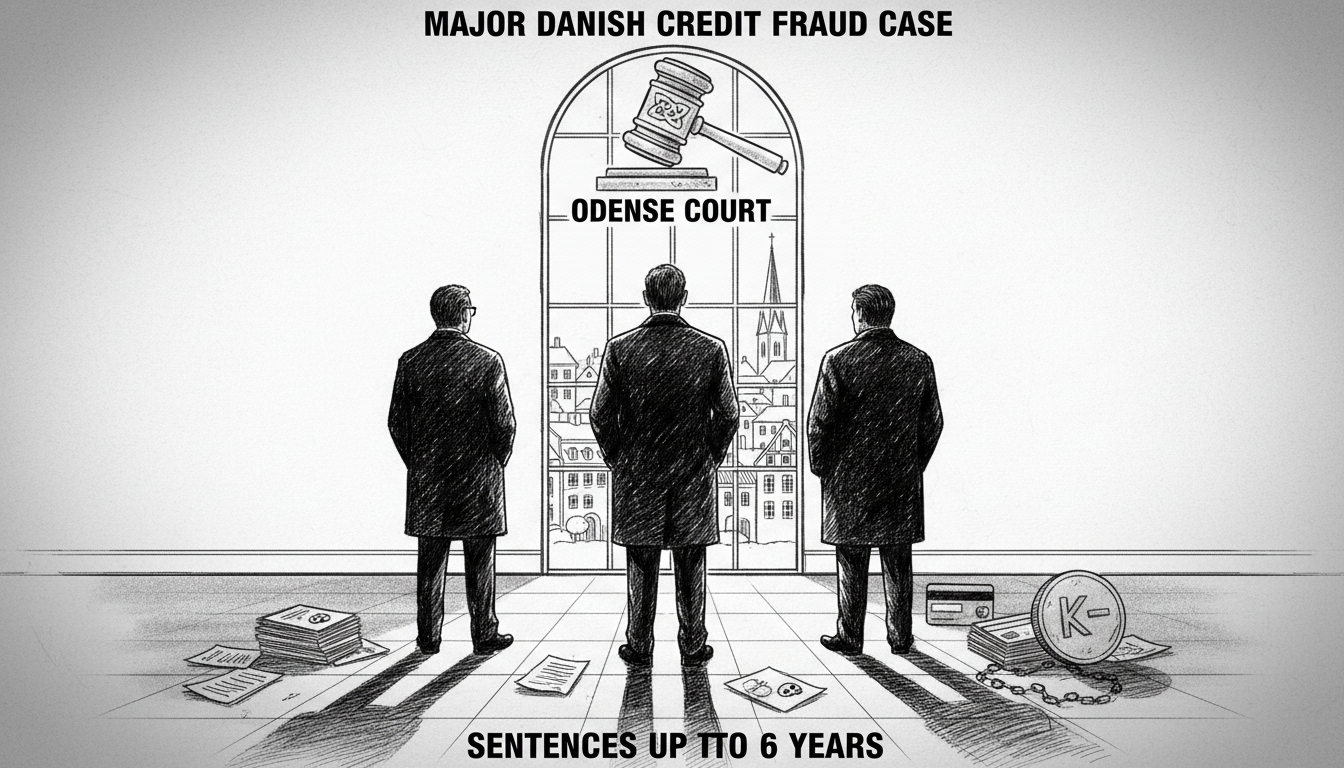
Three men received substantial prison sentences for orchestrating a sophisticated credit fraud scheme across Denmark. The Odense Court convicted the individuals for more than 300 counts of fraud involving over 20 million kroner in fraudulent purchases.
The defendants, aged 22, 26, and 29, operated their criminal enterprise for several years. They systematically ordered goods on credit using various company identities without ever intending to pay. The merchandise was then diverted to locations where they could collect it anonymously.
Court documents reveal the group successfully obtained approximately half of all goods they ordered. The 49-page indictment detailed their sophisticated operation that targeted numerous Danish businesses. Most stolen items were subsequently sold through Facebook marketplace or within their criminal network.
Law enforcement officials confirmed difficulties in recovering the stolen merchandise. Special prosecutor Daniel Dokkedahl stated that police managed to seize only a small portion of the goods. The majority had already been resold through various channels before investigators could intervene.
The scheme's international connections became apparent during the investigation. Authorities believe the primary defendants kept only a fraction of the profits. Most proceeds were transferred to overseas organizers who masterminded the operation from abroad.
Sentencing reflected the severity of the crimes. The 26-year-old and 22-year-old defendants each received six-year prison terms. The court also imposed a 12-year entry ban and deportation order against the 22-year-old defendant. The 29-year-old co-conspirator received a five-and-a-half-year sentence.
Legal proceedings continue as defendants consider appeals. Two convicted men requested deliberation time to decide on challenging their verdicts. They have fourteen days to file formal appeals. The third defendant immediately appealed his conviction according to court officials.
This case highlights growing concerns about organized retail crime in Denmark. Businesses face increasing challenges with fraudulent credit applications and identity theft. The sophisticated nature of this operation suggests professional criminal networks are targeting Danish companies systematically.
Danish authorities have intensified efforts against financial crimes in recent years. This conviction represents a significant victory for economic crime units. It also demonstrates the effectiveness of cross-jurisdictional cooperation in tackling complex fraud schemes.
The case has implications for credit security protocols across Scandinavian businesses. Companies may need to strengthen verification processes for commercial credit applications. The success of this fraud operation indicates vulnerabilities in current business-to-business transaction systems.