
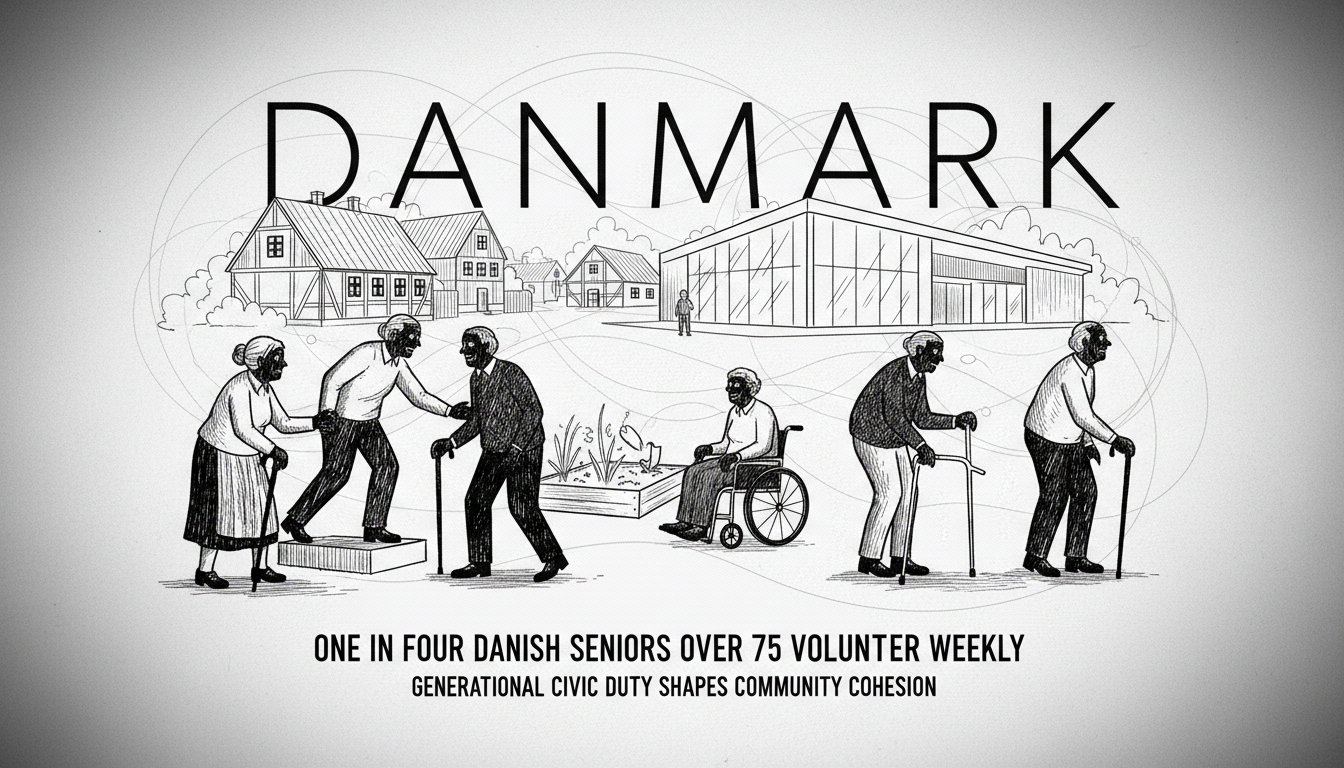
A new study reveals a striking generational divide in civic participation across Denmark. While just under ten percent of younger adults aged 25 to 34 volunteer weekly, a full 26 percent of those over 75 do so. This pattern highlights a profound shift in how different generations engage with their communities, with profound implications for the nation's social fabric and welfare model.
The data, released this week, shows 14 percent of the working-age population volunteers weekly. The commitment is strongest among the oldest citizens. For seniors, the preferred arena is social work and local community projects. Younger volunteers, in contrast, gravitate toward sports, hobbies, and leisure activities. This suggests seniors often see volunteering as an extension of social care, while younger adults view it as part of their personal recreation.
Geographic differences are also significant. In rural municipalities, 53 percent of working-age people volunteered at least once in the past year. In capital region municipalities, that figure was 43 percent. This rural-urban gap points to differing community structures and perhaps pressures. In tighter-knit rural areas, voluntary work may be more visible and expected as a social duty.
Association membership further illustrates this civic engagement. Nearly half of 16 to 24-year-olds are members of an association, with sports clubs being most popular. The rate soars for older groups, reaching 69 percent for those over 75. This culture of membership is a cornerstone of Danish society, often called 'foreningsliv,' and is deeply linked to both social integration and personal identity.
From my perspective covering integration, these numbers are not just statistics. They represent a critical, often overlooked, resource in Denmark's social ecosystem. The high level of senior volunteering acts as a soft buffer for the welfare state. These individuals provide companionship, run community centers, and support local events. Their work fills gaps that municipal services cannot always reach, especially in fostering social cohesion for newcomers and vulnerable groups. A community leader in Copenhagen's Norrebro district once told me, 'The volunteers are the glue. They are the first friendly face, the person who explains how things work here.'
Yet, the low participation among prime working-age adults raises questions. Is this due to time pressures, different values, or a lack of connection to traditional community structures? For Denmark's integration efforts, this generational volunteer gap could matter greatly. Successful integration often depends on casual, regular contact with established residents. If that contact relies heavily on a senior population, it may limit the range of social and professional networks available to newcomers.
The Danish welfare system is famously robust, but it is designed to work in partnership with a strong civil society. This data suggests that partnership is aging. Municipalities and social centers may need to think creatively about how to engage younger residents in voluntary roles that fit modern lifestyles. The future resilience of Denmark's celebrated local communities may depend on bridging this generational divide in civic duty.