
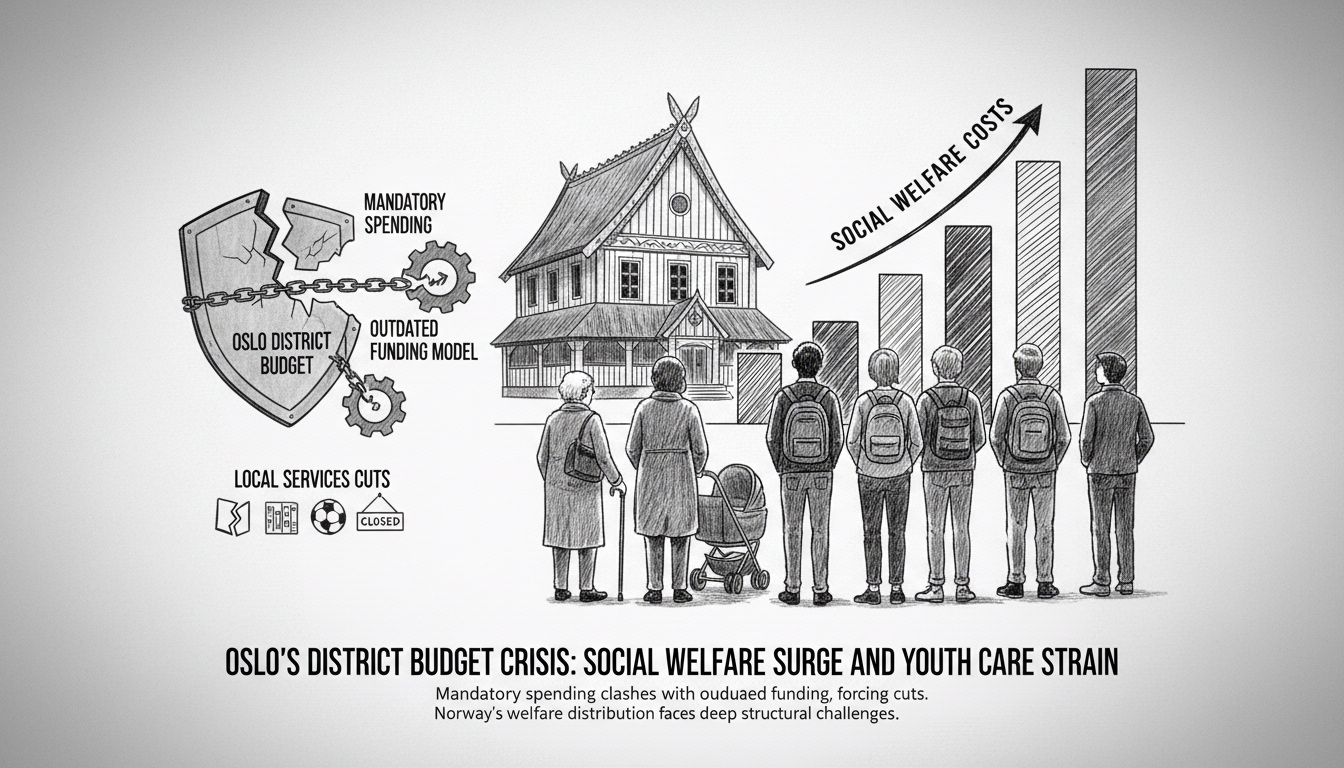
A hidden financial crisis is unfolding across Oslo's 15 administrative districts. These local bodies, responsible for schools, nursing homes, and social services, are collectively bleeding money. Nine districts are projected to run deficits, with some facing shortfalls exceeding 100 million kroner. The situation forces severe cuts to youth programs, elderly care, and kindergartens. The core issue is a perfect storm of mandatory spending spikes and a funding model that struggles to keep pace.
District budgets total over 32 billion kroner, more than the entire operating budget of Norway's second-largest city, Bergen. Yet this substantial sum is proving insufficient. A sharp, unanticipated rise in social welfare claimants is a primary driver. Last year, over 11,300 people in Oslo needed monthly assistance, a 15 percent increase from the prior year. Districts are legally obligated to provide this help, regardless of their budget status.
Simultaneously, a surge in demand for expensive youth health services is crippling district finances. Nationwide, municipalities report a 'youth wave' of complex care needs. In Oslo, younger users often require round-the-clock support, costing far more than standard elderly care. The Søndre Nordstrand district exemplifies the strain. Approximately one in twenty residents receives social welfare, the highest rate in the capital. District committee leader Ola Borge Mannsåker states the overspend is not on frivolities but on legally mandated services like social assistance and child welfare.
Compounding the problem is Oslo's complex funding allocation system. Money is not distributed equally per resident. A criteria-based model gives more funds for older residents and factors in social indicators. This system disadvantages districts like Søndre Nordstrand, which has a younger population with high care needs but receives less weighted funding than areas with more elderly residents. The model assumes higher costs for older citizens, leaving districts with costly young users underfunded.
Persistent deficits have led to significant municipal debt for several districts. Rules allow debt to be carried forward, creating a cycle where districts start each new fiscal year in the red. Saliba Korkunc, a city council representative, warns that forgiving all district debt is not financially viable for Oslo and could lead to reckless spending. He notes that districts with the most debt already benefit from mechanisms that cap repayments and write off old obligations after two years.
The political implications are stark. The opposition has criticized the city government's budget proposal, labeling it a 'razing' of services for children and the elderly. As districts finalize their budgets in December, residents across Oslo will feel the impact through reduced cultural activities, sports funding, and community programs. This crisis highlights the tension between centralized fiscal control and local service delivery, a challenge facing many Nordic welfare states. The situation in Oslo's districts serves as a critical test of the Norwegian model's ability to adapt to new social and demographic pressures while maintaining its core services.