
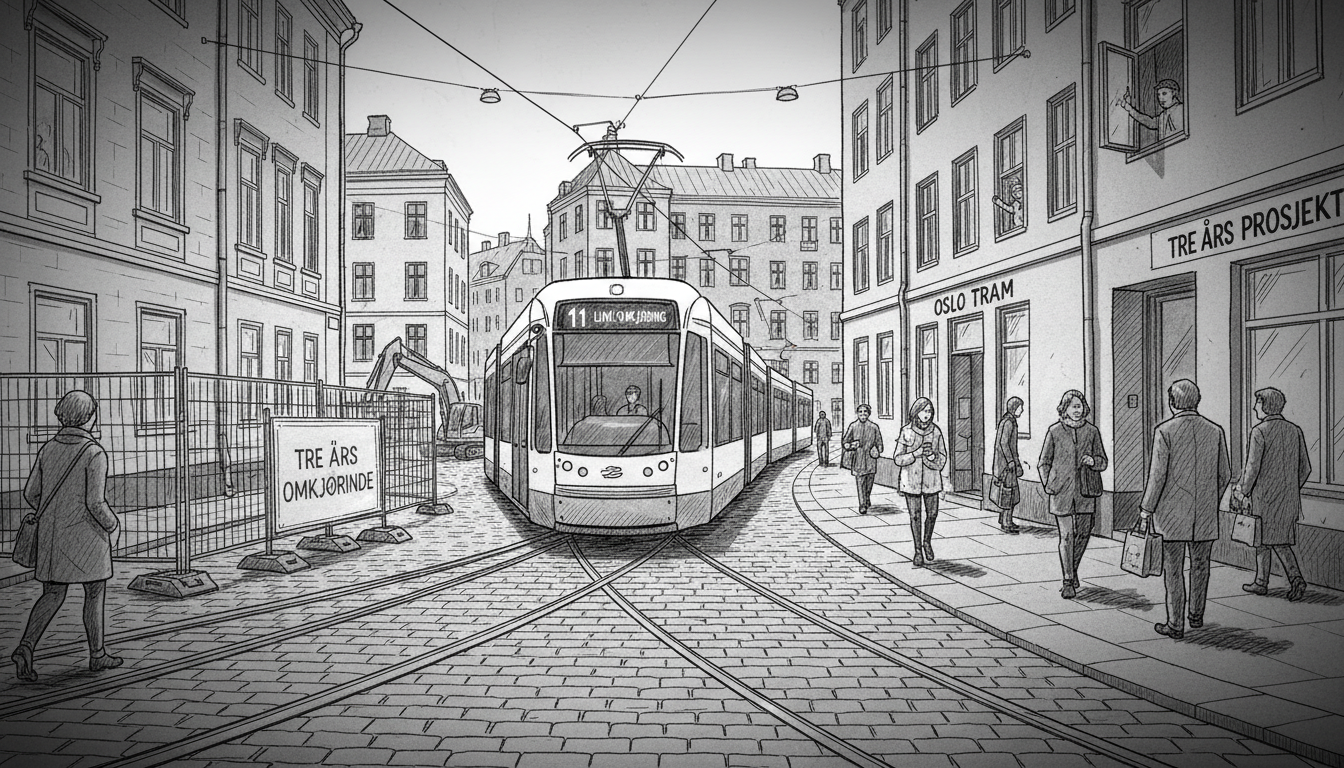
A temporary tram line through one of Oslo's most elegant streets will open ahead of schedule, marking a significant phase in a major urban renewal project. The diversion through Josefines gate, connecting Bislett and Hegdehaugsveien, is now set to begin on December 15, weeks earlier than the planned January start. This 400-meter reroute is a critical stopgap while the city's transport authority replaces severely degraded tracks in the nearby Pilestredet corridor.
The entire Pilestredet renewal, with a total budget of approximately 480 million kroner, includes new tram foundations, water pipes, and sidewalks. The temporary track in Josefines gate alone costs 100 million kroner. Project officials defended the expense, stating that a continuous tram service is superior to a bus replacement for passenger convenience and accessibility. A bus-for-tram service will continue on another section near the new National Hospital construction site.
Jan Vidar Husby, the project lead, credited proactive problem-solving for the accelerated timeline. He noted that underground challenges are expected in central Oslo projects, and solutions were found continuously. The decision to wait until the summer of 2027 to begin the main Pilestredet work is strategic. With the city's inner ring road, Ring 1, currently closed, authorities are concerned about emergency vehicle access. Work on Pilestredet will commence only after Ring 1 reopens to maintain city-wide mobility.
This project highlights the constant tension in a growing capital between maintaining essential public transport and minimizing disruption. The three-year duration of the temporary line has drawn criticism from some residents and the local Homansbyen neighborhood council, which has filed a formal complaint with the county governor. That complaint remains under review. The situation is a common dilemma for Oslo: aging infrastructure from previous centuries requires costly and intrusive upgrades to serve a modern, expanding population.
The focus on tram infrastructure, despite the high cost, signals a continued commitment to this form of public transit in Oslo's city center. Trams offer high capacity, reliability, and are integral to the city's goal of reducing car dependency and emissions. This project, while disruptive, is a direct investment in the long-term sustainability of Oslo's urban transport network. It also underscores the practical challenges of executing large-scale projects in dense, historic urban areas where every dig can reveal unforeseen complications.
For international observers, this is a snapshot of Nordic urban governance in action: a costly, long-term project justified by future benefits, facing public scrutiny, and requiring careful logistical planning to balance daily life with necessary renewal. The outcome will set a precedent for how Oslo manages similar infrastructure challenges in other central neighborhoods in the coming decades.