
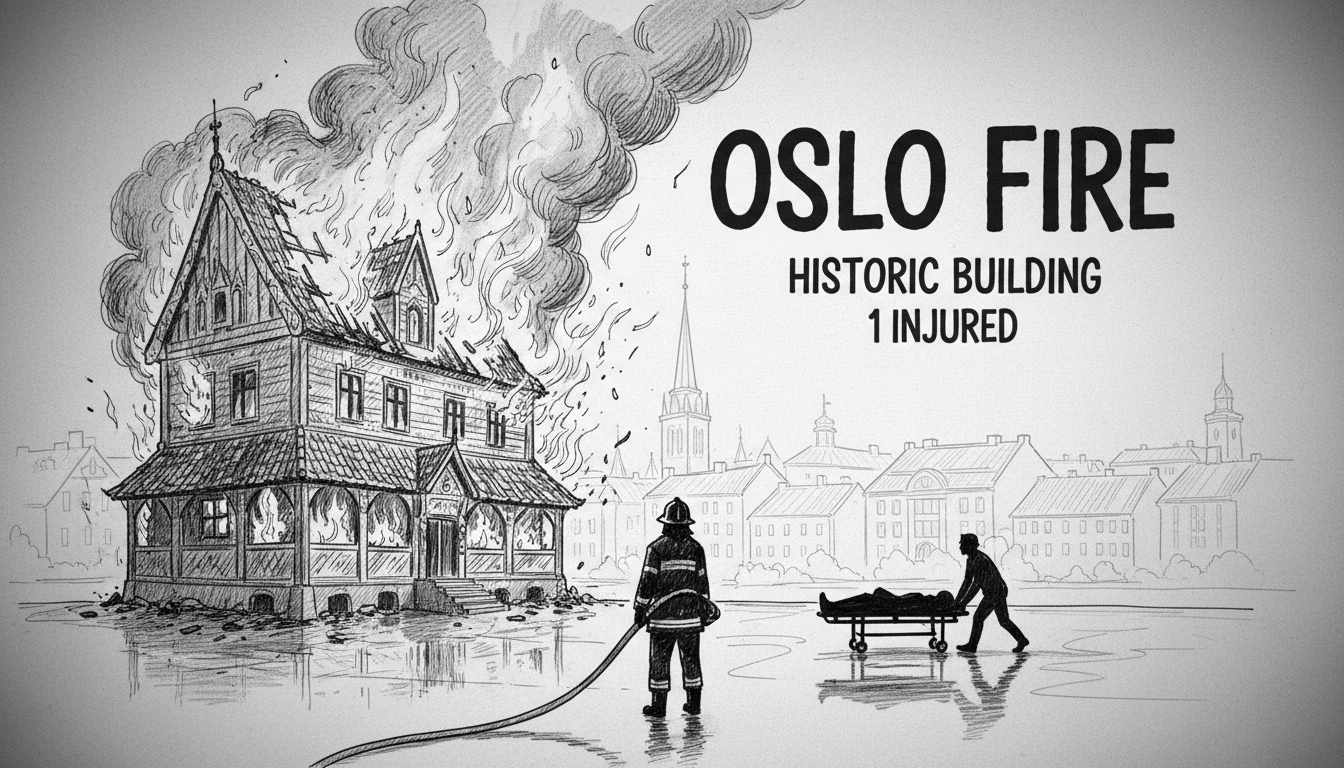
Oslo fire crews responded to a building fire on Grünerløkka Thursday, where one person was trapped in an elevator and suffered smoke inhalation. Emergency services were called to the apartment building after smoke developed in a basement area. Police confirmed the fire was extinguished by noon, and the injured individual was treated by medical personnel at the scene. The incident highlights ongoing fire safety challenges in Oslo's historic and densely populated neighborhoods.
A Narrow Escape in a Popular District
The fire, though quickly contained, caused significant alarm in the central Grünerløkka borough. This area is known for its vibrant mix of 19th-century brick apartment blocks, trendy cafes, and cultural venues. Its high population density means any fire incident has the potential to affect many residents rapidly. The specific cause of the basement fire is under investigation by Oslo Fire and Rescue Service. Initial reports indicate it was a limited outbreak, but the production of smoke posed the greatest danger.
“The primary risk in such confined building fires is smoke inhalation, not the flames themselves,” explained a fire safety consultant familiar with Oslo's building stock. “Smoke contains toxic gases and reduces visibility, making escape difficult. This is especially critical in older buildings with complex layouts.” The individual who became trapped in an elevator experienced this firsthand, requiring assessment by emergency health workers.
The Persistent Challenge of Older Building Safety
This event directs attention to Norway's continuous efforts to update fire safety standards in its existing building stock. Norwegian building codes are rigorous and frequently revised, but applying new standards to historic structures presents a unique set of problems. Retrofitting century-old buildings with modern sprinkler systems, fire-resistant materials, and updated escape routes is often technically challenging and expensive.
Many apartment buildings in areas like Grünerløkka have added elevators later in their lifespan to improve accessibility. While a necessity, this introduces new considerations for fire safety planning. Residents must be aware that elevators are not to be used during a fire, as power failure or malfunction can lead to entrapment, as witnessed in this case. Building owners have a legal responsibility to ensure safe escape routes and functioning safety equipment.
“Regular maintenance of smoke detectors and clear communication of evacuation plans are the bedrock of resident safety in any multi-story building,” the consultant added. “For tenants, knowing your building’s escape plan and never using the elevator during a fire alarm are two critical rules.” Oslo municipality conducts periodic inspections, but ultimate compliance rests with property owners and the awareness of those who live there.
A Broader Look at Urban Fire Preparedness
While this fire ended without major catastrophe, it serves as a operational check for Oslo's emergency services. The coordinated response between police, fire, and medical units appears to have functioned effectively. Such incidents test communication protocols and the ability to access potentially crowded urban sites quickly. Grünerløkka's narrow streets and limited parking can complicate large vehicle access, a factor planners constantly evaluate.
The psychological impact on residents should not be underestimated. Even a small fire can disrupt the sense of security in a home. Building managers and tenant associations often follow up with safety briefings after such events to reassure residents and reinforce preventative measures. Community preparedness, where neighbors are aware of vulnerable individuals, forms another layer of resilience in dense urban living.
Norway has a strong overall fire safety record, attributed to strict regulations and high public awareness. However, the country is not immune to tragedy, as past fires in both new and old buildings have shown. Each incident provides data for analysis, potentially leading to tweaks in national guidelines or localized safety campaigns. The focus often shifts between new construction standards and the more difficult task of upgrading historical gems that define a city's character.
Balancing Heritage with Modern Safety Demands
This is the core dilemma for cities like Oslo. Grünerløkka’s architectural charm is a major part of its appeal and economic vitality. Preserving these brick facades and original features is a cultural priority. Yet, ensuring the lives within them are protected requires modern interventions that can sometimes clash with preservation goals. Finding solutions that satisfy both heritage conservation and contemporary life-safety codes is an ongoing, nuanced process involving architects, fire engineers, and city planners.
Technological advances offer some middle ground. Modern alarm systems can be less intrusive to install. Advanced smoke extraction systems can be designed to fit within existing structures. Fire-retardant treatments for wood and other materials improve constantly. The Norwegian Directorate for Civil Protection (DSB) provides guidelines for fire safety in cultural heritage buildings, acknowledging the need for a balanced approach.
The individual treated for smoke inhalation on Thursday is a stark reminder that fire risk is a present reality, not a historical footnote. Their experience, while hopefully minor, underscores a universal truth: safety is a shared responsibility. It relies on building owners maintaining infrastructure, authorities enforcing codes, and residents making informed decisions during an emergency.
As Oslo continues to grow and its neighborhoods evolve, the integration of safety into the urban fabric remains a dynamic challenge. Will the city's love for its historic districts drive innovation in discreet, effective fire protection? The answer lies in learning from every incident, no matter how small, to protect the community within these iconic walls.