
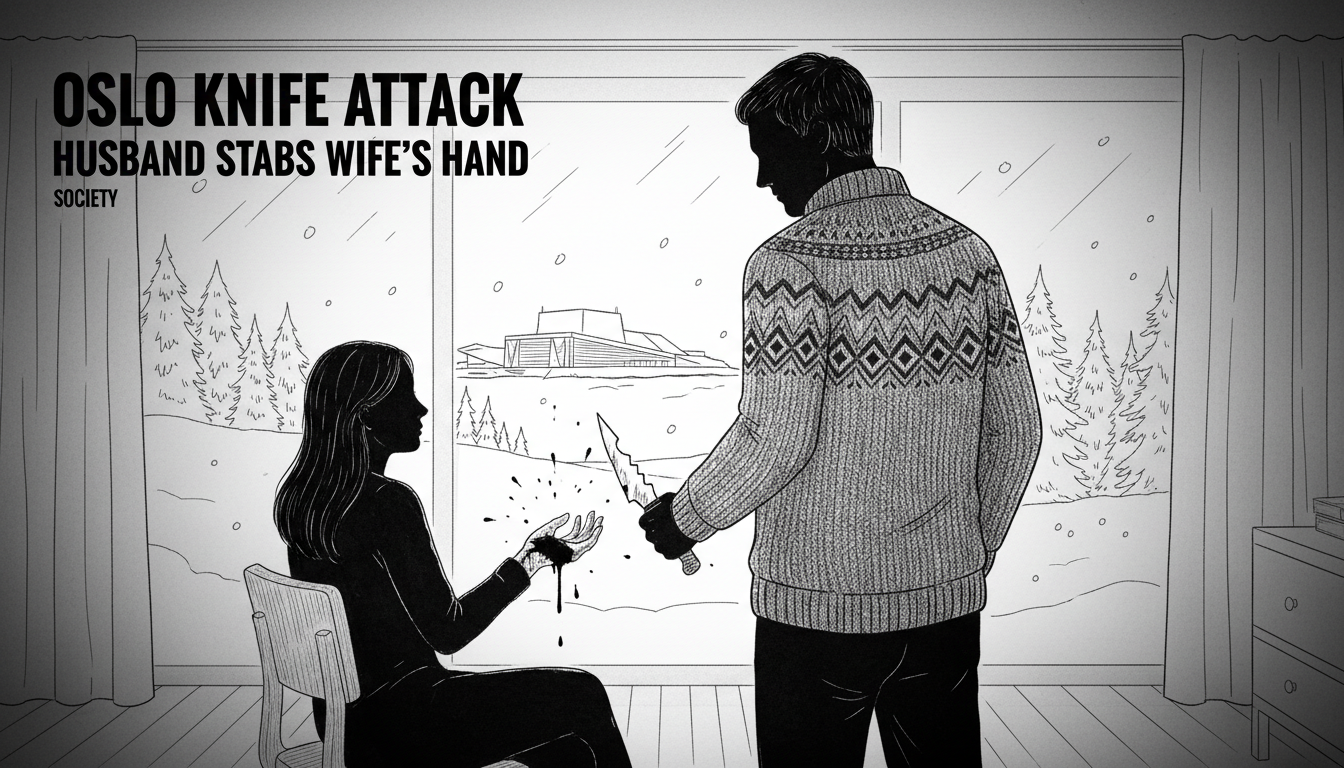
Norway domestic violence rates persist despite legal measures, with police recording 16,500 reports in a single year. A Saturday afternoon in Oslo was shattered by violence when a man allegedly stabbed his wife in the hand at their private residence. Police rushed to the scene after a witness reported the domestic incident, finding a woman with a knife wound. The attack highlights a grim contrast in a nation celebrated for gender equality.
A Call for Help in the Capital
Operations Commander Eirik Sannes confirmed the details in a police statement. Officers discovered a woman with a hand injury consistent with a stabbing. The alleged perpetrator, her husband, was arrested at the scene. The incident occurred in a private home, a setting tragically common for such violence. This swift police response, triggered by a civilian witness, prevented potential escalation.
Witness intervention is often critical in domestic violence cases. Experts note that neighbors and bystanders play a vital role in breaking the isolation that abusers enforce. The Oslo Police District routinely handles such calls, yet each case reveals a personal tragedy. The victim received immediate medical attention for her injured hand.
The Persistent Shadow
This stabbing is not an isolated event. It fits into a disturbing national pattern. According to Statistics Norway, police recorded 16,500 cases of domestic violence in 2022. A 2020 study by the Norwegian Institute of Public Health found approximately 7.5% of women in Norway have experienced physical violence from an intimate partner. These numbers form a stubborn stain on the country's social fabric.
“Each report to the police represents a story of fear, control, and physical harm,” says Kari Jensen, a senior researcher at the Norwegian Centre for Violence and Traumatic Stress Studies. “The incident in Oslo is a acute example of a chronic problem. We have strong laws, but implementation and prevention at the grassroots level need constant work.”
Norwegian law criminalizes domestic violence under the Penal Code § 219. The legal framework is considered comprehensive, offering protections and resources. However, the gap between law and lived experience remains. Victims often face complex barriers to reporting, including economic dependence, fear of reprisal, and emotional manipulation.
Beyond the Statistics
The human cost extends far beyond police blotters. Domestic violence creates long-term trauma for victims and children who witness it. It strains public health services, the justice system, and workplace productivity. The Oslo attack, involving a knife, points to the severe physical danger present in many homes. Such weapons transform arguments into life-threatening situations in an instant.
Support systems do exist. Norway funds a network of crisis centers and shelters, offering safe haven and legal aid. The national helpline, operated by the crisis center secretariat, provides 24/7 support. Yet, demand often outpaces capacity, especially in urban areas like Oslo. Experts argue for more proactive measures, focusing on early identification by health services and schools.
“We must move beyond simply responding to crises,” Jensen argues. “Prevention means addressing underlying issues like gender norms, mental health, and substance abuse. It means teaching young people about healthy relationships. The law is a necessary tool, but it is a last resort.”
A System Under Pressure
The Oslo case will now move through the judicial machinery. The arrested man faces charges of serious bodily harm. The court will consider the circumstances, which police are still investigating. This legal process, while methodical, can be retraumatizing for victims forced to relive events in detail. Specialized courtrooms and victim advocates aim to mitigate this burden.
Police and social services coordinate follow-up for the victim. This includes safety planning, which may involve barring orders against the perpetrator and connecting the woman with support services. The goal is to prevent further violence. However, the effectiveness of these interventions relies on resources and seamless cooperation between agencies, a challenge even in a well-organized society like Norway's.
Norway's paradox is stark. It consistently ranks high on global gender equality indices, with significant female representation in the Storting and corporate boardrooms. Yet, violence within homes persists. This suggests that legislative equality and economic empowerment, while crucial, do not automatically erase deep-seated patterns of abusive behavior.
Looking Ahead
The knife attack in an Oslo apartment is a violent symptom of a societal illness. It forces a uncomfortable question: how can a nation so advanced in public equality still harbor such private violence? The answer lies not in single policies but in a sustained cultural reckoning. It requires challenging the stigma that still surrounds domestic abuse and ensuring that support services are visible, accessible, and effective.
As the victim in this case begins her physical and emotional recovery, the broader conversation continues. Each incident like this one tests the strength of Norway's social safety net and the depth of its commitment to safety for all citizens, especially within their own homes. Will this case become another statistic, or a catalyst for deeper change in communities across the country?