
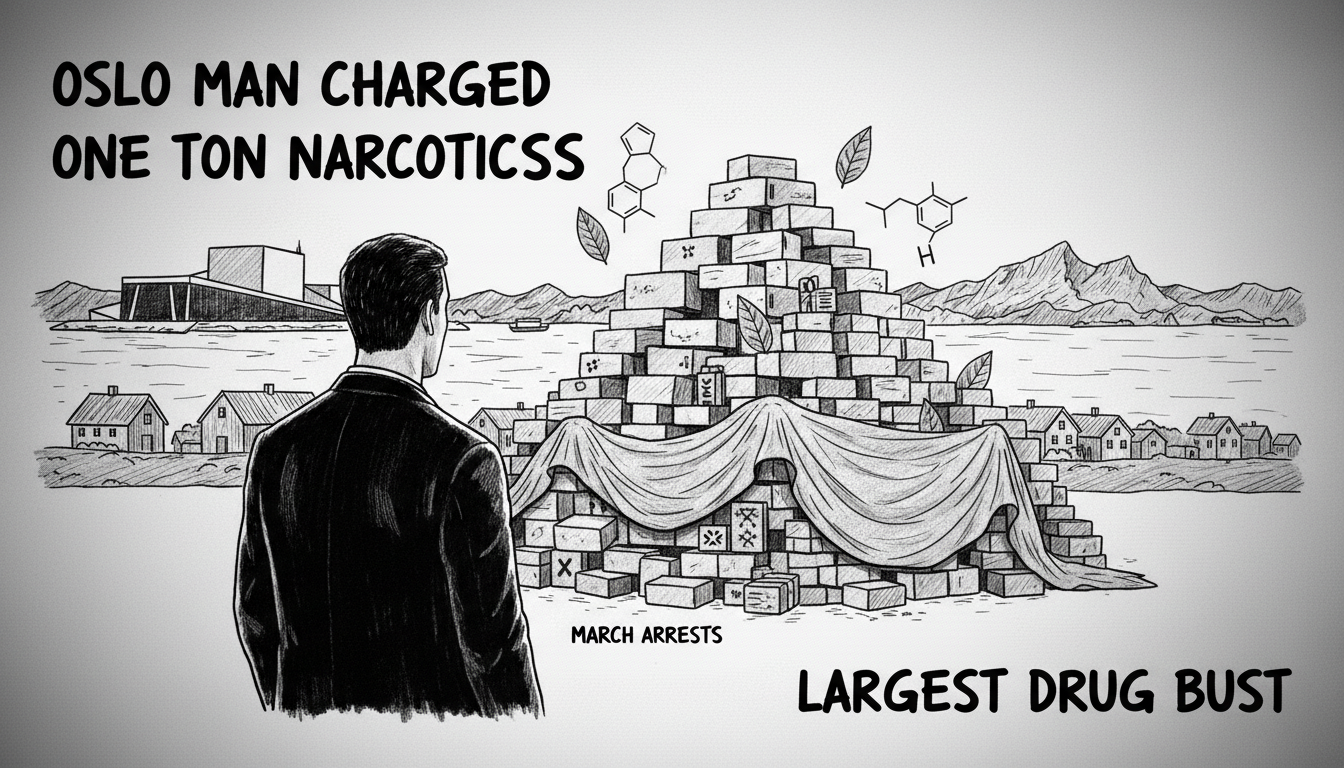
A man in his forties faces serious charges in Oslo for allegedly storing and selling approximately one ton of illegal drugs. Police discovered 1,065 kilograms of narcotics in an apartment on Majorstuen, a central Oslo neighborhood. About one quarter of the massive haul consisted of cocaine.
The defendant reportedly sold around 908 kilograms of drugs before authorities arrested him. Court documents reveal he met a buyer in his early twenties three times during February and March in Frogner Park. During these meetings, he allegedly delivered about two kilograms of cocaine each time. The young buyer faces charges in the same case, while other customers remain unidentified.
This extensive drug operation reportedly ran from the second half of 2023 until March 7, when police apprehended the main suspect. The timing suggests the operation had been active for several months before law enforcement intervention.
Oslo District Court will hear the case starting Tuesday, with proceedings scheduled to continue through December 2. The extended court timeline indicates the complexity and severity of the charges.
Norway maintains strict drug laws with severe penalties for large-scale trafficking. A seizure of this magnitude represents one of the largest drug busts in recent Oslo history. The case highlights ongoing challenges with international drug trafficking networks operating in Scandinavian countries.
The location choice in Majorstuen, an affluent central neighborhood, demonstrates how drug operations sometimes hide in plain sight within urban communities. Using public spaces like Frogner Park for transactions shows boldness in operational methods.
Norwegian authorities have intensified efforts against organized crime following increased drug-related violence in recent years. This case tests the effectiveness of these enhanced measures against sophisticated trafficking operations.
International readers should understand that Nordic countries generally experience lower drug-related crime rates than many other European nations. However, cases like this reveal that organized crime networks still find ways to operate within the region. The outcome will likely influence future drug enforcement strategies across Scandinavia.