
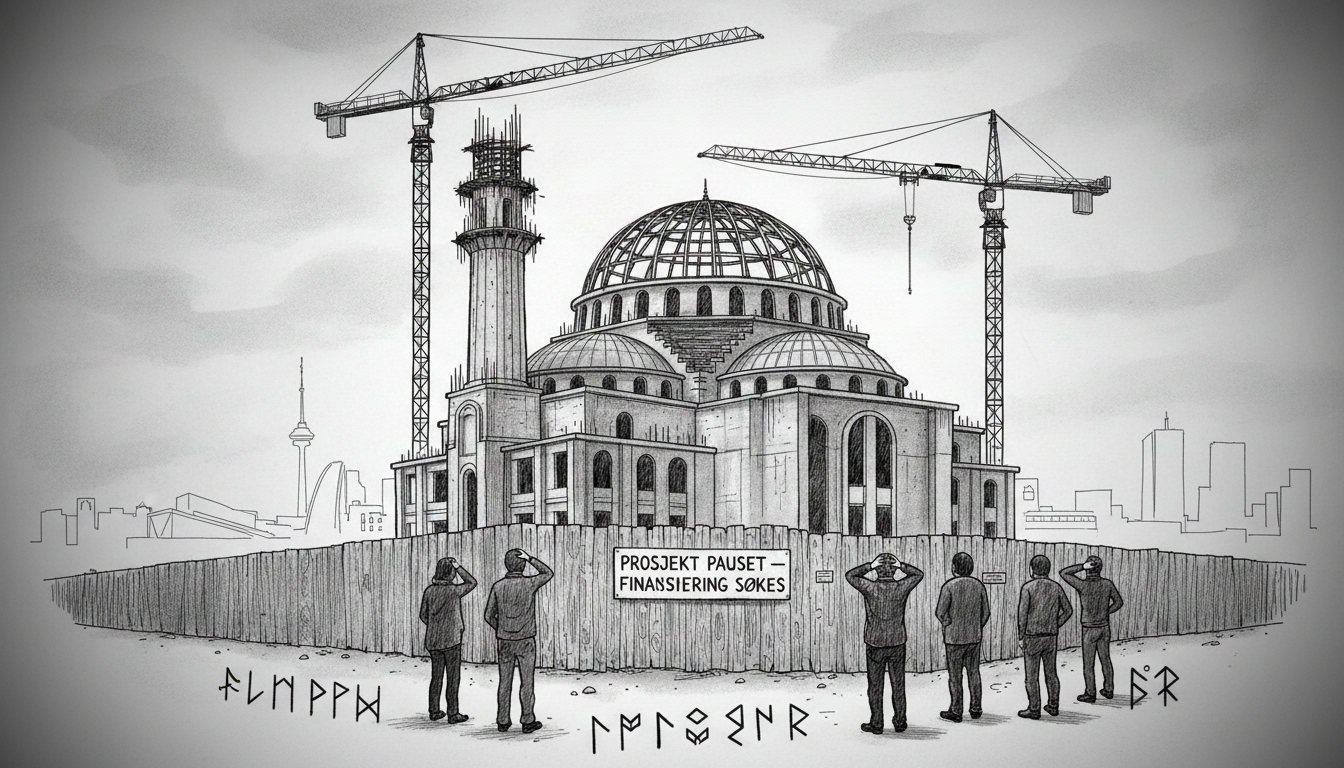
Construction of the new Rabita Mosque in central Oslo has halted indefinitely. Project leaders confirm the pause stems from a major funding shortage. The mosque development requires substantial financial backing to proceed beyond initial stages.
Daily manager Imen Hasnoui revealed the project has collected 30 million Norwegian kroner so far. The ambitious development needs 350 million kroner to reach completion. This leaves a significant funding gap that must be addressed before work can resume.
Hasnoui explained the current financial situation in detail. The project has spent approximately 10 million kroner on preliminary planning and demolition work. About 20 million kroner remains available for the development. She expressed hope that additional funding would materialize soon.
Construction will restart when financing for the next phase is secured. The original timeline projected completion by April 2027. Demolition work began earlier this year during spring months. The construction site has since been converted into a temporary parking area.
This funding challenge reflects broader patterns in religious construction projects across Norway. Major religious buildings often face financial hurdles despite community support. The pause raises questions about funding models for religious infrastructure in Scandinavian countries.
Oslo's growing Muslim community has awaited this mosque development for several years. The central location represents an important step toward religious inclusion in Norway's capital. Similar projects in other Nordic cities have faced comparable financial obstacles.
International readers should understand Norway's unique approach to religious funding. Unlike some countries with state-funded religious buildings, Norway relies more on private donations and community fundraising. This creates different financial pressures for religious communities seeking to establish permanent worship spaces.
The funding pause comes amid ongoing debates about religious architecture in Scandinavian cities. Some European countries have seen controversies around mosque construction, though Norway has generally maintained a pragmatic approach. The current situation appears driven purely by financial constraints rather than political opposition.
What happens next depends largely on the Muslim community's ability to mobilize additional resources. Successful religious construction projects in Norway typically combine community fundraising with some institutional support. The mosque committee likely needs to develop new strategies to bridge the financial gap.
Similar projects in Sweden and Denmark have overcome comparable challenges through extended fundraising campaigns and phased construction approaches. The Oslo mosque organizers may need to consider adjusting their timeline or scaling back initial plans to match available resources.
This situation highlights the practical realities of religious minority communities establishing permanent infrastructure in Nordic countries. While Norway provides religious freedom and equal rights, the financial burden of building major worship spaces falls heavily on the communities themselves.