
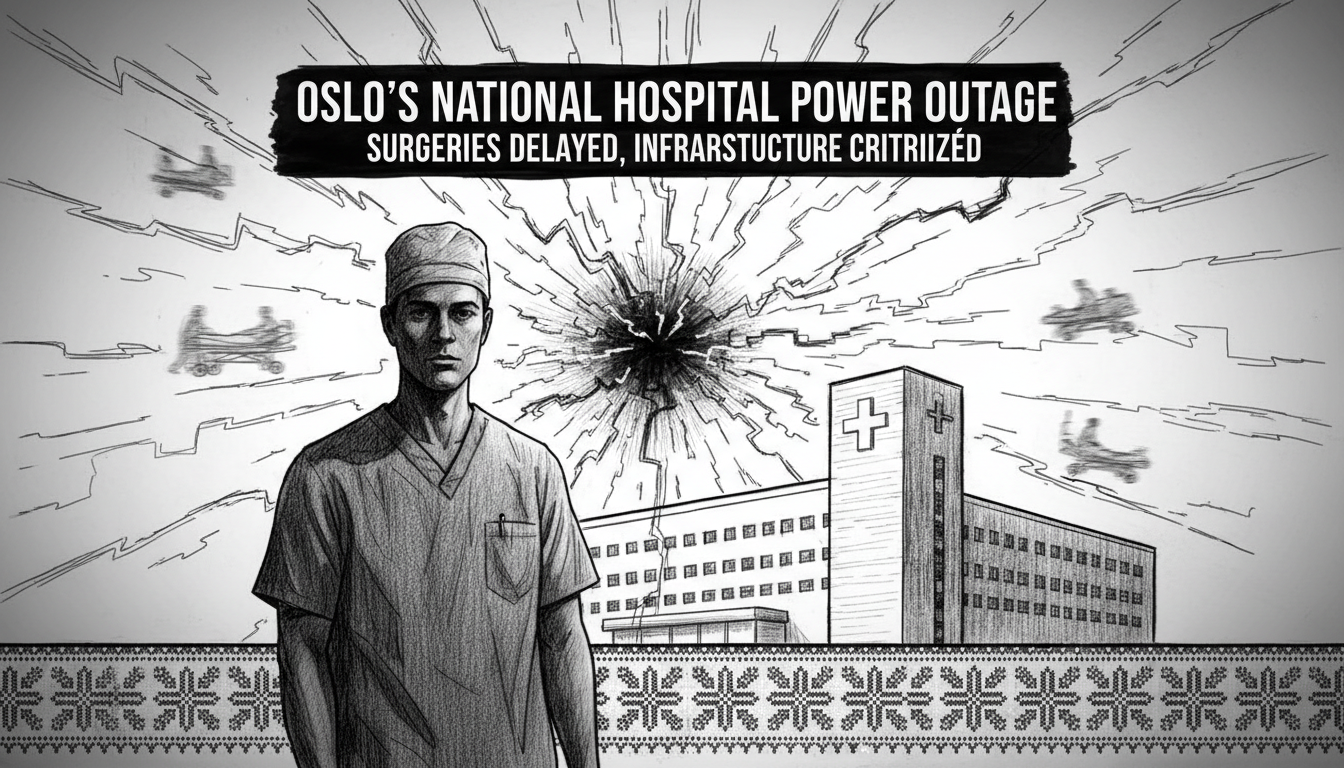
A major power failure struck Oslo's Rikshospitalet, the National Hospital, on Tuesday. The incident forced the postponement of scheduled surgeries and activated emergency procedures. Specialist advisor Anders Bejer confirmed the disruption to normal power supply. He said the cause remained unknown at the time. The hospital's emergency preparedness team monitored the situation closely. Power was later restored, and normal operations resumed. The hospital is part of the Oslo University Hospital system. It employs over 25,000 staff members and is a critical national healthcare hub. Extensive construction work is currently underway on the hospital grounds. This likely complicated the initial response and investigation.
This event highlights a critical vulnerability in Norway's infrastructure. The country prides itself on reliable, hydropower-generated electricity. Yet its most important hospital faced an unexplained blackout. The incident raises immediate questions about backup power systems and contingency planning. It also points to broader concerns about aging infrastructure. Major public projects often face delays and technical issues. The ongoing construction at Rikshospitalet may have been a contributing factor. Officials have not confirmed this link. They are investigating the root cause of the failure.
For international observers, this is a surprising development. Norway is a wealthy, technologically advanced nation. Its public services are typically efficient and reliable. A power failure at its flagship hospital contradicts this image. It suggests that even robust systems can fail under stress. The event will likely trigger a political review. Opposition parties in the Storting will demand answers from the Health Minister. They will ask about investment in infrastructure and maintenance schedules. The government must explain how such a failure occurred at a vital institution.
The timing is also notable. Norway is investing heavily in its green energy transition. It aims to become a low-carbon society. This goal requires a supremely reliable electrical grid. A failure at a major public building undermines public confidence. It shows that the physical network remains fragile in spots. The hospital's backup generators apparently functioned as designed. This prevented a complete collapse of medical services. But the delay to surgeries is a serious outcome. Patients and their families experienced significant stress and inconvenience.
What does this mean for Norway's future? The government must conduct a transparent investigation. It should publish the findings and implement recommended fixes. Other public buildings may require similar reviews of their electrical systems. The Storting will likely hold hearings on national infrastructure resilience. This single event, while resolved quickly, exposes a potential systemic weakness. For a nation so dependent on stable power for its economy and society, it is a wake-up call. Reliability cannot be assumed. It must be actively maintained and tested, even in Norway.