
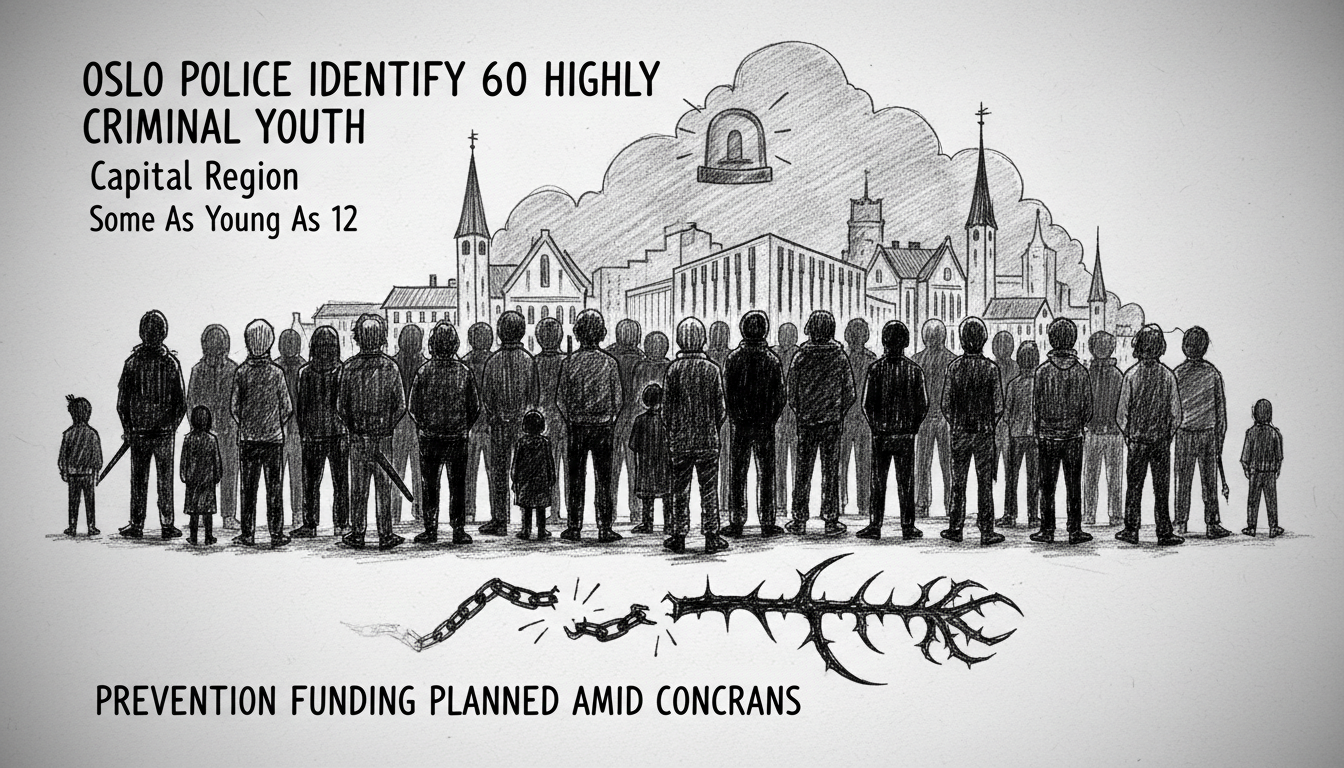
Oslo police district currently monitors between 40 and 60 children engaged in repeated serious crimes. These young individuals commit ten or more criminal offenses annually. Their activities range from violence and threats to attempted murder cases.
The problem particularly affects Norway's capital region. Police reports indicate the children primarily reside in Oslo. Some also come from neighboring municipalities like Bærum and Asker.
Norwegian authorities observe a troubling national trend. Extremely young boys now participate in grave criminal activities. Recent cases involve children as young as twelve and thirteen. They face recruitment for murders, grenade attacks, and other severe violent crimes.
Oslo's city council acknowledges the situation requires immediate action. Officials plan to allocate funds specifically for prevention programs. The goal is to intercept at-risk youth before they enter criminal pathways.
What explains the disconnect between identified youth criminals and institutional placements? Norway's child protection system operates under strict legal frameworks. The bar for removing children from homes remains exceptionally high. This creates tension between police observations and child welfare responses.
Norway's approach to youth crime emphasizes rehabilitation over punishment. The country maintains one of Europe's lowest incarceration rates. But the rise in pre-teen criminal involvement tests this philosophy. Can welfare-oriented systems effectively address organized youth crime?
The situation mirrors patterns seen in neighboring Sweden. Scandinavian countries traditionally avoid institutional solutions for young offenders. Yet police across the region report increasing numbers of children in criminal networks.
International readers should understand Norway's unique child protection context. The state prioritizes family preservation whenever possible. Removing children requires demonstrating immediate physical danger. This creates challenges when dealing with criminal but non-abusive home environments.
What happens next? Oslo's prevention programs will likely focus on early intervention. Schools, social services, and community organizations will probably receive additional resources. The success of these measures could influence approaches throughout Scandinavia.