
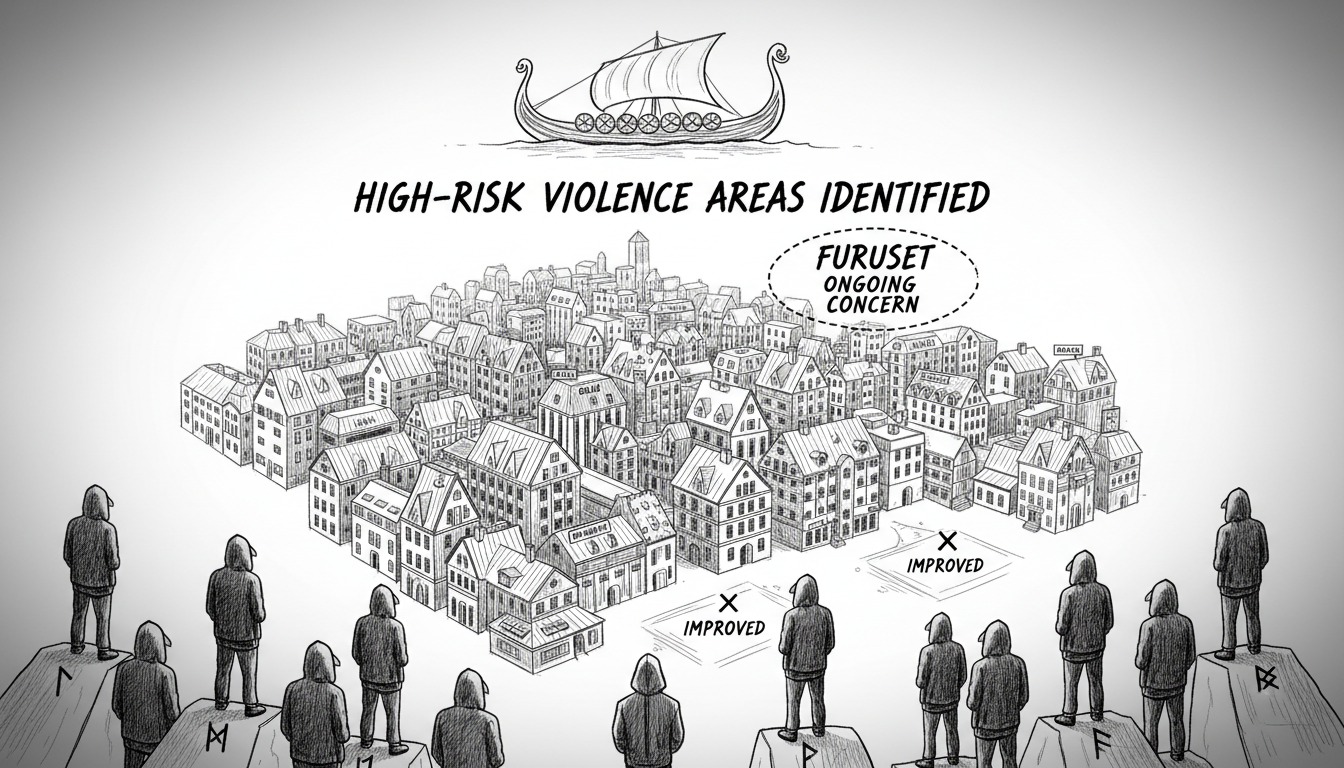
Oslo police have released their annual report on high-risk areas in the city's eastern districts. Nine neighborhoods now appear on the list: Furuset, Mortensrud/Bjørnerud, Vestli, Bjørndal, Ellingsrud, Trosterud, Fossum, Grorud and southern Holmlia.
Two areas from last year's list have been removed. Veitvet and Lambertseter showed decreased youth crime rates. Police credit targeted interventions for this positive development.
Furuset remains a particular concern for authorities. Eastern District Chief John Roger Lund said ongoing efforts focus on this area. Police collaborate with local communities, sports clubs, mosques and schools. They also work to remove individuals who recruit children and youth into criminal activities.
Police maintain both uniformed and plainclothes presence in these areas. They conduct surveillance on potential offenders and make arrests as needed. This approach aims to disrupt criminal networks targeting young people.
Why do certain Oslo neighborhoods consistently appear on these lists? The pattern suggests deeper social issues that enforcement alone cannot solve. Police efforts must be matched with community investment to break the cycle of violence.
International readers should note that Oslo's eastern suburbs face challenges common to many European cities. These include socioeconomic disparities and integration difficulties affecting immigrant communities.