
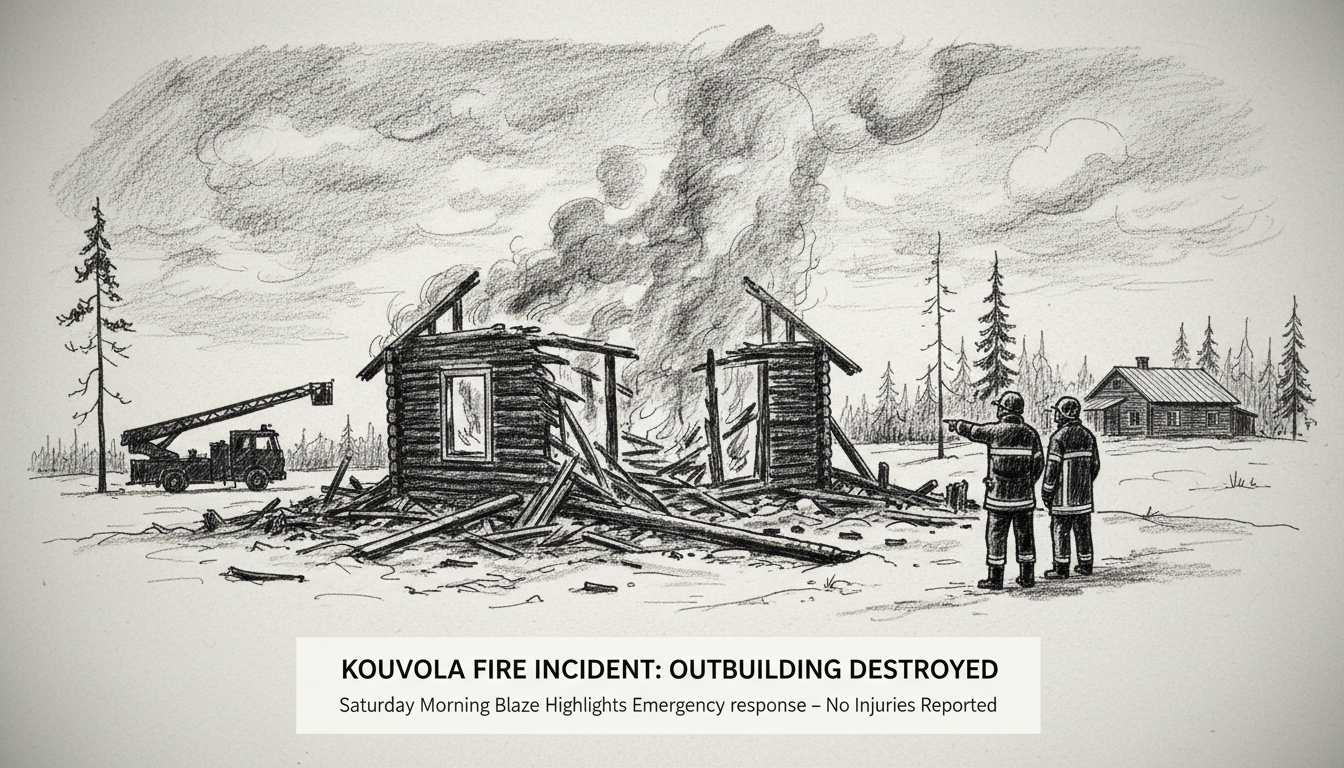
A small outbuilding on a residential property in Kouvola's Rita-ahontie neighborhood burned to the ground during a Saturday morning fire. The medium-scale emergency response call came through at 8:54 AM local time, with rescue services confirming the blaze had been extinguished shortly afterward. No injuries resulted from the incident, though the three-by-four-meter wooden structure sustained complete destruction. Fire investigators continue examining the cause of ignition without immediate conclusions.
This Kouvola fire incident highlights Finland's comprehensive emergency response system that operates across municipalities. Finnish rescue departments maintain standardized response protocols regardless of property size or location. The rapid containment demonstrates typical efficiency within Finland's decentralized emergency services network. Local municipalities bear primary responsibility for fire safety while following national guidelines from the Ministry of the Interior.
Finland's building safety regulations require specific fire prevention measures for auxiliary structures like sheds and outbuildings. Property owners must adhere to distance requirements between structures and maintain accessible fire lanes. The destroyed building's wooden construction raises questions about material flammability in auxiliary structures. Finnish building codes have evolved to address fire risks in traditional wood construction methods.
International residents should understand Finland's emergency number 112 connects directly to centralized rescue services. The system dispatches nearest available units regardless of municipal boundaries. Finland maintains one of Europe's most robust emergency response networks despite its sparse population distribution. Response times in urban areas like Kouvola typically fall under ten minutes.
Property insurance considerations become relevant following such incidents. Most Finnish home insurance policies cover outbuildings and contents against fire damage. Claims processing requires official fire investigation reports determining causation. The timing during third quarter typically sees increased outdoor storage activities before winter preparations.
Fire safety officials remind homeowners to maintain clear access paths around all structures. Regular inspection of electrical installations in auxiliary buildings remains crucial for prevention. The upcoming darker months traditionally see increased reliance on temporary heating solutions in outbuildings. Proper storage of flammable materials becomes particularly important during seasonal transitions.
Local rescue services likely will complete their investigation within standard administrative timelines. The property owner faces decisions about reconstruction permits and potential design modifications. Neighboring residents may review their own fire prevention measures following the visible demonstration of rapid fire spread.