
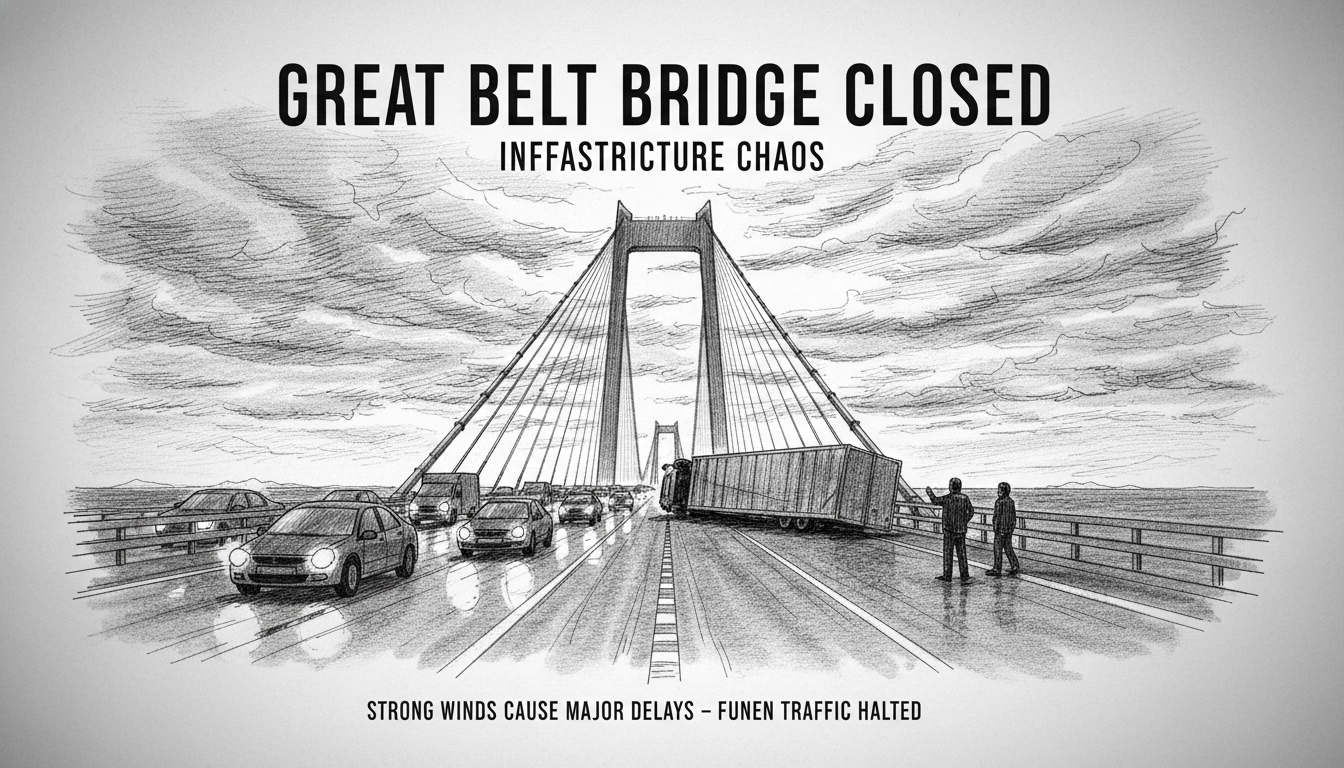
A car towing a trailer that overturned blocked all vehicle traffic on the Great Belt Bridge toward the island of Funen on Monday evening. The incident occurred around 6:00 PM, forcing a complete closure of the westbound lanes. Police confirmed no one was injured. Authorities attributed the accident primarily to strong winds, which were gusting over ten meters per second at the time. The bridge has since reopened, but the closure caused significant delays and extended travel times for evening commuters. Traffic management officials reported queues forming and advised that normal traffic flow would resume later in the evening.
The Great Belt Bridge, or Storebæltsbroen, is a critical national infrastructure link. It connects the Danish islands of Zealand, where Copenhagen is located, and Funen. This vital corridor supports the daily movement of thousands of commuters and a substantial portion of the nation's freight. Any disruption here has immediate and widespread economic and social consequences. The incident highlights the vulnerability of essential transport networks to sudden weather events. Denmark's geography as an archipelago makes such bridges not just conveniences but absolute necessities for national cohesion and function.
From my perspective covering Danish society, this event touches on deeper themes of integration and community connectivity. Reliable infrastructure is the silent backbone of social policy. It enables access to jobs, education, and family across regions. For new residents and international citizens, understanding and navigating these key routes is part of building a life in Denmark. Delays on this scale disrupt more than schedules. They can affect childcare pickups, medical appointments, and shift work, disproportionately impacting those with less flexible employment situations. The swift response by emergency services prevented injury, a testament to Denmark's high standards of public safety and crisis management.
The Danish welfare system relies on predictable mobility. The state's ability to deliver services and citizens' ability to access them depend on it. This incident serves as a reminder of the constant, often unseen, work required to maintain the societal machine. It also underscores a shared Danish reality. Everyone, from a CEO in Copenhagen to a student in Odense, is equally subject to the wind on the bridge. These moments of shared inconvenience, though frustrating, are a unifying thread in the national experience. They prompt public discussions about infrastructure investment, climate resilience, and emergency preparedness.
Looking forward, the seamless restoration of traffic is expected. The relevant authorities have a well-practiced protocol for such events. The real analysis lies in considering future pressures. With climate models suggesting the potential for more frequent and intense wind events, the resilience of this and other bridges becomes a pressing policy question. It intersects with long-term planning for the Danish welfare system and sustainable development. For now, commuters can breathe a sigh of relief. The bridge is open, and the familiar rhythm of Danish life, where islands are connected by feats of engineering, continues unimpeded.