
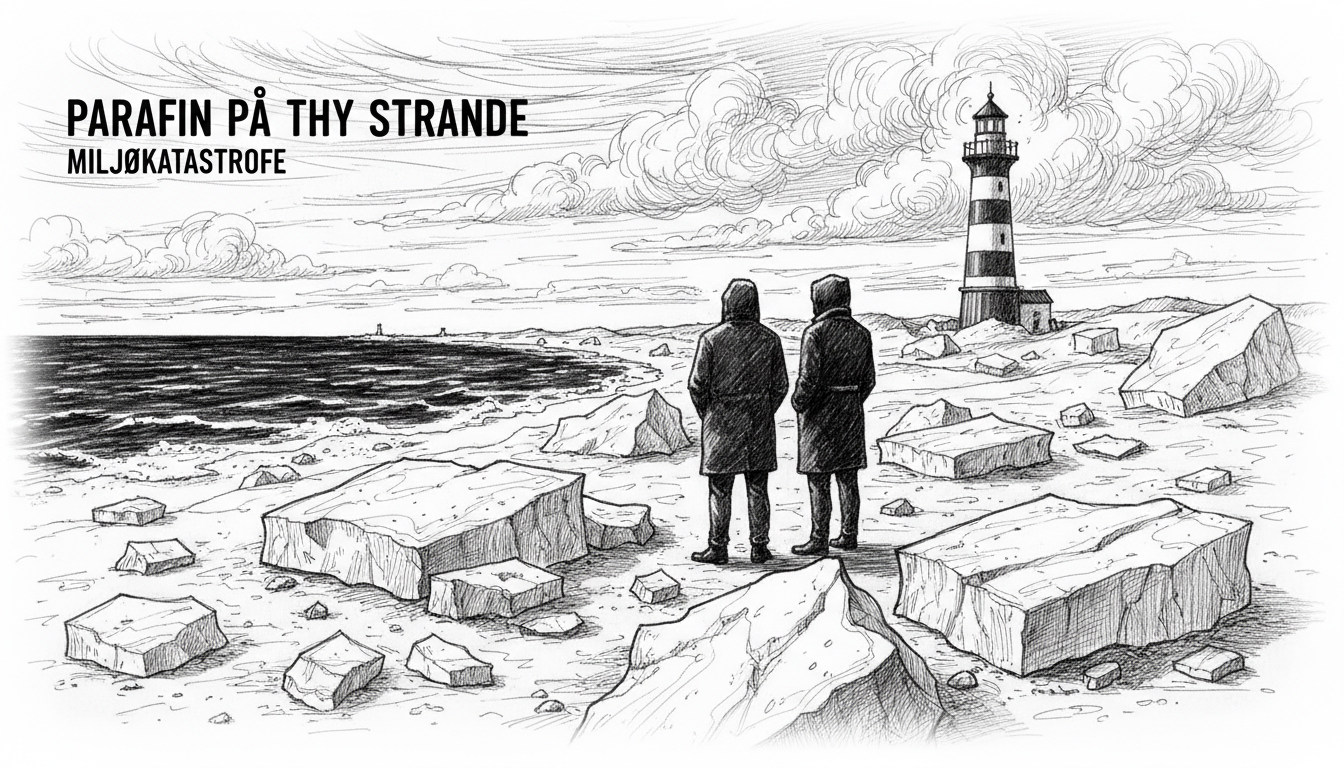
Large white lumps of paraffin wax, some weighing several kilograms, have begun washing ashore on multiple beaches in Denmark's Thy region. The material appeared along the coastline between Hanstholm and Lyngby, prompting local environmental authorities to respond. Residents reported the findings to North Jutland's emergency services, which then alerted the municipal environmental department in Thisted. Officials immediately issued a public advisory, urging people to leave the substance undisturbed on the sand.
Paraffin is a waxy petroleum byproduct historically used in maritime industries. Ships once commonly used it to clean cargo holds and tanks at sea. International regulations banned this practice several years ago, but residual pollution continues to surface. The porous lumps crumble easily, posing a potential environmental and public nuisance. Danish coastlines have experienced similar contamination events multiple times in recent years, highlighting a persistent maritime pollution challenge.
Helle Pedersen, the chair of the local beach wardens in Thy, expressed clear expectations for a cleanup. She stated that the municipality should organize the removal of the material. In her view, it is not acceptable to have large clumps of paraffin or similar substances littering the popular beaches of Thy. All beach wardens in the area have now been notified and instructed to monitor their assigned coastal stretches closely for further deposits.
This incident connects to broader themes in Danish society news and environmental policy. Denmark maintains a high standard for public spaces and its welfare system extends to environmental protection. Municipalities like Thisted bear direct responsibility for managing such local incidents. The response involves coordinated action between emergency services, environmental departments, and community volunteers like the beach wardens. This system reflects the integrated approach to public welfare and environmental stewardship common in Danish social policy.
For international observers, this event illustrates the practical workings of Denmark's municipal governance. Local problems trigger a swift, multi-agency response. The incident also raises questions about the long-term effectiveness of international maritime regulations. If a banned practice from years ago still causes shoreline pollution today, what does that say about enforcement and the legacy of past industrial actions? The clean, organized Danish coastline is a point of national pride, making such pollution particularly visible and politically sensitive.
What happens next? Thisted Municipality's environmental team will assess the scale of the contamination. They must decide on a removal method that minimizes further environmental impact. The cost of cleanup will likely fall to municipal budgets, ultimately funded by taxpayers. This reality underscores how local communities often bear the financial burden for pollution originating from global maritime activities. The situation serves as a small but clear example of the challenges in maintaining pristine natural spaces within a globalized economy.