
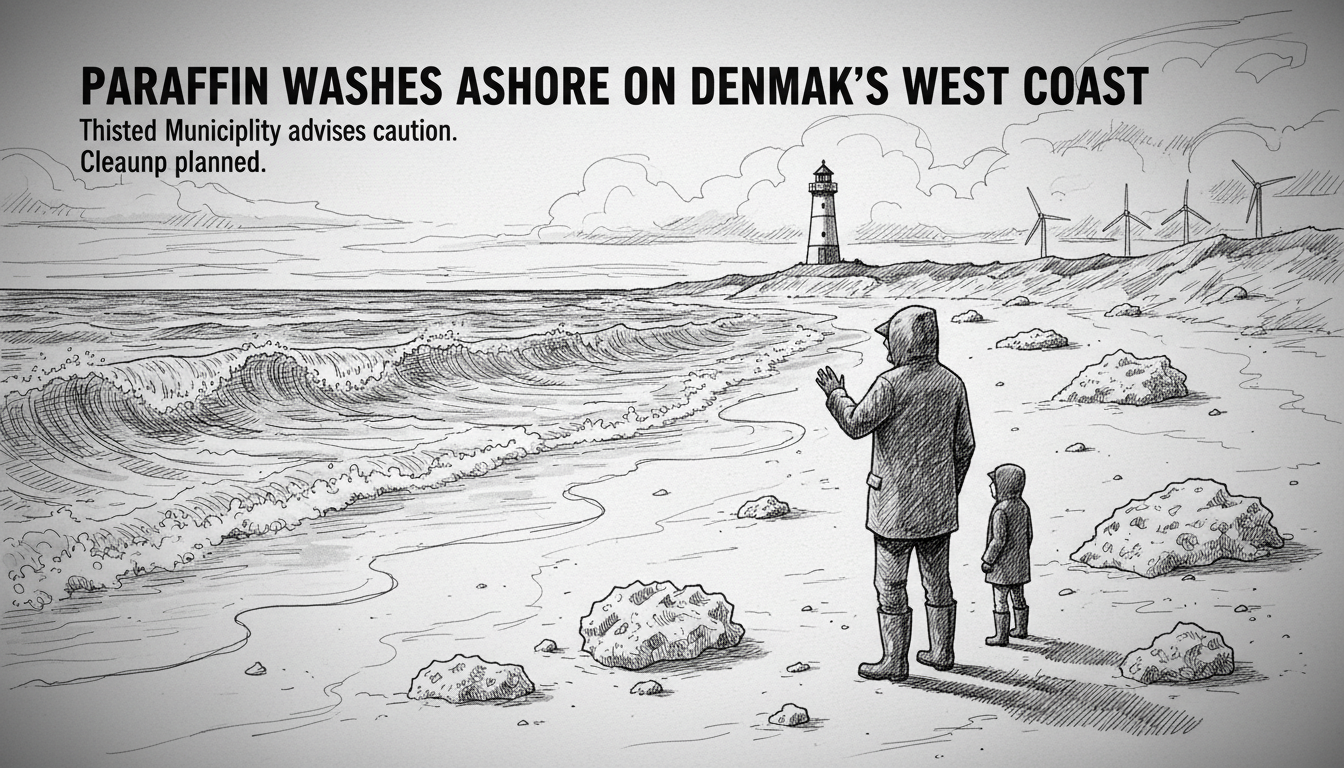
Mysterious white lumps have appeared along a vast stretch of Denmark's North Sea coastline. The substance, identified as paraffin wax, has washed ashore over a 40-kilometer stretch from Lyngby Beach north of Agger all the way up to Hanstholm in the Thy region. The clumps, resembling small pieces of cauliflower, are a byproduct of oil production. Their origin remains officially unconfirmed, sparking a local cleanup effort and raising questions about maritime oversight.
Tanja Bilde Binderup, head of the Agriculture and Nature section for Thisted Municipality, addressed the situation. She said officials have a theory about the source but cannot be certain. The leading assumption points to tanker ships cleaning their holds in the North Sea. Binderup issued a clear public advisory for beachgoers who encounter the wax. She urged people to leave the clumps undisturbed. The paraffin is very porous and crumbles easily upon touch, which would complicate cleanup operations. She emphasized that the material is not considered dangerous or an acute pollutant threatening wildlife, but it does not belong on the beaches.
This incident, while not an environmental crisis, opens a window into the daily workings of the Danish welfare and regulatory system. Municipalities like Thisted are the frontline for local environmental management. They bear the responsibility and cost for addressing such nuisances, which are often the indirect result of broader industrial activities. The response highlights a pragmatic Danish approach: a calm assessment, clear public communication, and a practical focus on solution-oriented cleanup. The municipality is now investigating the most effective method to collect the scattered wax.
From an integration and social policy perspective, this event is a small but telling example of how Danish society manages shared resources and public spaces. The immediate, trusted communication from local authorities fosters a sense of collective responsibility. It avoids public panic and encourages cooperative behavior—a cornerstone of the social contract here. For international residents, it's a glimpse into the high level of civic order and environmental consciousness expected and maintained at the municipal level. These values are deeply woven into the fabric of Danish social policy, where individual actions are understood to impact the collective good. The efficient local government response, even to a minor incident, reflects the operational strength of Denmark's decentralized welfare model.
Looking ahead, the cleanup will proceed methodically. The broader question lingers about maritime pollution sources in the busy North Sea shipping lanes. Denmark's extensive coastline makes it vulnerable to such drift incidents. While this paraffin wash-up is a minor event, it serves as a periodic reminder of the interconnectedness of industrial logistics and pristine natural environments. It underscores the ongoing need for vigilant international maritime regulations and their enforcement to protect coastal communities.