
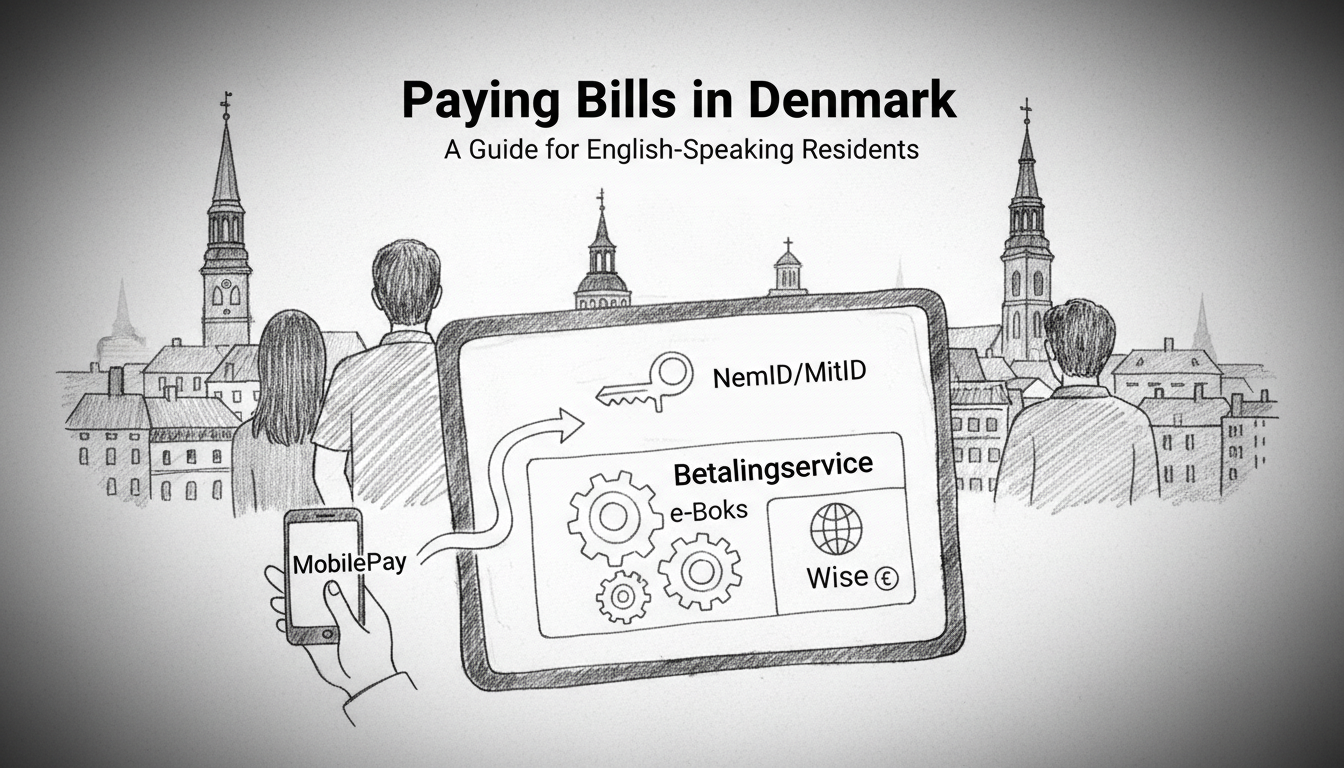
Newcomers to Denmark often find their first utility bill puzzling. The country operates a digital-first payment system that leaves paper cheques obsolete. Understanding this system saves time and avoids late fees. This guide explains Denmark's main payment methods for expats.
The Digital Backbone: NemID and MitID
Denmark's payment infrastructure relies on digital identification. NemID and its successor MitID authenticate users for online banking and bill payments. These systems require a personal code card or app. Banks issue these when opening an account. Without NemID or MitID, paying bills online becomes difficult. Most Danish companies send invoices electronically via e-Boks. This digital mailbox is mandatory for residents. Access requires NemID or MitID credentials. Setting up e-Boks should be a priority after receiving a CPR number.
Automatic Payments Rule
Danes prefer automated solutions for recurring bills. Direct debit agreements called "betalingsservice" dominate household payments. Companies like Norlys for utilities or YouSee for telecommunications use this system. Customers authorize companies to withdraw funds directly from their bank accounts. This happens on specific dates each month. Setting up betalingsservice requires online banking access. Log into your bank's website or app. Navigate to payment services section. Authorize each company individually. Monthly amounts vary but average 2,000 DKK for a two-person apartment. This includes electricity, heat, water, and internet.
Tools
Call home for less
Save up to 90% on international calls to family and friends.
Links may be monetized via affiliate partners.
MobilePay for Everyday Bills
MobilePay handles person-to-person payments and smaller bills. This app links directly to Danish bank accounts. Over 4.5 million Danes use it regularly. Landlords often request rent via MobilePay. Service providers like cleaners or dog walkers use it too. Download the app from Google Play or Apple App Store. Connect it to your Danish debit card. Transactions under 2,000 DKK process instantly. Larger amounts may require bank verification. MobilePay charges no fees for personal use. Businesses pay 1.5% per transaction. Always verify the recipient's name before sending money.
International Transfers and Alternatives
Expats without Danish bank accounts face challenges. Some companies accept international transfers. These incur fees from both sending and receiving banks. TransferWise (now Wise) offers lower-cost alternatives. Their borderless account supports Danish krone. Wise charges 0.5% for currency conversion. Revolut provides another option for EUR-DKK transfers. Both services require online verification. For one-off payments, use bank giro forms. These blue slips appear on some paper invoices. Fill them out at any bank branch. This method costs 25-50 DKK per transaction. It works when digital options fail.
Avoiding Common Pitfalls
Late payments trigger fees immediately. Danish companies add 50-100 DKK for overdue bills. Repeated delays affect credit scores. Always check e-Boks weekly. Mark payment dates in your calendar. Set reminders three days before deadlines. Keep payment confirmations for six months. Disputes require documentation. For help, contact your bank's expat service. Nordea and Danske Bank offer English support. They explain Danish payment culture. Their advisors clarify confusing invoices.
Frequently Asked Questions
How do I pay bills without a Danish bank account?
Use Wise or Revolut for international transfers. Some companies accept credit cards online. Bank giro forms work for one-time payments. Expect higher fees without local banking.
What is the deadline for bill payments in Denmark?
Most invoices require payment within 14 days. The due date appears clearly on digital invoices. Late fees apply immediately after deadlines. Set calendar reminders for all bills.
Can I use MobilePay for all my bills?
MobilePay works for person-to-person payments and some businesses. Recurring household bills need betalingsservice. Large companies rarely accept MobilePay for utilities.
How much do Danish banks charge for bill payments?
Digital payments through online banking cost nothing. International transfers cost 50-200 DKK. Bank giro payments cost 25-50 DKK. Betalingsservice has no direct fees.
What happens if I miss a payment?
Companies add 50-100 DKK late fees immediately. Multiple missed payments affect your credit score. Debt collection agencies may contact you after 30 days.
How do I set up automatic payments?
Log into your online banking platform. Find the betalingsservice section. Authorize each company using their payment ID. Start this process when you receive your first invoice.
Can I pay Danish bills from another EU country?
Yes, through international bank transfers. Use Wise for better exchange rates. Notify companies if you move abroad. Update your e-Boks address for digital invoices.