
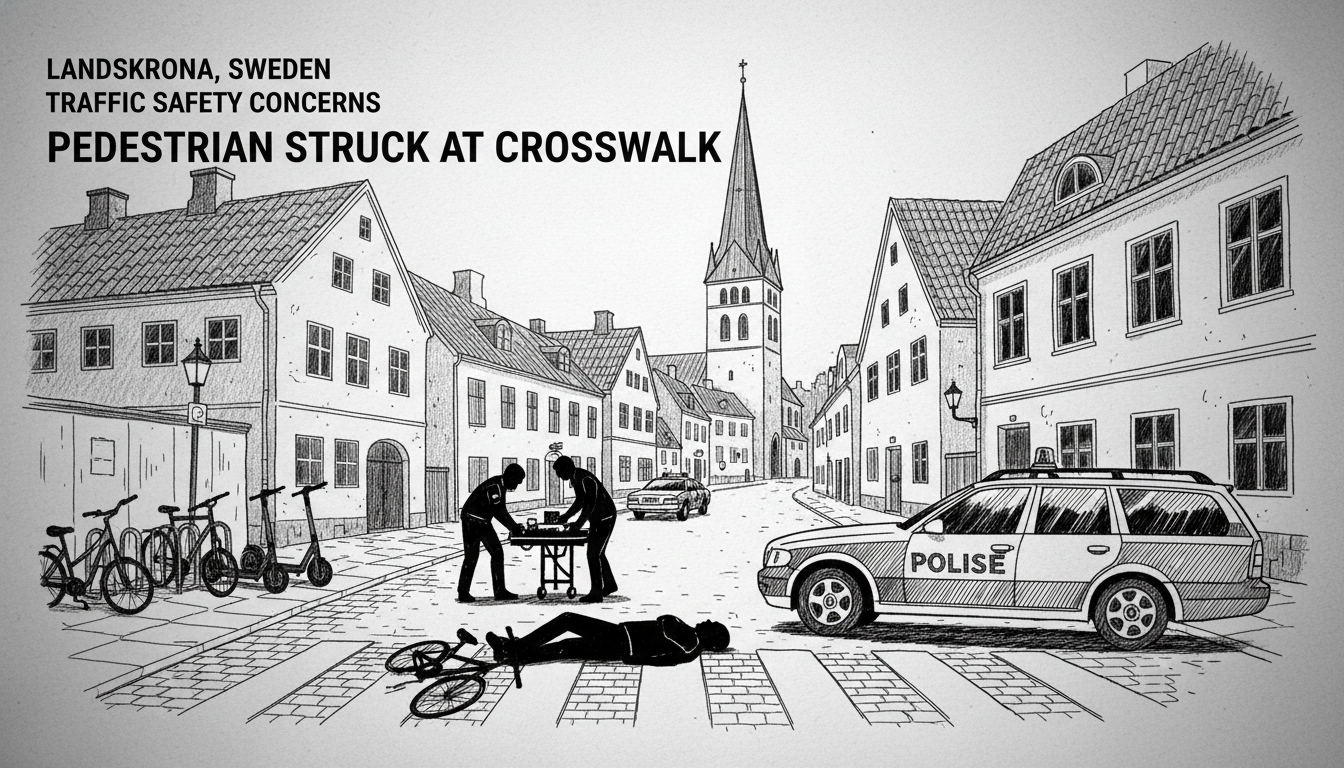
A driver struck a pedestrian at a marked crosswalk in Landskrona this Saturday afternoon. Emergency services received the call just after 4 PM local time. The injured person required ambulance transport to a nearby hospital. Police confirmed the driver remained at the scene following the collision.
Landskrona sits along Sweden's southwestern coast, approximately 50 kilometers north of Malmö. The city of 30,000 residents faces ongoing traffic safety discussions common throughout Swedish urban centers. Crosswalk accidents often spark public debate about pedestrian infrastructure and driver awareness.
Swedish traffic safety culture typically emphasizes pedestrian right-of-way at marked crossings. The country has invested heavily in Vision Zero initiatives since the 1990s. This comprehensive approach aims to eliminate traffic fatalities and serious injuries. Despite these efforts, incidents like Saturday's collision continue occurring across Swedish municipalities.
Local residents frequently note tension between historic city planning and modern traffic volumes. Many Swedish cities, including Landskrona, feature narrow streets originally designed for horse-drawn carriages. These now accommodate contemporary vehicle traffic alongside cyclists and pedestrians. This creates challenging environments for all road users despite Sweden's generally strong safety record.
International readers might compare Swedish traffic culture to their home countries. Sweden typically maintains lower speed limits in urban areas than many nations. The country also implements extensive traffic calming measures in residential zones. These include raised crosswalks, narrowed roadways, and prominent pedestrian signage.
The Saturday incident highlights ongoing challenges in balancing mobility and safety. Swedish society continues grappling with how to update infrastructure while preserving historical city character. Similar discussions occur in Stockholm neighborhoods like Södermalm and Vasastan where narrow streets meet heavy pedestrian traffic.
Police investigations typically follow such incidents to determine contributing factors. Swedish authorities often examine vehicle speed, visibility conditions, and potential distraction. The legal system treats traffic violations seriously, particularly those causing bodily harm.
What does this mean for Sweden's broader traffic safety goals? Each incident provides data points for continuous improvement of road designs and traffic regulations. The country's methodical approach to safety means even single events receive thorough analysis. This systematic perspective has helped Sweden maintain among Europe's lowest traffic mortality rates despite seasonal driving challenges.
Local officials will likely review the specific crossing location where Saturday's incident occurred. Swedish municipalities frequently adjust signage, lighting, or road markings following accidents. This responsive approach represents part of why Sweden remains a global leader in traffic safety innovation.