
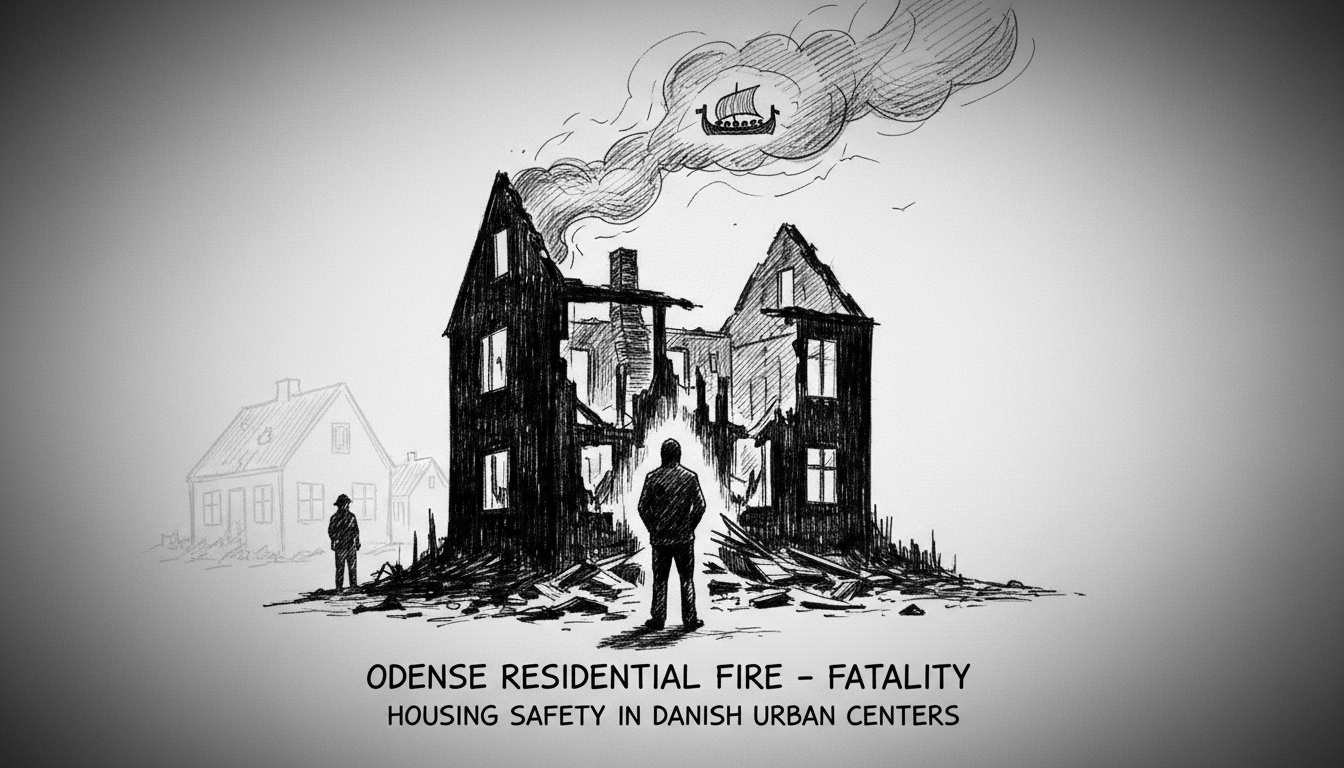
A tragic fire in central Odense has claimed one life, with authorities currently investigating the circumstances surrounding the blaze. Emergency services responded to Johannevej after witnesses alerted them around 8:43 PM, discovering one deceased individual at the scene. Police officials confirm they have notified next of kin while awaiting formal identification through coroner's examination.
Watch commander Christoffer Jacobsen stated investigators maintain no current suspicion of criminal activity but emphasized standard protocols require thorough examination of all fatal incidents. The police continue guarding the property until their investigation concludes, reflecting standard Danish emergency response procedures for unexpected deaths.
This incident highlights broader housing safety concerns within Danish urban centers, particularly in cities experiencing rapid population growth. Odense, as Denmark's third-largest city, faces unique challenges maintaining older residential buildings while accommodating diverse communities. The city's integration policies often intersect with housing quality initiatives, creating complex urban management scenarios.
Danish welfare systems typically provide strong support for victims of residential emergencies, though prevention remains the primary focus. Municipal social centers across Denmark coordinate with emergency services to assist affected residents, offering temporary housing and counseling services. These safety nets form crucial components of Denmark's comprehensive social policy framework.
Recent statistics show fire safety improvements throughout Danish municipalities, yet older building stock presents ongoing challenges. Copenhagen integration programs have pioneered fire safety education in multiple languages, recognizing that new residents may lack familiarity with local building codes and emergency procedures. Such initiatives demonstrate how social policy and practical safety measures intersect in modern Danish communities.
The Odense case raises questions about resource allocation for building inspections and preventive maintenance. While Danish welfare system protections remain robust, preventive measures require constant municipal attention and funding. Local authorities balance these needs against other integration and social service priorities within limited budgets.
As investigations continue, the community awaits answers about what caused this fatal fire and whether similar tragedies might be prevented through enhanced safety measures or educational outreach.