
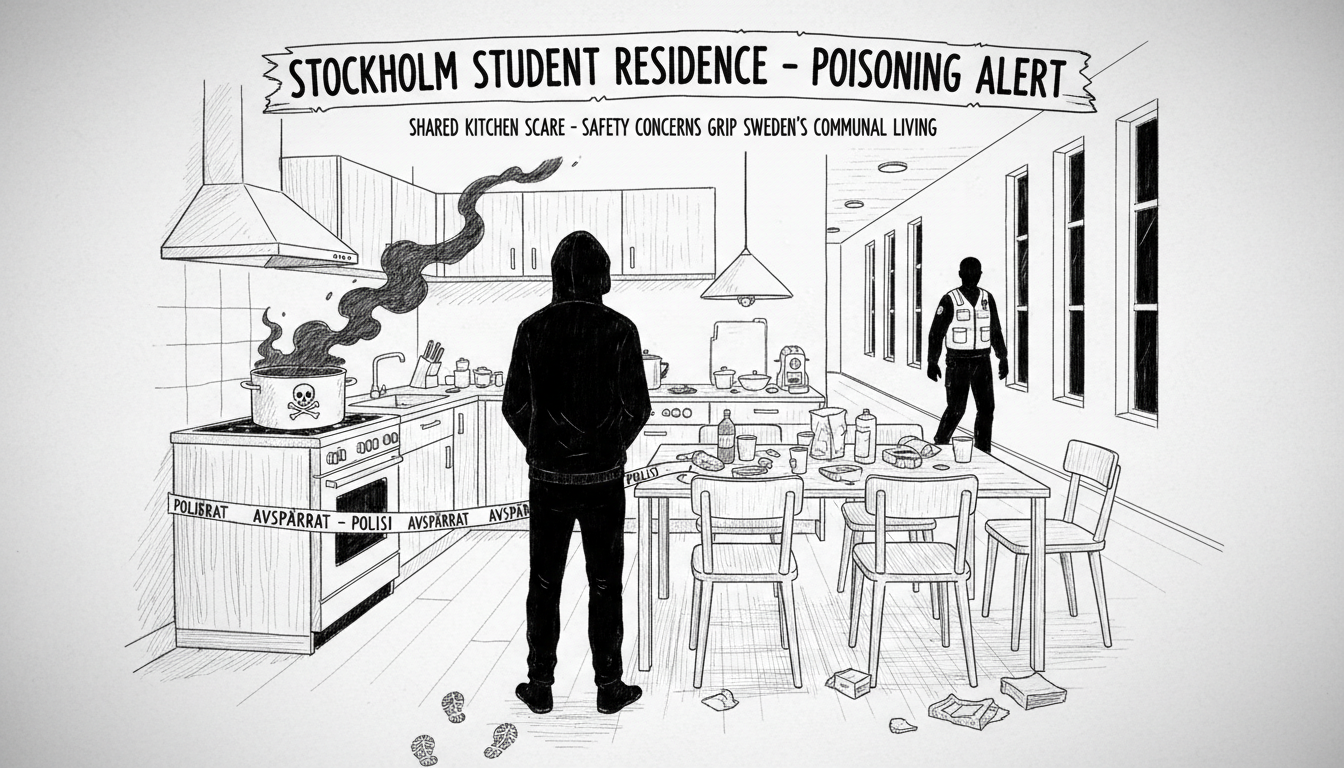
Stockholm's student community faces unsettling safety questions after a poisoning scare at a student residence. The incident began when a resident reported suspicious odors coming from shared kitchen food. Students immediately suspected someone had tampered with their meals.
Police spokesperson Ola Österling confirmed authorities are investigating what happened. Officers remain on site examining evidence. They treat this as a serious security breach at the housing facility.
Marlene Lundkvist from Stockholm Student Housing described the alarming discovery. A student noticed strange smells in the corridor kitchen area. This prompted immediate concern about food safety.
The housing provider responded quickly to the security threat. They deployed extra security guards to patrol the building. These measures aim to reassure nervous residents about their safety.
This incident touches on broader Swedish society trends around student living. Stockholm's student housing system accommodates thousands of international and domestic students. Shared kitchens are common features in these facilities. They represent the communal living approach popular in Swedish culture.
Student safety concerns in Stockholm neighborhoods like this one raise important questions. How do we balance open communal spaces with necessary security? This poisoning alert comes during a sensitive period for Swedish immigration news. International students contribute significantly to Stockholm's academic landscape.
The investigation continues into whether any food was actually poisoned. Police examine what substance might have been involved. They also investigate a reported break-in that preceded the poisoning concerns.
For Stockholm's student population, this incident disrupts the normally peaceful Swedish lifestyle. Student residences typically represent safe havens for young academics. This security breach challenges that assumption.
Local students express unease about returning to shared kitchens. The communal cooking spaces that usually foster international friendships now feel potentially risky. This poisoning scare demonstrates how quickly safety perceptions can change.
The housing provider faces difficult questions about security upgrades. How can they prevent similar incidents in student accommodations across Stockholm? Their response will interest anyone following Swedish society trends in urban living.
As the investigation continues, students await answers about what really happened. The outcome could influence security protocols at student housing throughout Sweden. For now, extra guards provide temporary reassurance while police seek permanent solutions.