
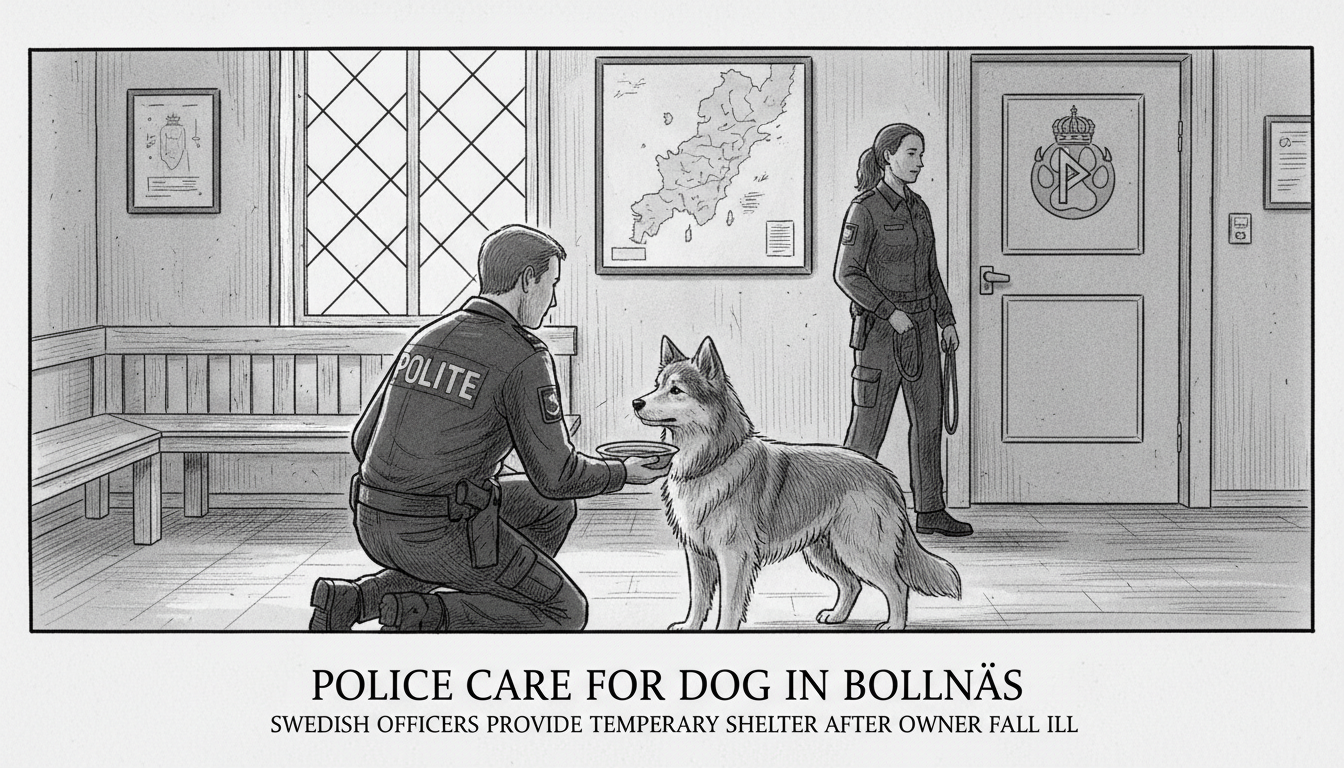
A Saturday emergency in Bollnäs, Sweden turned into a heartwarming rescue story. An elderly man suddenly fell ill outside a local store. Emergency services transported him to hospital by ambulance. His dog remained tethered outside the establishment with no immediate care options.
Police officers made an unusual decision in this situation. They brought the abandoned dog to the Bollnäs police station for temporary shelter. The animal received warmth and care at the facility while awaiting its owner's recovery. This action demonstrates how Swedish police often handle non-emergency community situations with compassion.
Later that Saturday evening, the dog's condition improved significantly. Officers reunited the pet with its recovered owner. The successful reunion concluded this unusual police operation in northern Sweden.
This incident highlights Sweden's community-focused policing approach. Swedish police frequently handle animal welfare cases when owners face emergencies. The country has strong animal protection laws requiring proper care for pets in distress. Many Swedish municipalities have formal agreements for emergency animal sheltering.
What does this reveal about Swedish society? The police response shows how Scandinavian countries prioritize both human and animal welfare. Sweden's legal system recognizes animals as sentient beings deserving protection. This case in Hälsingland county demonstrates how these principles work in practice.
International readers might wonder about police responsibilities in Nordic countries. Swedish police often handle tasks that other countries assign to animal control or social services. This integrated approach reflects the Nordic welfare model where public services cover broad community needs.
The Bollnäs police intervention represents typical Swedish problem-solving. Officers used available resources creatively to address an immediate need. This practical solution prevented the dog from suffering in cold weather while its owner received medical attention.
Such incidents occur regularly across Sweden but rarely make international news. They demonstrate how Scandinavian societies maintain social safety nets that extend even to pets during emergencies. The Bollnäs case shows this system working effectively at the local level.