
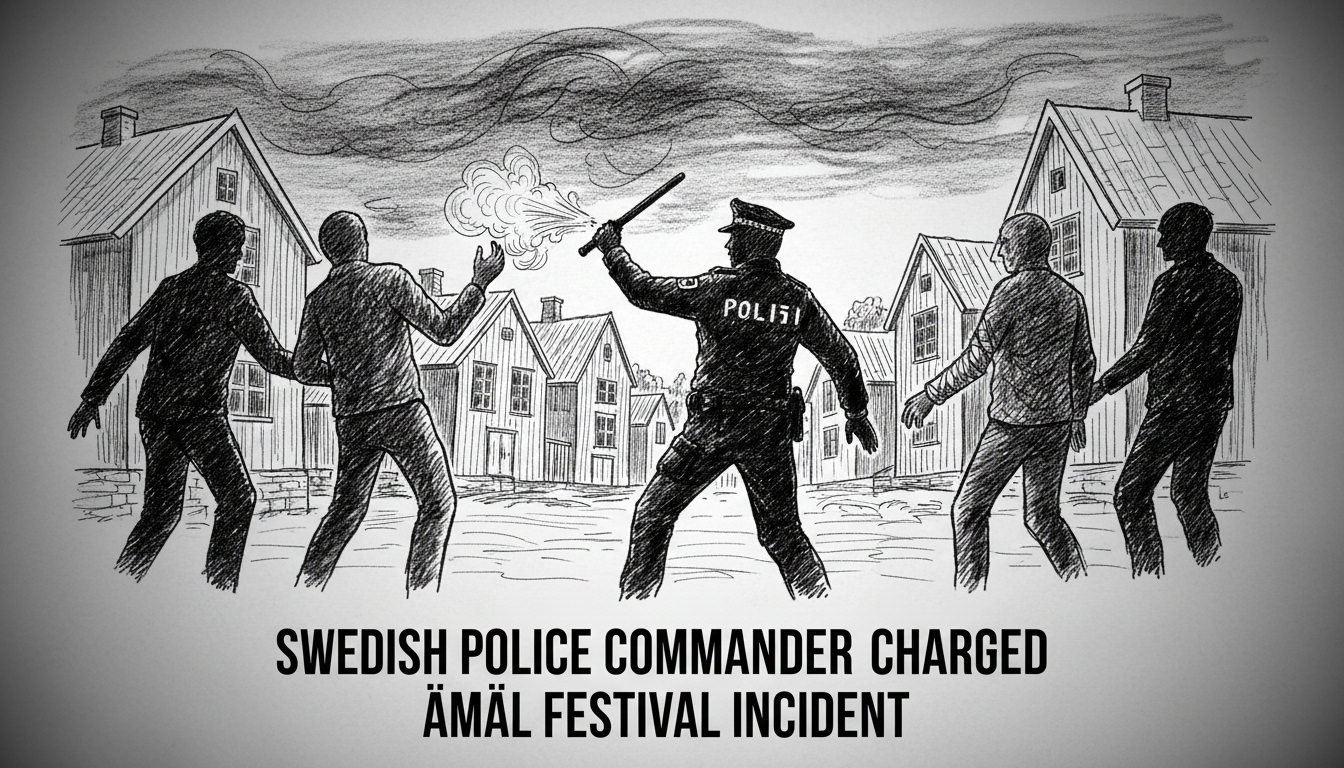
A Swedish police commander faces trial for assaulting four people during a music festival in Åmål. The incident occurred during the summer when officers intervened to assist an intoxicated person under Sweden's Act on Care of Intoxicated Persons.
Friends of the individual protested the police action, and the situation escalated quickly. The operations commander stated in official interviews that he felt surrounded and outnumbered during the events.
The officer now stands accused of assaulting three men and one woman with a batong and pepper spray within minutes. One victim suffered a fractured forearm that required surgical treatment.
'I perceive this as an escalating situation that isn't calming down. People kept coming one after another,' the commander told investigators.
Another officer described how the commander had given clear guidelines to act offensively even before the operation began. 'I don't recall exactly how he phrased it, but we got the impression the threshold for intervention was very low,' the colleague stated.
The accused officer has several years of police experience and previously served as a supervisor within the force. During the investigation, he has been reassigned to desk duties.
While acknowledging the basic facts, the officer denies committing any crime. None of the individuals involved in the police operation, including Fredrik Viktorin, face any suspicion of criminal activity related to the incident.
Both the officer and prosecutor have filed complaints against each other in connection with the case. The trial at Vänersborg District Court begins next week and is scheduled to conclude on November 10.
Jens Börretzen, local police chief for eastern Fyrbodal district, acknowledged the incident's impact on police operations. 'This type of event affects us in that we need to evaluate and draw lessons about how we develop our activities,' he said in a statement.
Police officials stated they continuously review methods, tactics, staffing, and how officers interact with civilians. Specific lessons from this incident will be examined after the legal process concludes.
The case highlights ongoing challenges in balancing public safety with appropriate use of force during crowded events, particularly when dealing with intoxicated individuals under Sweden's unique care laws.