
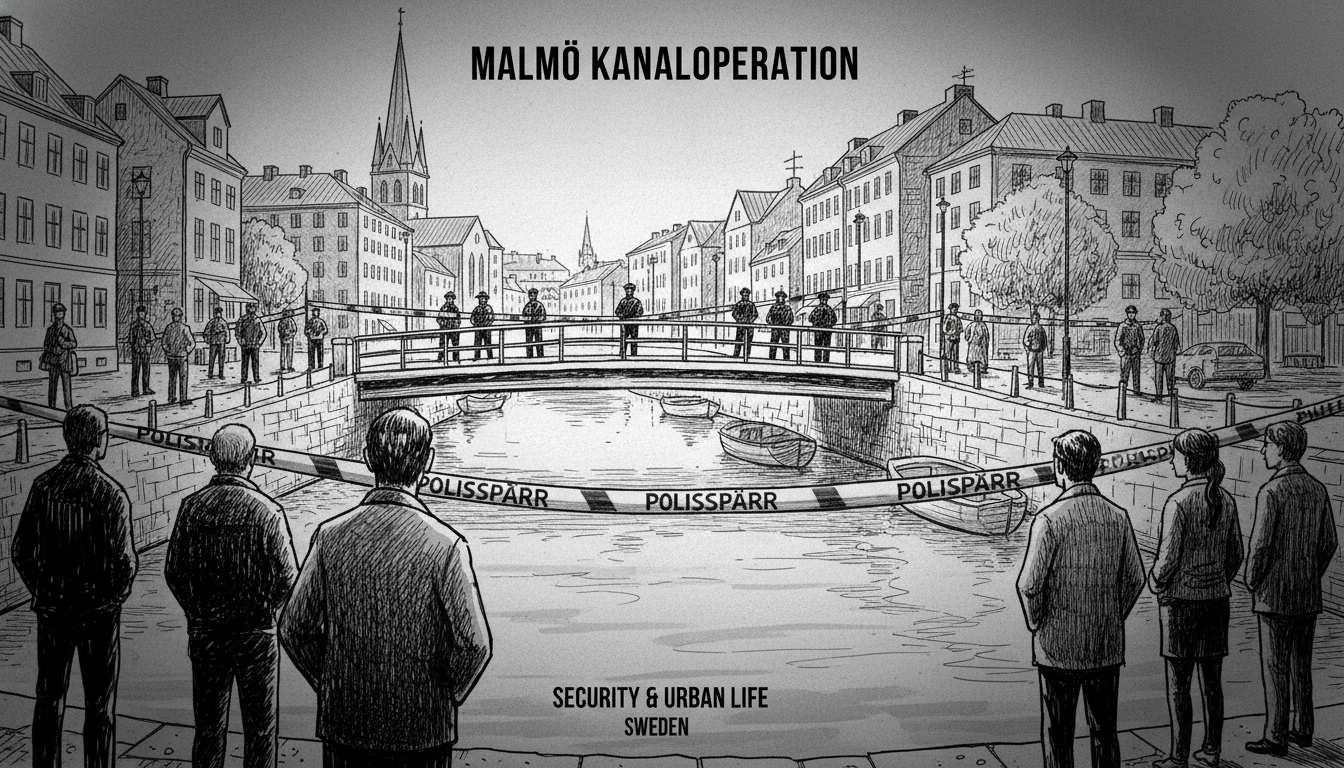
A significant police operation has cordoned off a large section of central Malmö. The area between Posthusplatsen and Anna Lindhs plats remains closed to the public. Officers have not disclosed the nature of their investigation. A police press spokesperson, Filip Annas, stated they are currently engaged in investigative work. He declined to provide further details at this time.
This type of police activity in a major public space immediately raises questions for residents. Malmö, Sweden's third-largest city, has a complex social fabric. The canal area is a central hub for both tourism and daily life. It connects the historic Gamla Staden district with the modern waterfront developments near the Turning Torso skyscraper. Any disruption here affects thousands of people.
For international readers following Swedish society trends, police operations in public areas often relate to several issues. These can range from serious criminal investigations to public safety concerns. Sweden has faced challenges in recent years regarding gang violence and organized crime, particularly in major urban areas. Malmö has been a focal point for national discussions on immigration, integration, and security. Operations like this one inevitably feed into that ongoing public conversation.
The location itself is symbolic. Anna Lindhs plats is named for the former Swedish Foreign Minister who was assassinated in 2003. It sits near the city's main library and cultural institutions. Posthusplatsen is a major transit point. The closure of the bridge and pathways between them cuts a key pedestrian artery. This impacts commuters, students at nearby Malmö University, and visitors to the Malmö Museer.
What does a police operation like this mean for daily life in Malmö? Local shop owners and café workers in the surrounding neighborhoods of Västra Hamnen and Gamla Väster will feel the immediate effect. Reduced foot traffic can hurt business on what might otherwise be a normal day. Events planned for the area would need to be postponed or relocated. The city's famous summer festival season, which often uses these open spaces, relies on predictable public access.
The police's tight-lipped approach is standard protocol during active operations. It prevents compromising their work but also fuels public speculation. Residents will be checking local news and social media for updates. They will want to know when the area will reopen and if there is any ongoing risk. The lack of information, while necessary, creates a vacuum often filled with rumor.
This incident is a reminder of the balance Swedish society seeks between openness and security. Sweden is known for its transparent public institutions and accessible urban spaces. A sudden police cordon challenges that norm. It shows how quickly a scene of everyday leisure can become a secured perimeter. The true test will be in the aftermath—how authorities communicate the reason for the operation once it concludes, and what it reveals about the current safety landscape in one of Scandinavia's most dynamic cities.