
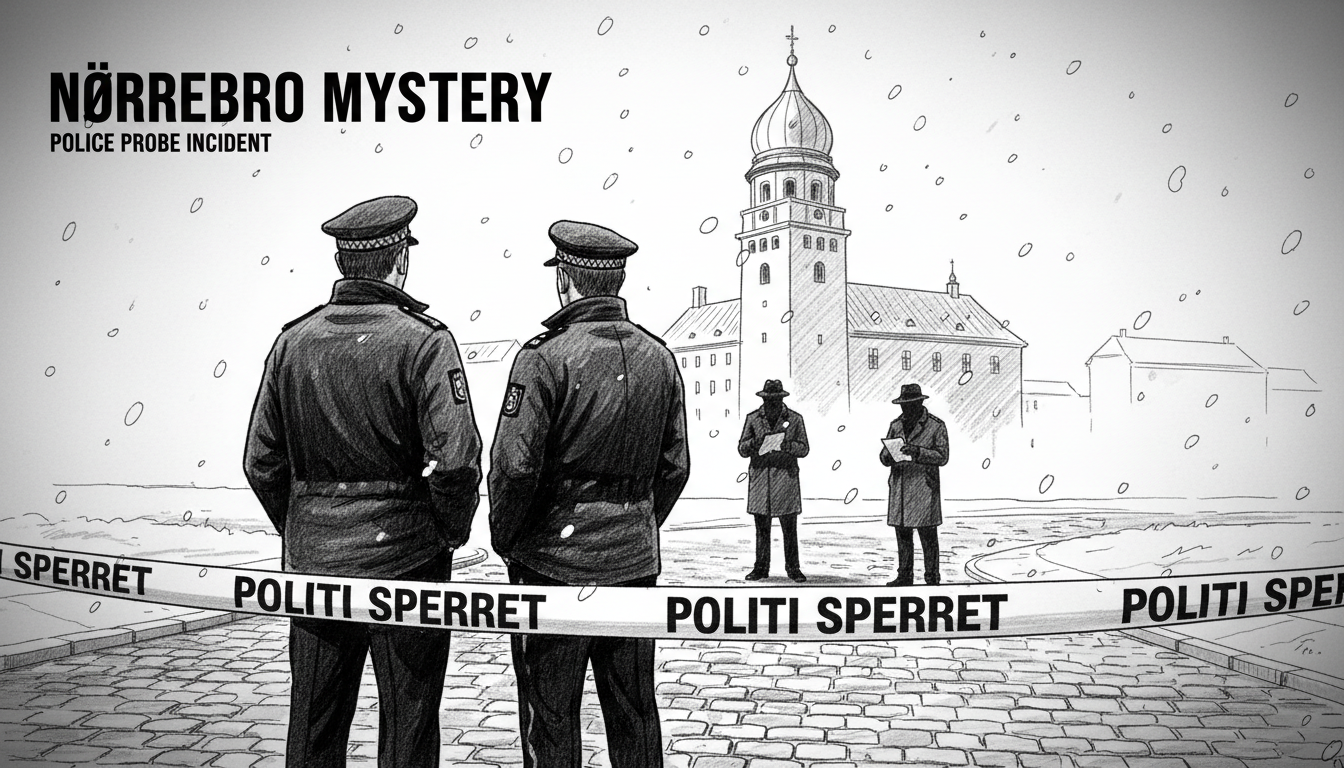
Copenhagen police are investigating a suspicious incident on Guldbergsgade in the Nørrebro district. Forensic technicians and patrol units secured the scene Wednesday afternoon, though authorities have released minimal details about their operation. No injuries have been reported in connection with the police activity, leaving residents and business owners with more questions than answers about the nature of the disturbance in this vibrant Copenhagen neighborhood.
A Tense Afternoon on Guldbergsgade
The police presence on Guldbergsgade began around midday. Officers cordoned off a section of the street, a typical thoroughfare lined with residential apartments, kebab shops, and small boutiques. The deployment of kriminalteknikere, Denmark's highly trained forensic evidence specialists, signaled the seriousness of the response. "When you see the technicians in their white suits, you know it's not just a routine check," said a local shopkeeper who asked not to be named. He observed the activity from his storefront for over two hours. The Copenhagen Police District confirmed its presence on social media platform X but stated it had no further information to share at the current time. This deliberate silence is a standard tactic during active investigations, allowing officers to secure evidence and conduct preliminary interviews without public interference.
Nørrebro's Complex Social Fabric
The incident unfolds against the backdrop of Nørrebro's unique social landscape. Once a classic working-class district, the area has transformed dramatically in recent decades. It is now one of Copenhagen's most culturally diverse and densely populated neighborhoods. Census data shows over 30% of its residents have a non-Danish ethnic background, creating a rich mosaic of communities. This diversity is a source of immense cultural vitality, with authentic eateries and vibrant street life. Yet, Nørrebro has also faced persistent challenges. Certain sections have struggled with sporadic gang-related crime and social inequality, factors that have necessitated a consistent and visible police presence over the years. The area embodies both the successes and ongoing tests of urban integration in Denmark.
The Significance of Forensic Response
The decision to dispatch forensic technicians is a key detail for analysts monitoring the situation. In Denmark's police hierarchy, these specialists are only called to scenes where physical evidence—such as biological material, ballistic findings, or digital traces—is deemed crucial. Their involvement typically rules out minor public order infractions or simple disputes. "The presence of forensic officers indicates the police are treating the location as a potential crime scene," explains Karen Mikkelsen, a retired police superintendent and independent security consultant. "They are looking for evidence that requires meticulous collection. This could range from a serious assault to a weapons incident, but without official word, we are in the realm of speculation." She notes that Copenhagen Police are generally cautious with public communications during the initial hours of a sensitive investigation to avoid compromising their work or causing undue alarm.
Community Reactions and Information Void
The lack of immediate information created a vacuum filled by concern and curiosity among locals. At the Nørrebro Lokaludvalg, a district-level council that handles local affairs, chairman Anders Høj remarked on the delicate balance police must strike. "People have a right to feel secure and informed about what is happening on their street," Høj said. "But we also trust that the police have operational reasons for their silence. Our role is to monitor the situation and ensure community well-being is considered once the immediate police work concludes." On social media and local forums, reactions were mixed. Some expressed anxiety, recalling past isolated incidents in the area. Others urged calm, noting that a large police deployment does not automatically equate to a major crime. This spectrum of response highlights the heightened awareness around public safety in urban centers.
Policing in a Transformative District
Nørrebro's policing strategy has evolved alongside the neighborhood itself. Copenhagen Police maintain a dedicated community policing unit in the district, focusing on building relationships and preventive measures. The approach blends traditional law enforcement with social outreach, a model discussed frequently in Danish social policy circles. Statistics from the National Police's annual report show that reported crime in Nørrebro has seen fluctuations, with petty theft and property crime being most common, while more serious violent crimes remain relatively rare but impactful. Each significant police action is therefore scrutinized for what it reveals about the area's social stability. Incidents involving forensic teams naturally attract more attention and can shape public perception disproportionately.
The Path Forward from Guldbergsgade
As the evening settled over Guldbergsgade, the police presence gradually scaled down. The forensic team completed its on-site work, and the cordon was lifted. The street returned to its normal evening rhythm, but the questions persisted. The Copenhagen Police will likely issue a brief statement in the coming days, but the full details may only emerge if charges are filed or the investigation concludes it was a major event. For now, the incident serves as a reminder of the complex reality facing historic, changing neighborhoods like Nørrebro. They are places of immense energy and community, yet they are not immune to the incidents that require a swift, serious police response. The true measure will be how the community and authorities engage in the aftermath, ensuring transparency and sustained safety for all residents. Does a single police operation define a neighborhood, or is it the long-term commitment to integration and opportunity that truly shapes its future?