
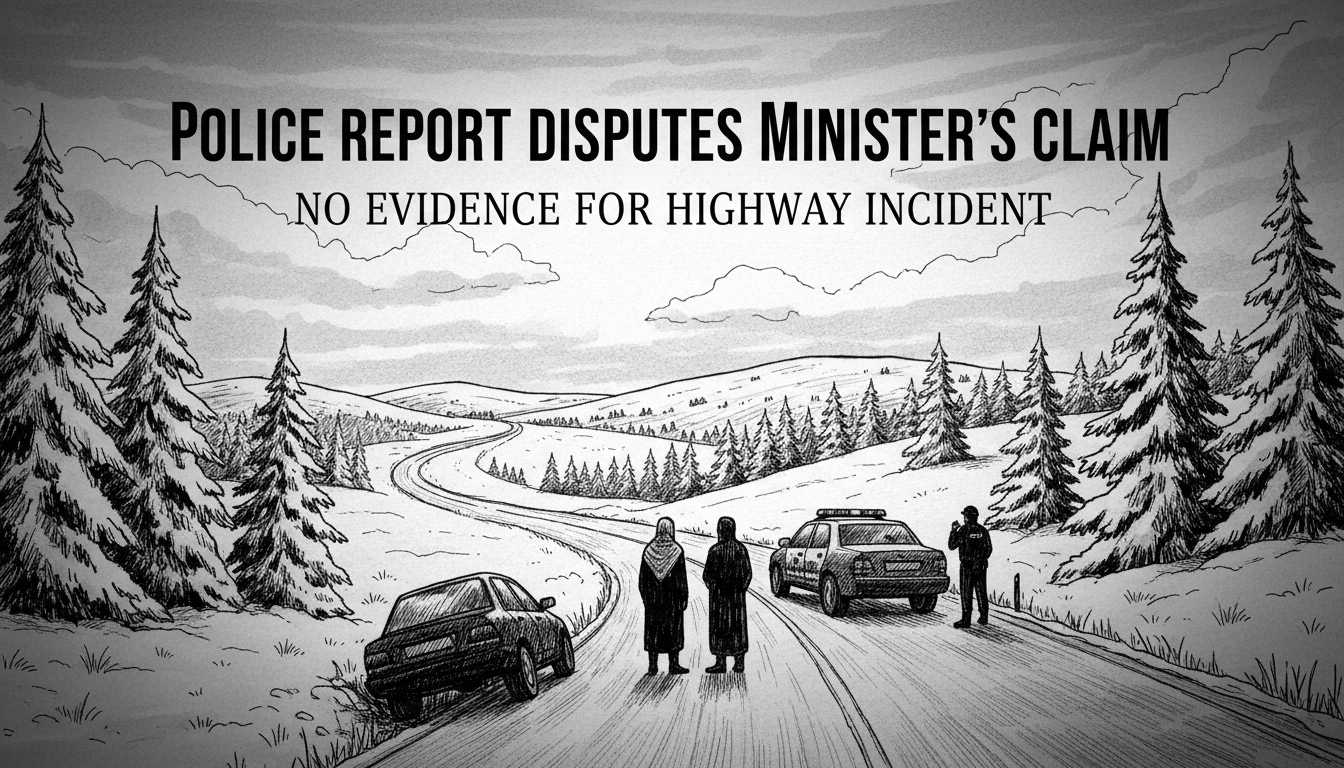
A recent police investigation has concluded that former Danish Integration Minister Inger Støjberg was not forced off the road by two immigrants, contradicting her public account of a September incident on the E20 near Ringsted. The report states there was at no point a dangerous situation for the politician, though it acknowledges the other vehicle drove recklessly. This finding touches a nerve in Denmark's ongoing national conversation about integration, political rhetoric, and public trust.
As a reporter focused on Danish society and integration, I see this story as more than a traffic dispute. It intersects directly with heated debates about immigration policy and the narratives shaping them. Støjberg, now leader of the Denmark Democrats party, built her political career on a strict immigration platform. Her initial characterization of the event as an attempted pressuring by two immigrants immediately fueled existing tensions. The police report's clear contradiction raises questions about the use of personal anecdotes in political discourse, especially on such a sensitive topic.
The incident occurred on the E20, a major artery connecting Copenhagen to Funen, during the third quarter. Local authorities in Ringsted and surrounding municipalities, often on the front lines of integration work, now face a renewed spotlight. Community leaders in social centers across Zealand express concern that such high-profile claims can undermine daily efforts to build cohesion. They point to measurable progress in areas like education and employment participation among new Danes, progress that relies on factual public dialogue.
Statistics from recent integration reports show complex realities. Language acquisition rates have improved in many urban areas, including Copenhagen integration districts, while employment gaps persist in some sectors. The Danish welfare system depends on high participation, making successful integration a practical economic concern, not just a social one. Policy analysts note that Denmark's immigration policy remains among the most regulated in Europe, a framework constantly evaluated for its effectiveness and humanity.
What does this police report mean for public trust? When a prominent figure's account is formally disputed by an official investigation, it can erode confidence in all narratives. This comes at a delicate time. Many Danes are genuinely concerned about the pace of social change and the capacity of their welfare state. Others feel targeted by rhetoric that can feel disproportionate. The core task for Danish social policy is to address these concerns with facts, not fear. The police have provided their factual finding. The political and social response to that fact will be the next chapter in this story. It is a test of whether Danish society can debate its future on a foundation of verified reality, even when that reality contradicts powerful stories.