
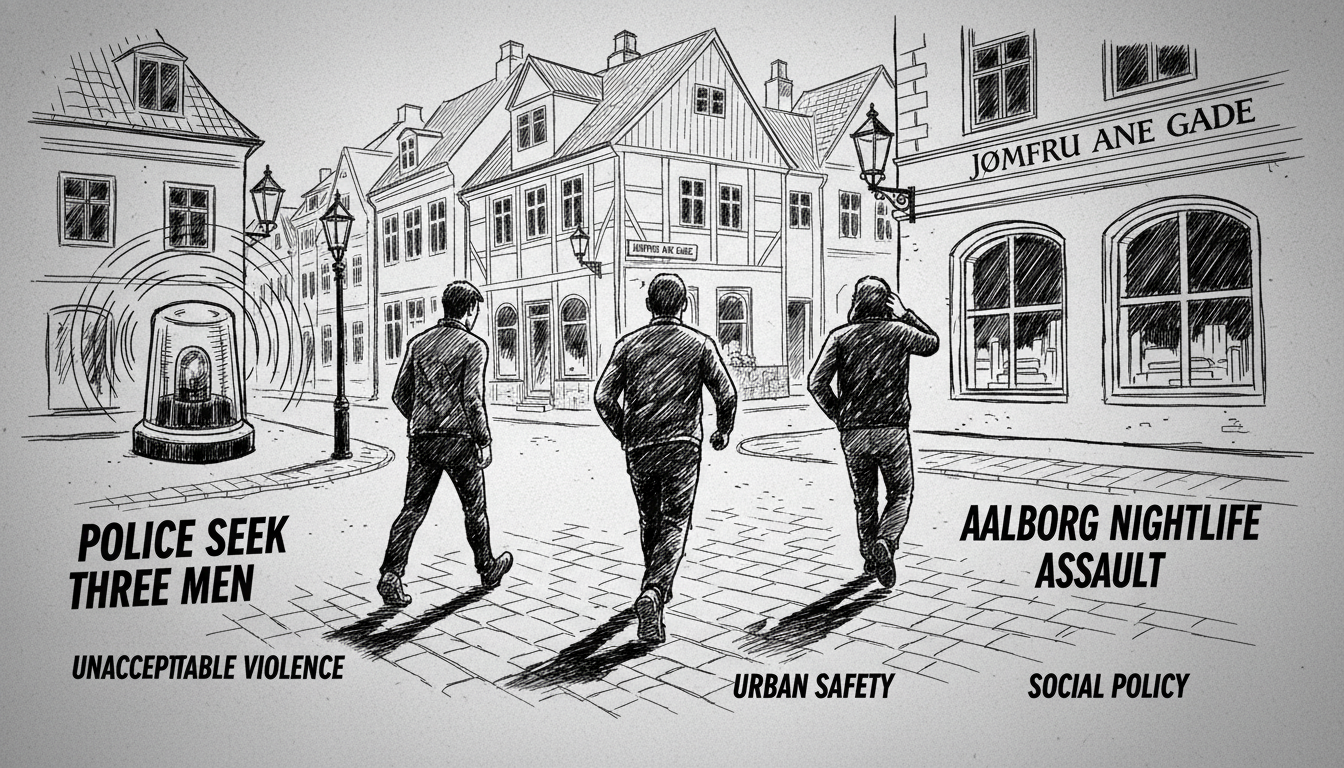
A violent assault in Aalborg's central nightlife street has prompted a public appeal from police. The incident occurred in the early hours of a Sunday morning on the first floor of a well-known bar. Authorities are now seeking three men described as having light skin tones, with two being muscular and between 180 and 190 centimeters tall. The third suspect is described as having an average build and standing between 170 and 175 centimeters tall. Police have released detailed clothing descriptions, including specific shoe types, alongside surveillance images in hopes the public can assist.
Police Commissioner Mads Elstrup stated that violence in public spaces is completely unacceptable. He emphasized that guests in the entertainment district should be able to enjoy a night out without fear. The public appeal was made because initial investigative steps failed to locate the suspects. Anyone with information is urged to contact North Jutland Police directly. This case touches on broader concerns about safety in Danish urban nightlife, a recurring topic in local social policy discussions.
As a reporter focused on Danish society and integration, I see this incident connecting to wider conversations about municipal responsibility and social cohesion. Nightlife districts like this one are microcosms of the city. They are spaces where different social groups interact, sometimes with friction. Municipalities across Denmark, including Aalborg, invest in street-level community policing and support for social centers to prevent such conflicts. These efforts aim to create inclusive public spaces for all residents and visitors.
Statistics from recent integration reports show a complex picture. While overall crime rates in Denmark remain relatively low, isolated violent incidents in nightlife areas often spark intense public debate. These debates frequently intertwine with discussions on immigration policy and the effectiveness of the Danish welfare system's social safety nets. The goal is always to ensure safe communities. This requires coordinated efforts between police, municipal social services, and local community leaders to address root causes and ensure swift justice when laws are broken.
What happens next in this specific case depends on public response to the police appeal. The detailed descriptions suggest investigators have clear evidence from surveillance footage. The focus now is on identification and apprehension. For the city of Aalborg, the response to this event will be watched closely. It serves as a test of local systems designed to maintain safety and public trust. The outcome may influence policy discussions in Copenhagen and other municipalities about resource allocation for nightlife policing and community prevention programs.