
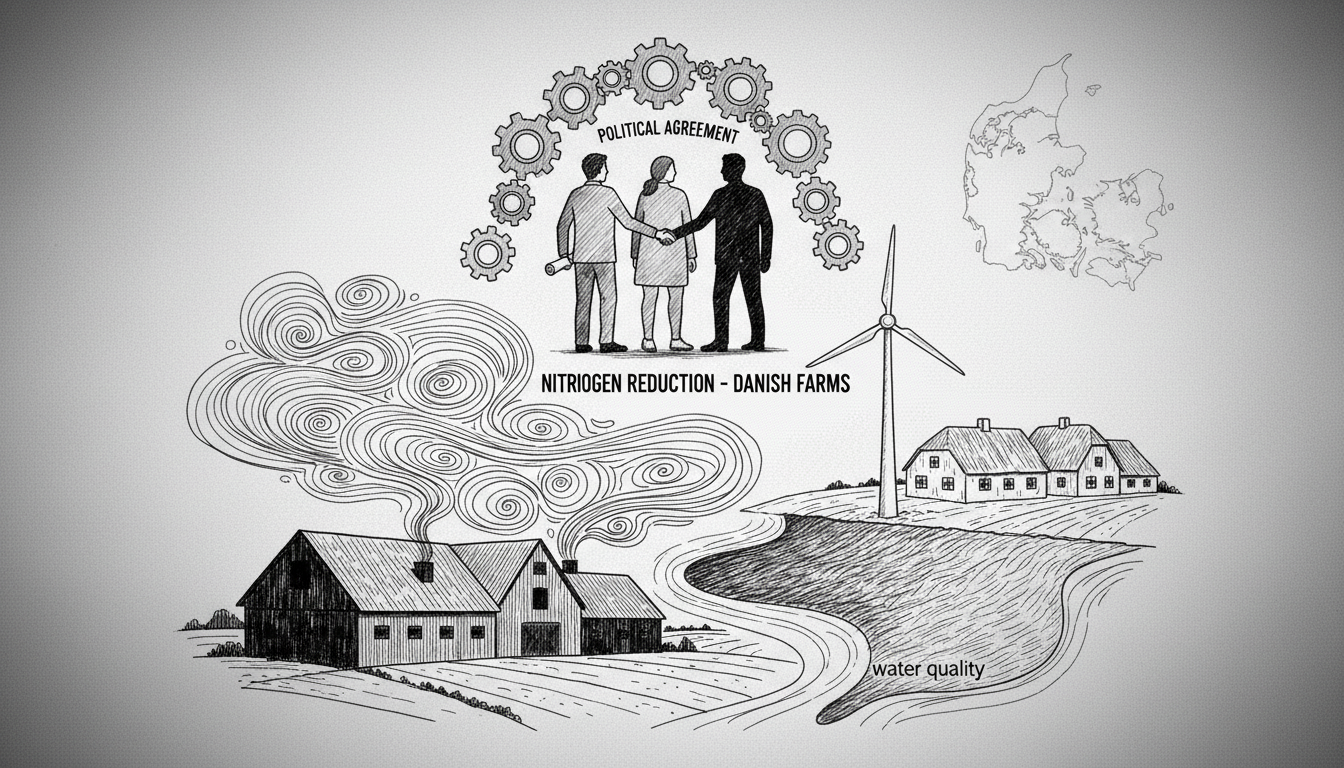
A new political agreement to reduce nitrogen pollution from agriculture has sparked debate across Denmark. The plan aims to significantly cut nitrogen emissions from farms. Critics argue the measures may not go far enough to protect water quality. A leading professor in environmental science expressed clear doubts. He stated the agreement likely falls short of securing clean water for future generations. This debate touches the core of Denmark's environmental and agricultural identity.
Nitrogen runoff from fertilizers is a persistent challenge in Danish environmental policy. It affects groundwater, lakes, and coastal waters. The political deal seeks to balance economic interests with ecological needs. Farmers face new requirements and potential costs. Environmental groups demand stricter action. This tension is familiar in Danish politics, where consensus is often sought but not always achieved. The agreement represents a compromise after lengthy negotiations.
For international observers, this story reveals the complex dance between Denmark's powerful agricultural sector and its green ambitions. Denmark exports vast quantities of pork and dairy. Its farming model is intensive and efficient. This efficiency sometimes conflicts with environmental goals. The country has a long history of trying to regulate agricultural pollution. Past agreements have had mixed results. Water quality in many areas remains a concern despite decades of effort.
Local municipalities will play a key role in implementing the new rules. They work directly with farmers and monitor local water systems. Community leaders in rural areas often feel caught between national policy and local reality. One official from a Jutland municipality noted the need for workable solutions. He said farmers are willing to adapt but need clear and consistent rules. The success of the agreement hinges on this local cooperation.
From an integration perspective, this policy affects new Danes as well. Many residents in Copenhagen and other cities come from countries where water scarcity is a daily crisis. They bring a different understanding of environmental stewardship. Community centers in neighborhoods like Nørrebro and Vestegnen sometimes host discussions on these topics. The conversation about clean water connects to broader values about shared public goods and responsibility.
The Danish welfare system traditionally manages collective risks like pollution. This agreement tests that model. It asks how much society is willing to invest in prevention. It also asks who should bear the cost. The answers are not simple. They involve trade-offs between food prices, farmer livelihoods, and environmental health. This is not just a technical policy discussion. It is a conversation about the kind of countryside and natural heritage Denmark wants to preserve.
The professor's skepticism is noteworthy. It suggests the political process may have produced a lowest-common-denominator solution. Real change often requires more courage. Denmark has been a leader in renewable energy like wind power. Its approach to agricultural pollution is still evolving. The coming years will show if this agreement is a stepping stone or a stumbling block. The health of Denmark's famous lakes and coastlines depends on getting this right.