
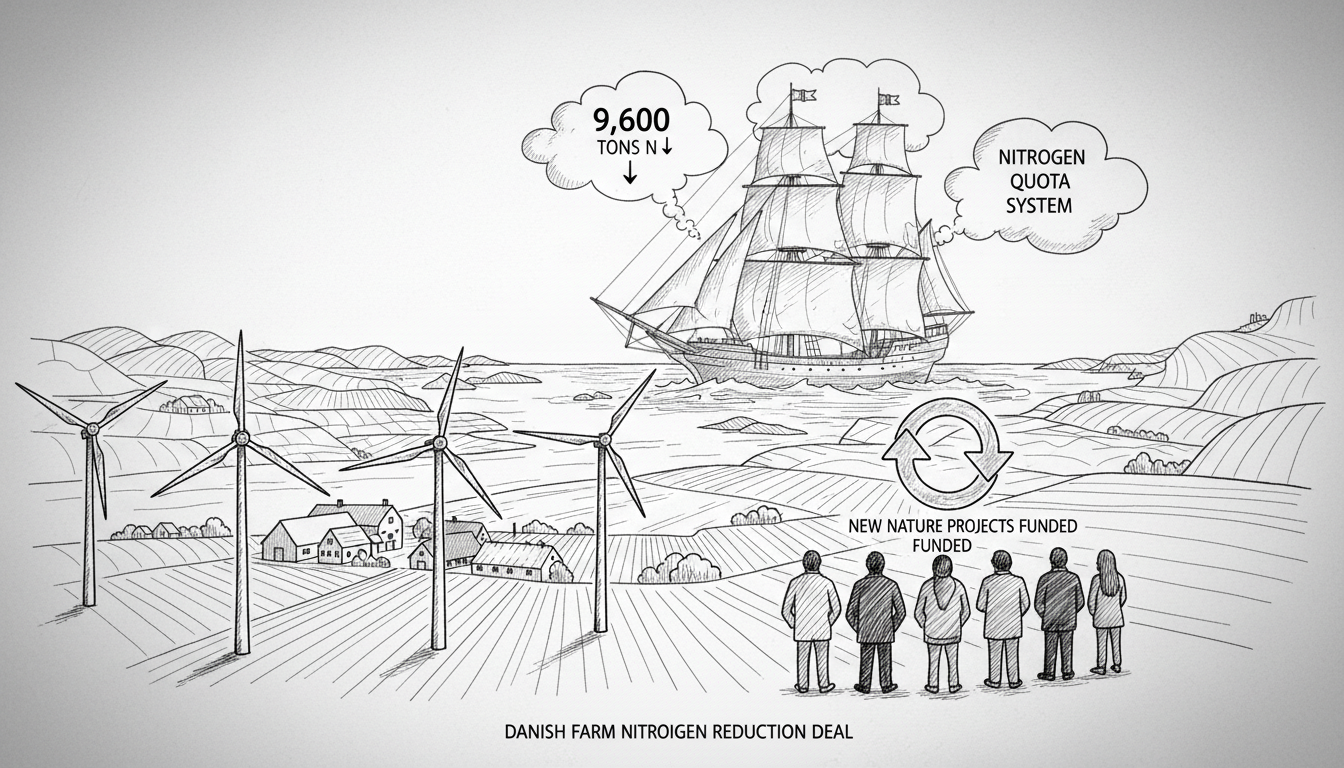
A landmark political agreement will impose strict new limits on nitrogen pollution from Danish agriculture. The deal, part of a broader green tripartite framework, mandates a reduction of 9,600 tons of nitrogen from farmland. This will be enforced through a new quota system, setting individual emission ceilings for each farm. The policy aims to transform land use by taking the most polluting fields out of production to improve coastal and fjord water quality.
Minister for the Tripartite Agreement Jeppe Bruus presented the deal, acknowledging past shortcomings. He stated that while progress has been slow for many years, the new framework demands substantial action in a short period. The core challenge in negotiations was distributing the reduction burden. On one side, left-leaning parties pushed for targeting the most polluting land. The government and agricultural sector argued for a broader distribution. The final compromise allocates 25 percent of reductions to the worst-polluting soils, with the remaining 75 percent spread widely across the sector.
Scientists have assessed that a 14,800-ton reduction is needed to restore good water quality in Denmark's vulnerable marine environments. Minister Bruus conceded the agreement only gets the country two-thirds of the way toward that scientific goal. He admitted more work remains, but framed the deal as a critical step forward. The agreement also allocates 150 million kroner from a dedicated land fund to establish ten new nature restoration projects.
From my perspective covering Danish society and integration, this policy shift has profound social implications. Danish agriculture is a cornerstone of both the economy and national identity. Imposing hard limits represents a major recalibration of the welfare state's relationship with a key industry. It moves environmental regulation from voluntary measures to enforceable quotas, a significant shift in Danish social policy. The success of this integration of green goals into economic sectors will be closely watched. It tests the Danish model of consensus-based change, pitting immediate economic interests against long-term environmental and public health. The real test will be in implementation across Danish municipalities, where local social centers often see the human impact of such large-scale economic transitions first. Will farmers adapt, or will this create new social fractures in rural communities? The answer will define Denmark's next chapter.