
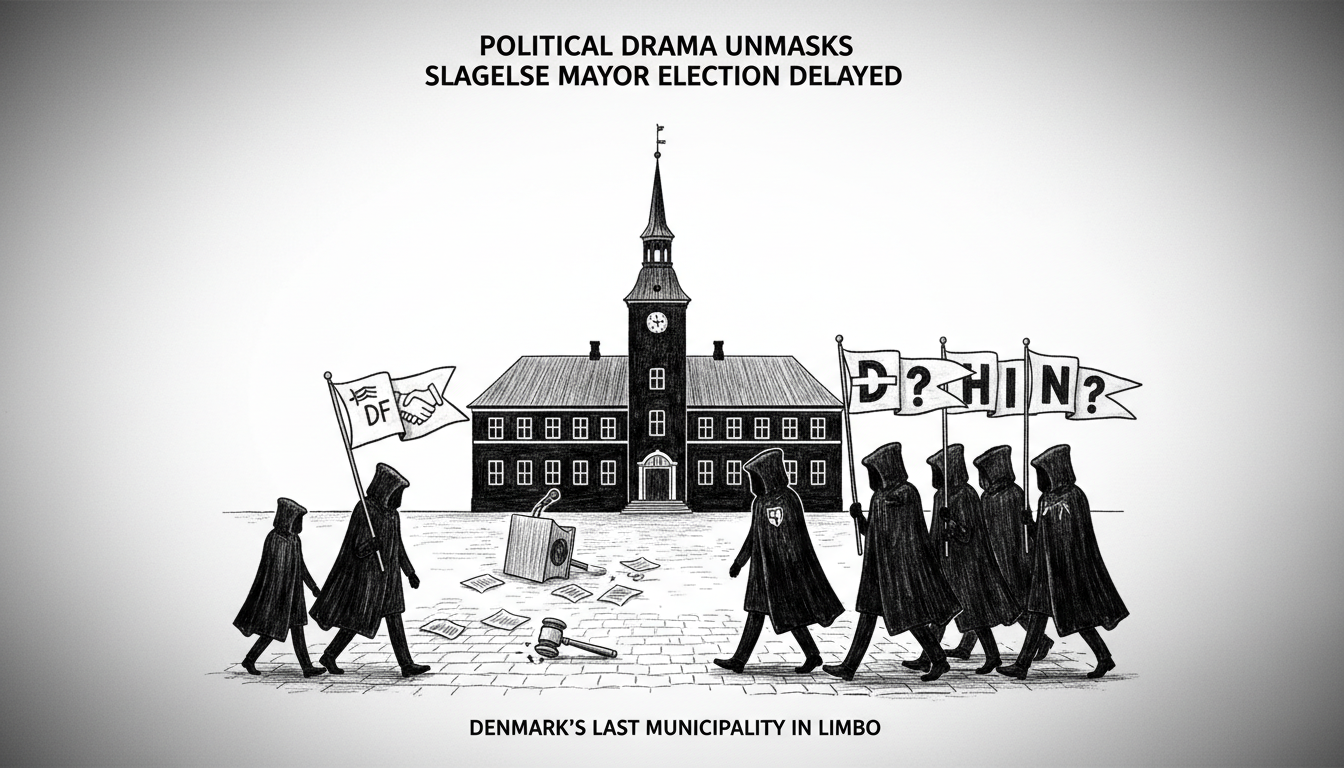
A political crisis continues in Slagelse, Denmark, where the identity of the next mayor remains uncertain after broken agreements. This municipality now stands as the last in Denmark without a confirmed mayor for the coming term. The situation took another dramatic turn when Social Democratic lead candidate Britt Hunley canceled a scheduled Sunday press conference about the new mayor appointment.
Hunley confirmed the cancellation in a text message to media. The press conference was intended to present a new governing agreement reached just one day earlier. Five parties had reportedly agreed on a new coalition deal on Saturday. This agreement emerged after the Socialist People's Party abandoned the original election night pact that would have secured Knud Vincents of the Venstre party another four-year term.
Danish political tradition shows that pre-election agreements often face challenges during actual coalition formations. This year alone, similar breakdowns have occurred in Slagelse, Sorø, and Ringkøbing-Skjern municipalities. In each case, politicians have abandoned initial agreements to support different candidates.
The current deadlock in Slagelse stems from the Danish People's Party's absence from negotiations. Multiple sources confirm that Henrik Brodersen from the Danish People's Party failed to attend crucial talks. Without their participation, the remaining parties can only gather 13 mandates, falling short of the majority needed to elect a left-leaning mayor.
Danish municipal politics operates on a delicate balance of power. Mayors typically emerge from coalition agreements between multiple parties rather than single-party majorities. This system creates complex negotiations where smaller parties often hold decisive influence. The current instability in Slagelse reflects broader challenges in Danish local governance where traditional party alliances are becoming increasingly fluid.
International observers might find Denmark's municipal political landscape surprisingly volatile. While the country maintains political stability at the national level, local elections frequently produce fragmented results requiring extensive negotiations. The Slagelse situation demonstrates how personal decisions and last-minute changes can override initial election night agreements.
What happens next remains uncertain. The parties must either persuade the Danish People's Party to join negotiations or seek alternative coalition configurations. Meanwhile, municipal administration continues under temporary leadership until a permanent mayor is elected. The prolonged uncertainty could impact local decision-making and delay important municipal projects.
This political drama in Slagelse offers a window into the practical workings of Danish democracy. It shows how coalition building requires constant negotiation and how even established agreements can unravel when key players change positions. The outcome will set the political direction for Denmark's eighth largest municipality for the next four years.